
Pesciaiola vs Smergo maggiore
Mergellus albellus contro Mergus merganser
Fai un quiz con Pesciaiola e Smergo maggiore
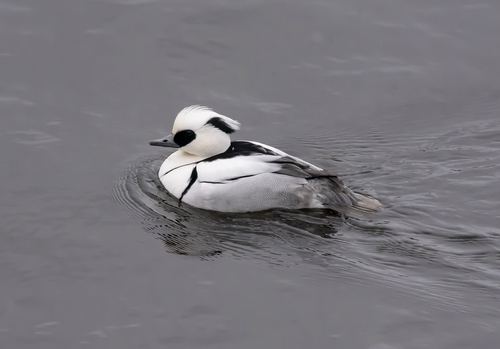 Pesciaiola
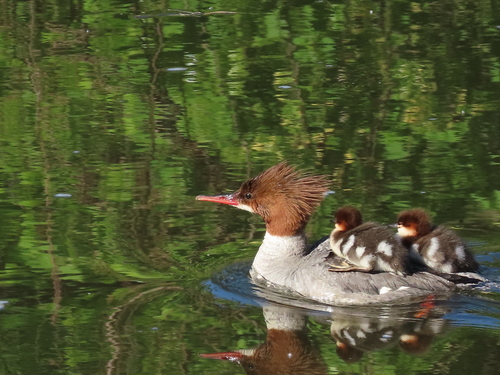 Smergo maggiore
In breve
Il modo più affidabile per separare la Pesciaiola dallo Smergo maggiore è per dimensione e struttura generale: lo Smergo maggiore è molto più grande e massiccio, con un corpo e un becco più lunghi. In volo, la Pesciaiola (soprattutto le femmine e gli immaturi) mostra ordinati patch ovali bianchi sulle ali, mentre lo Smergo maggiore ha un'ala interna bianca più estesa e un'ala esterna nera contrastante. Il maschio adulto della Pesciaiola è sorprendentemente bianco e nero ('panda' o 'ghiaccio screpolato'), mentre i maschi dello Smergo maggiore sono bianchi con una testa verde-nera e spesso una sfumatura rosa salmone. Le femmine e gli immaturi della Pesciaiola sono piccoli, ordinati e grigi con un cappello castano, mentre la femmina dello Smergo maggiore è molto più grande, con una testa rossiccia e shaggy e un becco più lungo e pesante. Entrambe le specie possono essere viste insieme su laghi o fiumi in inverno, ma le loro differenze di dimensione e piumaggio sono solitamente chiare con buone visuali.
Consigli di identificazione
- La dimensione è il primo controllo: Lo Smergo maggiore è molto più grande e massiccio della Pesciaiola. Se vedi entrambi insieme, la differenza è ovvia. Se da solo, confronta con altre anatre nelle vicinanze.
- Forma e lunghezza del becco: Lo Smergo maggiore ha un becco lungo, pesante, rosso a marrone-rossastro; il becco della Pesciaiola è molto più corto e ordinato, anche se entrambi sono 'sawbill'.
- Piumaggio del maschio adulto: Il maschio della Pesciaiola è completamente bianco con linee nere nette e una maschera nera, dando un aspetto 'panda' o 'ghiaccio screpolato'. Il maschio dello Smergo maggiore è bianco con una testa verde-nera e spesso una sfumatura rosa salmone, con un dorso e una coda grigi.
- Schema della testa femminile/immatura: La femmina/immatura della Pesciaiola ha un cappello castano ordinato, guance e mento bianchi e lore nere, apparendo piccola e ordinata. La femmina dello Smergo maggiore ha una testa shaggy, rossiccia con una chiara demarcazione al collo e un mento bianco, apparendo più grande e più ruvida.
- Striscia facciale del giovane Smergo maggiore: Il giovane Smergo maggiore mostra una breve striscia bianca bordata di nero tra occhio e becco, assente nella Pesciaiola.
- Schema delle ali in volo: La Pesciaiola (tutte le età) mostra un ordinato patch bianco ovale; lo Smergo maggiore (tutte le età) mostra un ampio pannello bianco sull'ala interna con primarie nere esterne, più esteso rispetto al patch della Pesciaiola.
- Forma del corpo: La Pesciaiola è compatta e con collo corto; lo Smergo maggiore è lungo e con collo lungo, con una postura più orizzontale sull'acqua.
- Cresta: Entrambi hanno creste, ma quella della Pesciaiola è corta e ordinata (soprattutto nelle femmine/immaturi), mentre quella dello Smergo maggiore è più lunga e shaggy, specialmente nelle femmine.
- Comportamento: La Pesciaiola è timida, spesso vicino a coperture e si spaventa facilmente; lo Smergo maggiore è meno diffidente, spesso in spazi aperti, a volte a pescare in gruppi.
- Contesto dell'habitat: La Pesciaiola preferisce acque più piccole e tranquille con alberi sovrastanti; lo Smergo maggiore è più probabile che si trovi su laghi e fiumi grandi e aperti.
- Colore delle gambe: Le gambe dello Smergo maggiore sono rosse a marrone-rossastro, più brillanti nei maschi adulti, più opache nei giovani; il colore delle gambe della Pesciaiola non è un segno distintivo forte.
- Vocalizzazione: Non è solitamente utile, ma lo Smergo maggiore può emettere un basso grugnito o un fischio morbido; la Pesciaiola è per lo più silenziosa.
- Piumaggio in eclipse: Il maschio della Pesciaiola in eclipse somiglia alla femmina ma mantiene più bianco nell'ala; il maschio dello Smergo maggiore in eclipse assomiglia alla femmina ma è comunque molto più grande e con un becco più pesante.
- Fagotti misti: Se vedi un'anatra piccola, ordinata, grigia e castana tra un gruppo di grandi anatre bianche con teste verde-nere, è probabile che sia una Pesciaiola tra gli Smergo maggiore.
- Quando hai dubbi: Concentrati su dimensione, lunghezza del becco e forma del patch bianco dell'ala in volo—questi sono i segni distintivi più affidabili per tutte le età e i sessi.
Taglia
Lo Smergo maggiore è più di due volte più pesante della Pesciaiola (massa media adulta: Smergo maggiore 1470,5 g, Pesciaiola 610 g) ed è anche molto più lungo (Smergo maggiore 58–72 cm vs. Pesciaiola 38–44 cm). L'apertura alare dello Smergo maggiore (78–97 cm) è sostanzialmente maggiore rispetto a quella della Pesciaiola (56–69 cm). Anche a distanza, lo Smergo maggiore appare lungo e con un becco pesante, mentre la Pesciaiola è compatta e delicata. Quando visti insieme, il divario di dimensione è ovvio.
Piumaggio
- Giovani e femmine in volo: La Pesciaiola (femmina/immatura) mostra un ordinato patch bianco ovale sulle ali altrimenti grigie; lo Smergo maggiore (femmina/giovane) mostra un ampio pannello bianco sull'ala interna (secondarie) con primarie nere esterne, e un'area bianca complessivamente più estesa.
- Maschi adulti: Il maschio della Pesciaiola è inconfondibile: completamente bianco con linee nere nette e una maschera nera, con un aspetto 'ghiaccio screpolato' o 'simile a un panda'. Il maschio dello Smergo maggiore è bianco con una testa verde-nera lucida e una variabile sfumatura rosa salmone; il dorso e la coda sono grigi, e il pattern delle ali è un'ampia ala interna bianca con primarie nere esterne.
- Femmine/Maschi in eclipse: Le femmine/immaturi della Pesciaiola sono piccoli, ordinati e grigi con una fronte e una corona castana, guance e mento bianchi, e lore nere. Le femmine/eclissi dello Smergo maggiore sono molto più grandi, per lo più con corpo grigio, con una testa shaggy rossiccia, mento bianco e una chiara demarcazione tra testa e collo. Il giovane Smergo maggiore ha una breve striscia bianca bordata di nero tra occhio e becco, che manca nella Pesciaiola.
- Becco: Entrambi hanno becchi seghettati, ma quello dello Smergo maggiore è molto più lungo e pesante, accentuando la differenza di dimensione.
Comportamento
Lo Smergo maggiore è spesso visto a pescare in gruppi, a volte radunando i pesci in acque poco profonde. Possono riposare su rocce o ghiaccio, a volte con le ali mezze aperte, e si muovono goffamente sulla terra. La Pesciaiola è più timida, spesso rimanendo ai margini dei laghi o sotto alberi sovrastanti, e si spaventa facilmente quando disturbata. Entrambi tuffano per pesci, ma la Pesciaiola è più probabile che venga vista da sola o in piccoli gruppi, e raramente rimane all'aperto a lungo.
Habitat
Entrambe le specie nidificano in aree boschive vicino a laghi e fiumi e fanno il nido in cavità degli alberi. In inverno, entrambe possono essere trovate su grandi laghi, fiumi lenti o acque costiere protette. La Pesciaiola tende a preferire acque più piccole e tranquille e spesso rimane vicino a coperture, mentre lo Smergo maggiore è più a suo agio su fiumi e laghi grandi e aperti, ed è più probabile che venga visto all'aperto o su rocce esposte.
Voce
Le vocalizzazioni non sono solitamente diagnostiche sul campo. Lo Smergo maggiore emette un grugnito basso e aspro e, durante la stagione di riproduzione, i maschi e i giovani possono emettere un fischio morbido. La Pesciaiola è generalmente silenziosa e timida, raramente vocalizzando sul campo.