

Slaty-breasted Rail vs Red-legged Crake
Lewinia striata contro Rallina fasciata
Fai un quiz con Slaty-breasted Rail e Red-legged Crake
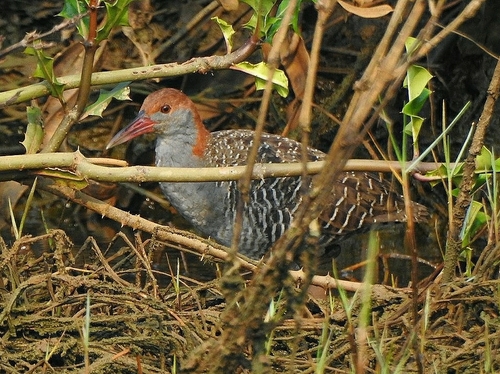 Slaty-breasted Rail
 Red-legged Crake
In breve
Il segno distintivo più affidabile per separare il Slaty-breasted Rail dal Red-legged Crake è il motivo delle parti inferiori: il Red-legged Crake mostra barre nere e bianche audaci sul ventre e sulle ali inferiori, mentre il Slaty-breasted Rail ha parti inferiori blu-grigio semplici senza barre. Anche il colore del becco e delle gambe differisce: il Slaty-breasted Rail ha un lungo becco rossastro e gambe più opache, mentre il Red-legged Crake ha un becco verde e gambe rosse sorprendenti. Entrambi sono rail di dimensioni medie, ma la colorazione della testa e del petto, così come il colore del becco, sono fondamentali sul campo. I motivi di volo o delle ali specifici per gli immaturi non sono descritti nelle fonti per nessuna delle due specie, quindi concentrati sui colori delle parti inferiori e delle parti scoperte per tutte le età.
Consigli di identificazione
- Underpart barring: Il Red-legged Crake mostra sempre barre nere e bianche audaci sul ventre e sulle ali inferiori, visibili anche in volo o quando l'uccello si sta pulendo. Il Slaty-breasted Rail non mostra mai barre: le sue parti inferiori sono blu-grigio semplici. Questo è il segno distintivo più affidabile per tutte le età.
- Bill color: Il Slaty-breasted Rail ha un lungo becco rossastro, mentre il Red-legged Crake ha un becco verde. Il colore del becco è spesso visibile anche in viste ombreggiate o parzialmente oscurate.
- Leg color: Il Red-legged Crake ha gambe rosse brillanti, una caratteristica sorprendente in buona luce. Le gambe del Slaty-breasted Rail sono più opache e meno appariscenti.
- Crown and nape: Il Slaty-breasted Rail ha una corona e una nuca castanee distinte, in contrasto con il suo petto blu-grigio. La testa, il collo e il petto del Red-legged Crake sono più uniformemente rosso-marroni, con solo una gola leggermente più chiara.
- Breast color: Il petto del Slaty-breasted Rail è blu-grigio, in netto contrasto con la corona castanea. Il Red-legged Crake ha un petto rosso-marrone che si fonde con la testa e il collo.
- Upperparts: Le parti superiori del Red-legged Crake sono grigio-marroni e meno contrastanti rispetto alla corona castanea del Slaty-breasted Rail.
- Flight views: In volo, cerca il motivo delle ali inferiori: il Red-legged Crake mostra barre nere e bianche, mentre le ali inferiori del Slaty-breasted Rail sono semplici.
- Perched views: Quando è posato, concentrati sul motivo delle parti inferiori e sul colore del becco. Anche in copertura densa, il ventre barrato del Red-legged Crake può essere intravisto.
- Juvenile/immature birds: Non sono descritte differenze nei motivi delle ali o di volo specifiche per età, quindi utilizza il colore delle parti inferiori e del becco/gambe per tutte le età.
- Size: Entrambe le specie sono simili in dimensioni; non fare affidamento sulla dimensione per la separazione.
- Habitat: Entrambe le specie utilizzano habitat umidi simili; l'habitat non è un separatore affidabile.
- Voice: Non sono descritte differenze vocali diagnostiche nelle fonti fornite.
- Pitfalls: Luce scarsa o viste oscurate possono rendere difficile giudicare il colore delle gambe e del becco; cerca sempre di vedere il motivo delle parti inferiori. Fai attenzione agli uccelli macchiati di fango o bagnati, che possono attenuare il colore delle gambe o del becco.
- Season/sex: Non sono descritte differenze stagionali o sessuali nel piumaggio che aiutino la separazione.
- Summary tip: Dai sempre priorità alle barre delle parti inferiori (presenti nel Red-legged Crake, assenti nel Slaty-breasted Rail) e al colore del becco/gambe per un'identificazione rapida e sicura.
Taglia
Entrambe le specie sono simili in dimensioni, con il Slaty-breasted Rail che misura 25–30 cm di lunghezza e pesa 100–142 g, mentre il Red-legged Crake è leggermente più piccolo a 24 cm di lunghezza. In pratica, la dimensione da sola non è un separatore affidabile sul campo, poiché le loro proporzioni corporee e il loro aspetto generale si sovrappongono considerevolmente. Utilizza invece le differenze di colore e motivo.
Piumaggio
- Adults and all ages: La differenza più diagnostica è il motivo delle parti inferiori. Il Red-legged Crake ha barre nere e bianche audaci sul ventre e sulle ali inferiori, visibili sia negli uccelli posati che in volo. Il Slaty-breasted Rail non ha barre, mostrando invece un petto e parti inferiori blu-grigio semplici.
- Head and breast: Il Slaty-breasted Rail ha una corona e una nuca castanee con un petto blu-grigio, mentre il Red-legged Crake ha una testa, un collo e un petto più uniformemente rosso-marroni, più chiari sulla gola.
- Upperparts: Le parti superiori del Red-legged Crake sono grigio-marroni, mentre la corona e la nuca del Slaty-breasted Rail sono castanee, in contrasto con il resto del corpo.
- Bill and legs: Il Slaty-breasted Rail ha un lungo becco rossastro e gambe più opache; il Red-legged Crake ha un becco verde e gambe rosse brillanti.
- Juvenile/immature: Non sono descritte differenze specifiche per età nei motivi delle ali superiori o di volo per nessuna delle due specie nelle fonti.
Comportamento
Entrambe le specie sono segrete e spesso si nascondono in vegetazione densa vicino all'acqua. Non sono descritte differenze comportamentali nelle fonti che siano diagnostiche per la separazione sul campo. Entrambi possono volare improvvisamente da un riparo, ma il loro comportamento di volo e di foraggiamento è ampiamente simile.
Habitat
Entrambe le specie si trovano in habitat umidi e paludosi simili in tutto il subcontinente indiano e nel sud-est asiatico. L'habitat da solo non è un separatore affidabile, poiché entrambi possono essere trovati in canneti densi, praterie umide e paludi forestali. L'abbondanza locale può differire, ma questo non è un segno distintivo sul campo.
Slaty-breasted Rail · Red-legged Crake · I miei uccelli difficili