

Shiny Cowbird vs Chopi Blackbird
Molothrus bonariensis contro Gnorimopsar chopi
Fai un quiz con Shiny Cowbird e Chopi Blackbird
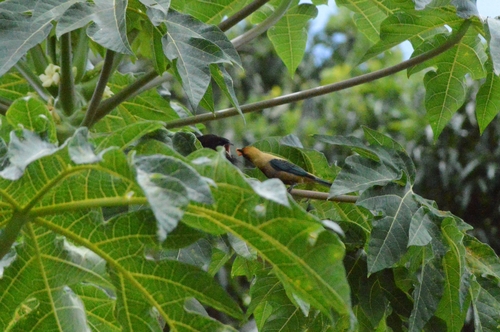 Shiny Cowbird
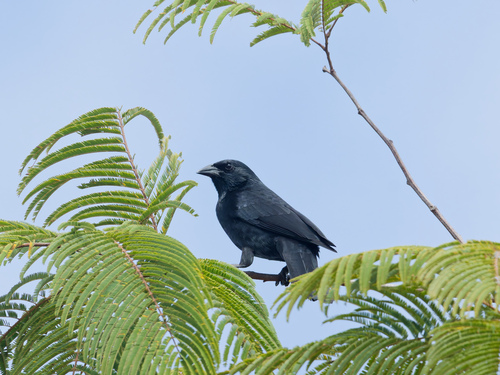 Chopi Blackbird
In breve
Il segno di campo più affidabile per separare il Shiny Cowbird dal Chopi Blackbird è la struttura generale e la forma del becco: il Shiny Cowbird è notevolmente più piccolo, con un becco più delicato e slanciato e una testa più piatta, mentre il Chopi Blackbird è più grande e massiccio con un becco distintamente curvo che presenta una scanalatura lungo la mandibola inferiore. I maschi adulti di Shiny Cowbird mostrano un'iridescenza lucida di colore blu-viola, mentre i Chopi Blackbird sono di un nero uniforme senza forte iridescenza. Le femmine e gli immaturi di Shiny Cowbird sono di un marrone opaco e molto più chiari di qualsiasi Chopi Blackbird. Sul campo, presta particolare attenzione alla dimensione, alla forma della testa e del becco e, per le femmine, alla colorazione molto più chiara e marrone del cowbird. Anche le vocalizzazioni sono piuttosto diverse, con il Chopi Blackbird che emette richiami forti ed esplosivi.
Consigli di identificazione
- Size: Il Chopi Blackbird è molto più grande e massiccio del Shiny Cowbird. Usa questo segno quando entrambe le specie sono presenti o confrontate con altri icteridi.
- Bill shape: Il Chopi Blackbird ha un becco lungo e leggermente curvo con una scanalatura lungo la mandibola inferiore; il becco del Shiny Cowbird è più corto, più fine e più appuntito. Questo è particolarmente utile quando gli uccelli sono posati.
- Head profile: Il Shiny Cowbird ha una testa più piatta, mentre la testa del Chopi Blackbird è più robusta e arrotondata.
- Male plumage: Il maschio adulto di Shiny Cowbird è di un nero lucido con iridescenza blu-viola, mentre il Chopi Blackbird è di un nero uniforme senza forte iridescenza. In buona luce, cerca la lucentezza.
- Female/immature plumage: Le femmine e gli immaturi di Shiny Cowbird sono di un marrone opaco o grigio-marrone, più chiari sotto, e non sono mai veramente neri. Il Chopi Blackbird è sempre nero, indipendentemente dall'età o dal sesso. Questo è il segno migliore per separare femmine/immaturi.
- Tail length: Il Chopi Blackbird ha una coda proporzionalmente più lunga del Shiny Cowbird, che può essere vista in volo o quando è posato.
- Behavior: Il Shiny Cowbird è più probabile che venga visto cercare cibo a terra in aree aperte e disturbate. Il Chopi Blackbird è più arboricolo e spesso si posa in modo evidente.
- Vocalizations: Il richiamo forte ed esplosivo del Chopi Blackbird è diagnostico. Il canto del Shiny Cowbird è più morbido e musicale, spesso emesso durante il corteggiamento.
- Habitat: Il Shiny Cowbird preferisce terreni disturbati, aree agricole o pascoli, mentre il Chopi Blackbird è più comune in savane naturali e bordi di foresta.
- Social context: Il Shiny Cowbird si trova spesso in piccoli gruppi o stormi misti, specialmente con altri cowbirds. Il Chopi Blackbird può formare stormi più grandi e rumorosi.
- Courtship display: Il maschio di Shiny Cowbird può inchinarsi e arruffare le piume durante il corteggiamento, ma questo non è probabile che venga confuso con il Chopi Blackbird.
- Bill color: Entrambe le specie hanno becchi scuri, quindi questo non è utile.
- Flight style: Il Chopi Blackbird appare più pesante e più diretto in volo; il Shiny Cowbird è più leggero e più agile.
- Egg-laying behavior: Solo il Shiny Cowbird è un parassita del nido, ma questo non è un segno di campo.
- Geographic context: Nel lontano nord del Sud America o nei Caraibi, il Chopi Blackbird è assente, quindi qualsiasi uccello simile è probabilmente un Shiny Cowbird.
Taglia
Il Shiny Cowbird è significativamente più piccolo e leggero (massa corporea ~37 g) del Chopi Blackbird, che è lungo circa 25 cm e notevolmente più massiccio. La differenza è particolarmente evidente quando entrambe le specie sono viste insieme o confrontate con altri icteridi: il Chopi Blackbird è più vicino in dimensione a un grackle, mentre il Shiny Cowbird è più simile a un merlo. Questo divario di dimensioni è un forte indizio, specialmente a distanza o in stormi misti.
Piumaggio
Il maschio adulto di Shiny Cowbird è di un nero lucido con un'iridescenza blu-viola, mentre il Chopi Blackbird è di un nero uniforme senza iridescenza pronunciata. Le femmine e gli immaturi di Shiny Cowbird sono di un marrone grigio-opaco, a volte più chiari sotto, e molto più leggeri di qualsiasi Chopi Blackbird. Il Chopi Blackbird di entrambi i sessi e di tutte le età è sempre nero, privo delle tonalità marroni o grigie delle femmine/immaturi di cowbird. Non sono descritti schemi distintivi di ali juvenile o immature per nessuna delle due specie, quindi concentrati sul colore e sulla lucentezza complessivi. In volo, entrambi appaiono nerognoli, ma la dimensione più piccola e la coda più corta del cowbird sono evidenti. La femmina di Shiny Cowbird può essere confusa con altri cowbirds, ma è molto più chiara e con un becco più piccolo rispetto al Chopi Blackbird.
Comportamento
Il Shiny Cowbird viene spesso visto cercare cibo a terra, a volte intorno al bestiame o in habitat aperti e disturbati, ed è solitamente in piccoli gruppi o stormi misti. Il Chopi Blackbird è anche sociale ma tende ad essere più arboricolo e viene spesso visto posato in modo evidente, a volte in gruppi più grandi e rumorosi. I movimenti del cowbird sono più furtivi e meno audaci rispetto a quelli del chopi. Durante il corteggiamento, il maschio di Shiny Cowbird può esibirsi inchinandosi e arruffando le piume, ma questo è improbabile che venga confuso con il comportamento del Chopi Blackbird.
Habitat
Entrambe le specie si trovano in habitat aperti o semi-aperti, ma il Shiny Cowbird è più strettamente associato a terreni disturbati, aree agricole e pascoli, specialmente dove può parassitare i nidi di altri uccelli. Il Chopi Blackbird si trova a sud dell'Amazzonia in una varietà di habitat aperti e semi-aperti, ma è meno legato al disturbo umano e più probabile da vedere in savane naturali o bordi di foresta. L'overlap dell'areale è ampio nel sud del Sud America, ma la preferenza per l'habitat può aiutare in casi ambigui.
Voce
Il Chopi Blackbird ha un richiamo forte ed esplosivo 'tjouw', spesso ripetuto in serie irregolari e variando in tonalità. Questo richiamo è distintivo e molto più forte e aspro di qualsiasi vocalizzazione del Shiny Cowbird. Il canto del Shiny Cowbird è più morbido e musicale, usato nei corteggiamenti, e non è probabile che venga confuso con i richiami esplosivi del chopi. Se senti il richiamo 'tjouw', è diagnostico per il Chopi Blackbird.