

Forapaglie comune vs Migliarino di palude
Acrocephalus schoenobaenus contro Emberiza schoeniclus
Fai un quiz con Forapaglie comune e Migliarino di palude
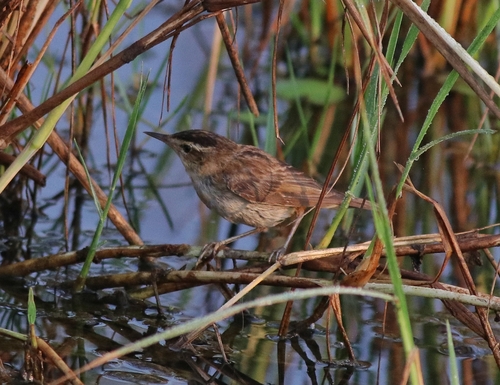 Forapaglie comune
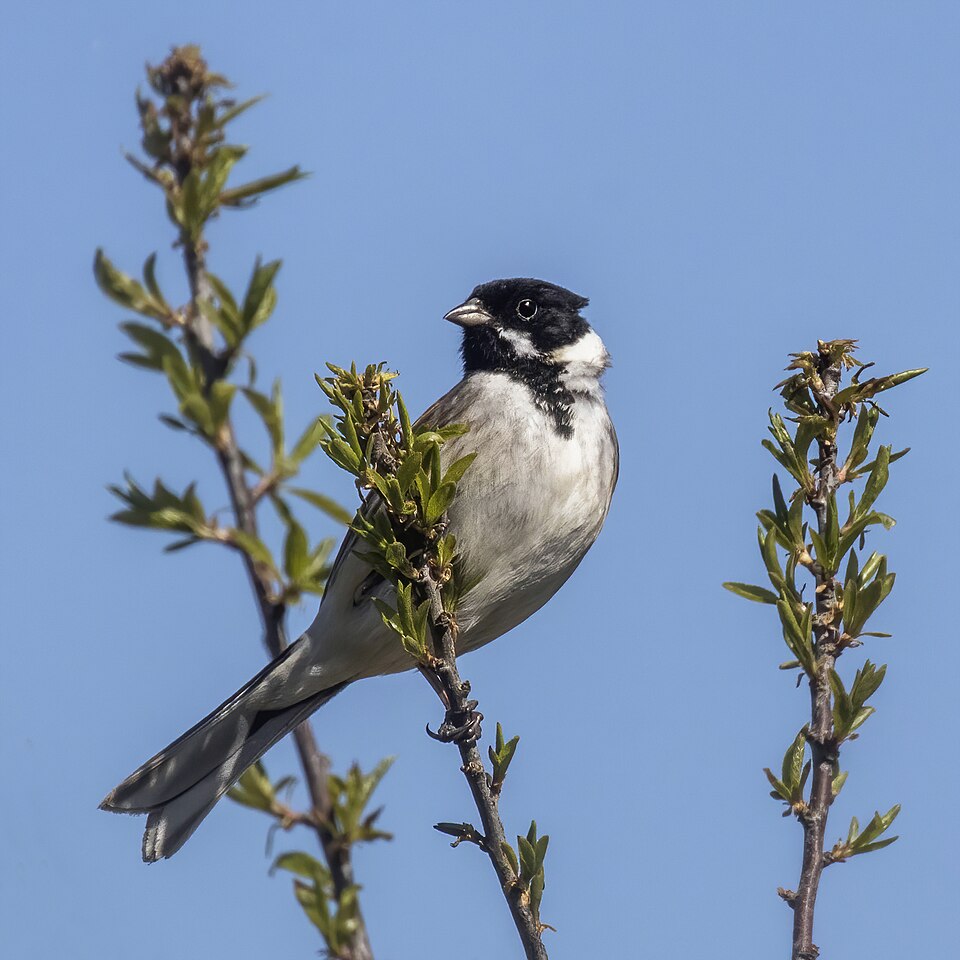 Migliarino di palude
In breve
The most reliable field mark to separate Sedge Warbler from Common Reed Bunting is the prominent pale supercilium (eyebrow) of the Sedge Warbler, which is always present and strong, versus the Reed Bunting's less distinct, often broken supercilium (especially in females and immatures). Sedge Warbler shows a streaked crown and back with a warm, unstreaked rump, while Reed Bunting (especially females and immatures) has a more heavily streaked appearance overall and a less contrasting rump. In flight, neither species shows a bold wing panel or unique upperwing pattern, so focus on head pattern and structure. Bill shape is a strong structural clue: Sedge Warbler has a slender, pointed insect-eater's bill, while Reed Bunting has a short, conical seed-eater's bill. Males in breeding plumage are easy: Reed Bunting males have a black head and throat with a white collar, never shown by Sedge Warbler. Calls and songs differ, but can be subtle if not well-heard.
Consigli di identificazione
- Supercilium (eyebrow): Sedge Warbler always shows a strong, pale supercilium extending well behind the eye; Reed Bunting's is weaker, often broken, especially in females and immatures.
- Bill shape: Sedge Warbler has a slender, pointed bill (insect-eater); Reed Bunting has a short, thick, conical bill (seed-eater). This is diagnostic at close range or in photos.
- Crown and head pattern: Sedge Warbler has a streaked crown with a flattened look; Reed Bunting male (breeding) has a solid black head and throat with a white collar, while females/immatures are streaked but lack the strong supercilium.
- Rump color: Sedge Warbler shows a warm, rufous, unstreaked rump that contrasts with the duller wings; Reed Bunting's rump is less distinct and not as warm or contrasting.
- Back and underparts: Both are streaked brown above, but Sedge Warbler's streaking is finer and more regular; Reed Bunting is more heavily and coarsely streaked, especially below on females and juveniles.
- Breast spots (juveniles): Juvenile Sedge Warblers have dark spots on the breast, which can be a pitfall with Reed Bunting juveniles, but the head pattern (supercilium) remains a better clue.
- Sexual dimorphism: Only Reed Bunting males in breeding plumage show a black head and throat with a white collar; Sedge Warbler sexes look alike.
- Flight behavior: Sedge Warbler may perform song-flights with a parachuting descent and wings held in a 'V'; Reed Bunting rarely does this.
- Perching posture: Reed Bunting often perches upright and still on exposed reeds or wires; Sedge Warbler is more active, flicking wings and tail, and usually stays lower in vegetation.
- Habitat context: In winter, Reed Bunting may be found in open fields or at feeders; Sedge Warbler is absent (migratory) and strictly a summer breeder in reedbeds.
- Vocalizations: Sedge Warbler's song is varied and chattering, often with mimicry; Reed Bunting's is a simple, repetitive phrase. Calls differ: Sedge Warbler's is a rattling 'chirr', Reed Bunting's is thinner.
- Seasonality: Sedge Warbler is present only in spring/summer (migratory); Reed Bunting may be resident or winter visitor, depending on location.
- Overall jizz: Sedge Warbler is smaller, more slender, and more restless; Reed Bunting is bulkier, longer-tailed, and more deliberate in movement.
- Pitfalls: Female and juvenile Reed Buntings are the main confusion risk; always check the supercilium and bill shape. Sedge Warbler never shows a black head or white collar.
- When in doubt: Focus on the combination of strong supercilium, bill shape, and rump color for Sedge Warbler; look for black head (male), conical bill, and upright posture for Reed Bunting.
Taglia
Sedge Warbler is slightly smaller and lighter, measuring 11.5–13 cm in length and about 12 g in weight [wikipedia], while Common Reed Bunting is larger at 13.5–15.5 cm and more variable in mass (10–28 g) [wikipedia]. Reed Bunting often appears bulkier and longer-tailed, especially when perched. However, size overlap is considerable and not reliable as a sole field mark.
Piumaggio
-
Juvenile/immature birds: Sedge Warbler juveniles have dark spots on the breast and a strong pale supercilium, with a streaked crown and back but a warm, unstreaked rump. Reed Bunting juveniles and females are streaked brown overall, with a streaked head and more barring below, but their supercilium is less distinct and often broken behind the eye. Neither species shows a bold wing panel or unique upperwing pattern in flight at any age, so focus on head and rump pattern.
-
Adult males (breeding): Reed Bunting males are unmistakable with a black head and throat, white collar, and heavily streaked brown back. Sedge Warbler never shows a black head or throat, instead having a streaked crown, pale supercilium, and no collar.
-
Adult females/non-breeding: Female Reed Bunting is duller, with a streaked brown head and less distinct supercilium, and more barring below. Sedge Warbler females look like males: strong pale supercilium, streaked crown, warm unstreaked rump, and pale underparts.
-
Flight views: Sedge Warbler shows a warm, unstreaked rump contrasting with duller wings; Reed Bunting's rump is not as distinctly colored or contrasting. Both species have streaked backs, but Sedge Warbler's is finer and more regular.
Comportamento
Sedge Warbler is often seen actively foraging in reeds or low bushes, frequently flicking its wings and tail, and may perform song-flights with a parachuting descent and wings held in a 'V' [wikipedia]. Reed Bunting is more likely to perch upright and still, often on exposed reeds or wires, and feeds both on the ground and in vegetation. Sedge Warbler is more restless and acrobatic; Reed Bunting is steadier and more deliberate in movement.
Habitat
Both species overlap in wetland and reedbed habitats, but Sedge Warbler is more strictly tied to dense reedbeds and wet vegetation during breeding, while Reed Bunting can also be found in drier grassy areas, farmland, and hedgerows, especially outside the breeding season. Reed Bunting is more likely to be seen in open fields and at feeders in winter, whereas Sedge Warbler is a summer visitor and strictly insectivorous.
Voce
Sedge Warbler's song is a fast, varied, chattering jumble with mimicry, often delivered from cover or during song-flights. Its calls are sharp 'chirr' or 'kerr', which can form a rattling alarm. Reed Bunting's song is a simple, repetitive 'srip' or short phrase, less varied and musical than Sedge Warbler. Reed Bunting's calls are thinner and less rattling. Vocalizations are helpful if heard well, but beware of brief or distant songs.
Forapaglie comune · Migliarino di palude · I miei uccelli difficili