

Motmot

Gabbiano di Sabine vs Mignattino comune

Xema sabini contro Chlidonias niger

Fai un quiz con Gabbiano di Sabine e Mignattino comune
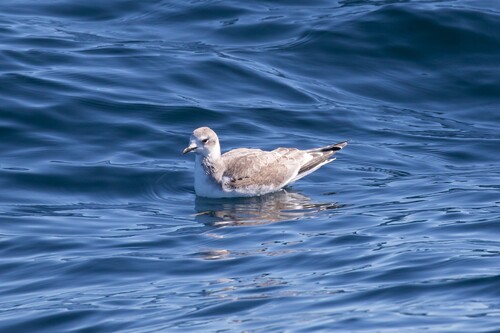
Gabbiano di Sabine (Xema sabini) Gabbiano di Sabine
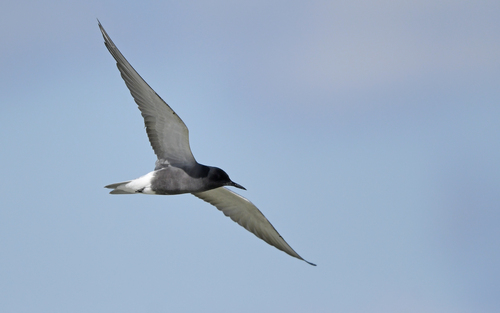
Mignattino comune (Chlidonias niger) Mignattino comune

Media

Caricamento…

In breve

The most reliable field mark to separate Sabine's Gull from Black Tern is the distinctive tricolored upperwing pattern shown by both adult and juvenile Sabine's Gulls in flight: a bold black, white, and gray arrangement that Black Tern never shows. Juvenile Sabine's Gulls also have a black tail band and brownish tones, while Black Tern juveniles have a more uniform, drab upperwing and a square tail. Structurally, Sabine's Gull is chunkier with a slightly forked tail, while Black Tern is slimmer with a short, square tail and a slender, decurved bill. Both species can appear superficially similar at a distance, especially in non-breeding plumage, but careful attention to wing pattern, tail shape, and bill structure will reliably separate them.

Consigli di identificazione

  1. Tricolored upperwing pattern (all ages Sabine's Gull): Look for the bold black, white, and gray (or brown in juveniles) wing pattern in flight. Black Tern never shows this; its upperwing is more uniform and lacks sharp contrasts.
  2. Tail shape (all ages): Sabine's Gull has a slightly forked white tail (with a black band in juveniles), while Black Tern's tail is square and brownish-grey, never forked or banded.
  3. Bill structure: Sabine's Gull has a short, thick bill with a black base and yellow tip; Black Tern's bill is longer, slender, all dark, and slightly decurved. This is best seen at close range or in good light.
  4. Body structure and jizz: Sabine's Gull is chunkier and more gull-like, with longer wings and a heavier build. Black Tern is slimmer, more delicate, and tern-like, with a buoyant, erratic flight.
  5. Juvenile tail band (Sabine's Gull): Juvenile Sabine's Gulls have a distinct black terminal tail band; Black Tern juveniles do not.
  6. Head pattern (breeding adults): Sabine's Gull has a dark gray hood with a narrow black collar; Black Tern has a black head, neck, and belly, with a white face and dark cap. In non-breeding plumage, both become paler, but Sabine's Gull keeps a dark cap and the tricolored wing.
  7. Upperwing in juveniles: Juvenile Sabine's Gull shows brown replacing gray in the tricolored pattern; Black Tern juveniles have drab, pale-edged upperparts without any bold pattern.
  8. Flight style: Black Tern is more erratic and agile, often dipping to the water for insects; Sabine's Gull is steadier, with longer, more pointed wings.
  9. Habitat context: Sabine's Gull is more likely offshore or in Arctic/alpine settings; Black Tern is most often seen over freshwater marshes or lakes, especially in breeding season.
  10. Size: Sabine's Gull is significantly larger and heavier; if seen together, the size difference is obvious, but beware lone birds.
  11. Bill color: Sabine's Gull's bill is bicolored (black with yellow tip), especially in adults; Black Tern's bill is all dark.
  12. Vocalizations: Sabine's Gull gives a high-pitched, squeaky call; Black Tern's call is a sharp "kik." Not usually diagnostic unless birds are vocalizing.
  13. Moult timing: Sabine's Gull juveniles retain juvenile plumage longer and do not start moulting until reaching wintering grounds; Black Tern moults more conventionally.
  14. Association: Sabine's Gull may be seen with other gulls; Black Tern is usually with other terns or alone, rarely with gulls.
  15. Potential confusion: At long range, especially in poor light or non-breeding plumage, both can appear gray and white, but the wing pattern of Sabine's Gull is always the clincher.

Taglia

Sabine's Gull is substantially heavier and larger overall, weighing about 185 g versus the Black Tern's 60 g. It also has a longer wingspan (81–87 cm vs. 61 cm) and is slightly longer in body length (27–33 cm vs. 25 cm). In the field, Sabine's Gull appears more robust and gull-like, while Black Tern is noticeably slighter, more delicate, and tern-like, with a lighter, more buoyant flight.

Piumaggio

Juvenile and immature Sabine's Gulls show a striking tricolored upperwing pattern: black outer primaries, white inner primaries and secondaries, and pale gray (adults) or brown (juveniles) coverts. Juveniles also have a black terminal tail band. In contrast, juvenile Black Terns have a drab upperwing with pale feather-edgings but lack any bold tricolored pattern or tail band; their tail is square and brownish-grey. Adult Sabine's Gulls in breeding plumage have a dark gray hood with a black collar, pale gray back, and a white, slightly forked tail. Adult Black Terns in breeding plumage are mostly black on the head, neck, and belly, with a dark gray back and white forewing, but their tail remains square. In non-breeding plumage, both species become paler, but Sabine's Gull retains its tricolored wing pattern, while Black Tern becomes drab gray with a dark cap and white face. The upperwing pattern is diagnostic for Sabine's Gull in all plumages and ages.

Comportamento

Sabine's Gull typically flies with long, pointed wings and a slightly buoyant, tern-like flight, but is less erratic than Black Tern. Black Tern is agile, with rapid, dynamic wingbeats and erratic flight as it dips and dives for insects or small prey. Sabine's Gull may be seen both inland and offshore, often associating with other gulls, while Black Tern is more often seen over freshwater marshes or, in migration, over coastal waters, rarely associating with gulls.

Habitat

Sabine's Gull breeds in high Arctic tundra and migrates long distances, often seen offshore during migration and wintering at sea. It is occasionally seen inland, but usually in the context of migration. Black Tern breeds in freshwater marshes across temperate North America and Eurasia, and in migration or winter is found in coastal areas or over open water, but is much more closely tied to marshes and inland water during the breeding season. Context can help: a small gull offshore is more likely Sabine's; a small, dark tern over a marsh is likely Black Tern.

Voce

Sabine's Gull gives a very high-pitched, squeaking call. Black Tern's call is a high-pitched "kik"; large flocks can be noisy and even described as 'deafening.' While both are high-pitched, Black Tern's call is sharper and more abrupt, while Sabine's is more squeaky. Voice is rarely diagnostic unless birds are calling actively.

Invia una descrizione migliore

Usa le stesse sezioni del confronto. Il testo viene pubblicato subito.

The most reliable field mark to separate Sabine's Gull from Black Tern is the distinctive tricolored upperwing pattern shown by both adult and juvenile Sabine's Gulls in flight: a bold black, white, and gray arrangement that Black Tern never shows. Juvenile Sabine's Gulls also have a black tail band and brownish tones, while Black Tern juveniles have a more uniform, drab upperwing and a square tail. Structurally, Sabine's Gull is chunkier with a slightly forked tail, while Black Tern is slimmer with a short, square tail and a slender, decurved bill. Both species can appear superficially similar at a distance, especially in non-breeding plumage, but careful attention to wing pattern, tail shape, and bill structure will reliably separate them.

  1. Tricolored upperwing pattern (all ages Sabine's Gull): Look for the bold black, white, and gray (or brown in juveniles) wing pattern in flight. Black Tern never shows this; its upperwing is more uniform and lacks sharp contrasts.
  2. Tail shape (all ages): Sabine's Gull has a slightly forked white tail (with a black band in juveniles), while Black Tern's tail is square and brownish-grey, never forked or banded.
  3. Bill structure: Sabine's Gull has a short, thick bill with a black base and yellow tip; Black Tern's bill is longer, slender, all dark, and slightly decurved. This is best seen at close range or in good light.
  4. Body structure and jizz: Sabine's Gull is chunkier and more gull-like, with longer wings and a heavier build. Black Tern is slimmer, more delicate, and tern-like, with a buoyant, erratic flight.
  5. Juvenile tail band (Sabine's Gull): Juvenile Sabine's Gulls have a distinct black terminal tail band; Black Tern juveniles do not.
  6. Head pattern (breeding adults): Sabine's Gull has a dark gray hood with a narrow black collar; Black Tern has a black head, neck, and belly, with a white face and dark cap. In non-breeding plumage, both become paler, but Sabine's Gull keeps a dark cap and the tricolored wing.
  7. Upperwing in juveniles: Juvenile Sabine's Gull shows brown replacing gray in the tricolored pattern; Black Tern juveniles have drab, pale-edged upperparts without any bold pattern.
  8. Flight style: Black Tern is more erratic and agile, often dipping to the water for insects; Sabine's Gull is steadier, with longer, more pointed wings.
  9. Habitat context: Sabine's Gull is more likely offshore or in Arctic/alpine settings; Black Tern is most often seen over freshwater marshes or lakes, especially in breeding season.
  10. Size: Sabine's Gull is significantly larger and heavier; if seen together, the size difference is obvious, but beware lone birds.
  11. Bill color: Sabine's Gull's bill is bicolored (black with yellow tip), especially in adults; Black Tern's bill is all dark.
  12. Vocalizations: Sabine's Gull gives a high-pitched, squeaky call; Black Tern's call is a sharp "kik." Not usually diagnostic unless birds are vocalizing.
  13. Moult timing: Sabine's Gull juveniles retain juvenile plumage longer and do not start moulting until reaching wintering grounds; Black Tern moults more conventionally.
  14. Association: Sabine's Gull may be seen with other gulls; Black Tern is usually with other terns or alone, rarely with gulls.
  15. Potential confusion: At long range, especially in poor light or non-breeding plumage, both can appear gray and white, but the wing pattern of Sabine's Gull is always the clincher.

Sabine's Gull is substantially heavier and larger overall, weighing about 185 g versus the Black Tern's 60 g. It also has a longer wingspan (81–87 cm vs. 61 cm) and is slightly longer in body length (27–33 cm vs. 25 cm). In the field, Sabine's Gull appears more robust and gull-like, while Black Tern is noticeably slighter, more delicate, and tern-like, with a lighter, more buoyant flight.

Juvenile and immature Sabine's Gulls show a striking tricolored upperwing pattern: black outer primaries, white inner primaries and secondaries, and pale gray (adults) or brown (juveniles) coverts. Juveniles also have a black terminal tail band. In contrast, juvenile Black Terns have a drab upperwing with pale feather-edgings but lack any bold tricolored pattern or tail band; their tail is square and brownish-grey. Adult Sabine's Gulls in breeding plumage have a dark gray hood with a black collar, pale gray back, and a white, slightly forked tail. Adult Black Terns in breeding plumage are mostly black on the head, neck, and belly, with a dark gray back and white forewing, but their tail remains square. In non-breeding plumage, both species become paler, but Sabine's Gull retains its tricolored wing pattern, while Black Tern becomes drab gray with a dark cap and white face. The upperwing pattern is diagnostic for Sabine's Gull in all plumages and ages.

Sabine's Gull typically flies with long, pointed wings and a slightly buoyant, tern-like flight, but is less erratic than Black Tern. Black Tern is agile, with rapid, dynamic wingbeats and erratic flight as it dips and dives for insects or small prey. Sabine's Gull may be seen both inland and offshore, often associating with other gulls, while Black Tern is more often seen over freshwater marshes or, in migration, over coastal waters, rarely associating with gulls.

Sabine's Gull breeds in high Arctic tundra and migrates long distances, often seen offshore during migration and wintering at sea. It is occasionally seen inland, but usually in the context of migration. Black Tern breeds in freshwater marshes across temperate North America and Eurasia, and in migration or winter is found in coastal areas or over open water, but is much more closely tied to marshes and inland water during the breeding season. Context can help: a small gull offshore is more likely Sabine's; a small, dark tern over a marsh is likely Black Tern.

Sabine's Gull gives a very high-pitched, squeaking call. Black Tern's call is a high-pitched "kik"; large flocks can be noisy and even described as 'deafening.' While both are high-pitched, Black Tern's call is sharper and more abrupt, while Sabine's is more squeaky. Voice is rarely diagnostic unless birds are calling actively.

Scartare le modifiche?

Hai modifiche non salvate. Se esci ora, andranno perse.

Gabbiano di Sabine · Mignattino comune · I miei uccelli difficili