

Russet-mantled Foliage-gleaner vs Buff-fronted Foliage-gleaner
Syndactyla dimidiata contro Dendroma rufa
Fai un quiz con Russet-mantled Foliage-gleaner e Buff-fronted Foliage-gleaner
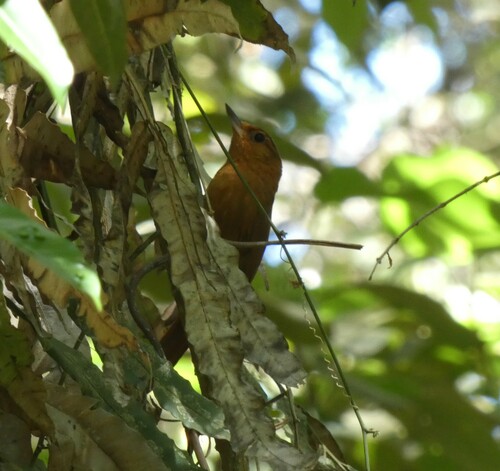 Russet-mantled Foliage-gleaner
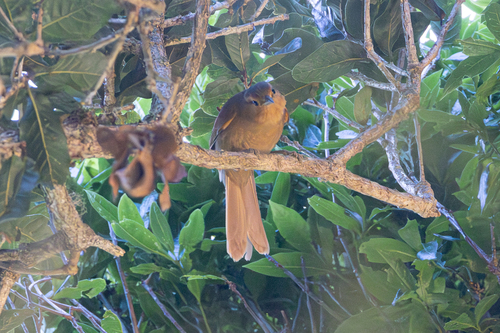 Buff-fronted Foliage-gleaner
In breve
Il segno di campo più affidabile tra il Russet-mantled (Planalto) Foliage-gleaner e il Buff-fronted Foliage-gleaner è la colorazione della testa e delle parti superiori: il Russet-mantled mostra un volto di un ricco arancione rufescente e una corona e un dorso di un brillante marrone rufescente, mentre il Buff-fronted ha una fronte e un supercilium distintivi color ocra (buff) messi in risalto contro una corona e un dorso grigio bruno opaco. Il giovane Russet-mantled può mostrare una gola biancastra e un petto barrato di marrone, mentre il giovane Buff-fronted ha una fronte buff più stretta e una corona più chiara. Entrambe le specie hanno toni rufeschi nelle ali e nella coda, ma la distribuzione e l'intensità differiscono. La struttura è simile, ma il Buff-fronted è leggermente più grande e massiccio. Usa il motivo della testa e il colore delle parti superiori come tua separazione primaria, specialmente in uccelli posati o in movimento lento.
Consigli di identificazione
- Il motivo della testa è fondamentale: Il Russet-mantled ha un volto di un ricco arancione rufescente con un colore più profondo sul supercilium e copritrici auricolari più scure, che si fondono in una brillante corona marrone rufescente. Il Buff-fronted ha una fronte e un supercilium ampi color ocra (buff), nettamente messi in risalto rispetto a una corona e un dorso grigio bruno opaco.
- Colore della corona e del dorso: Il Russet-mantled è di un brillante marrone rufescente con una sfumatura di cannella sulla corona e sulle parti superiori; il Buff-fronted è di un grigio bruno opaco sulla corona e sul dorso superiore, diventando marrone ocra sul dorso inferiore e sul coda.
- Segni giovanili: Il giovane Russet-mantled mostra una gola biancastra e un petto barrato di marrone (unico tra questi due), mentre il giovane Buff-fronted ha una fronte buff più stretta, una corona più chiara e parti inferiori più scure e rufescenti ma senza barrature sul petto.
- Struttura del becco: Il giovane Russet-mantled ha un becco notevolmente più corto rispetto agli adulti, il che potrebbe farlo sembrare meno robusto rispetto al Buff-fronted alla stessa età.
- Colorazione delle ali: Le ali del Russet-mantled sono di un marrone rufescente scuro con bordi più chiari sulle primarie; le ali del Buff-fronted sono per lo più di un rufous brillante con copritrici primarie più scure. In volo, il Buff-fronted può mostrare un maggiore contrasto tra l'ala rufesca e il dorso più opaco.
- Colore della coda: Il Russet-mantled ha una coda color rufous-castagna; la coda del Buff-fronted è di un marrone rufous opaco con punte delle penne appuntite. La differenza è sottile ma può essere utile se vista bene.
- Parti inferiori: Le parti inferiori del Russet-mantled sono di un rufous ocra con sottili striature chiare sul petto e una sfumatura olivastra sui fianchi; la gola e il petto del Buff-fronted sono di un ocra luminoso, sfumando in un ocra più opaco sull'addome e sui fianchi, senza striature o sfumature olivastre.
- Supercilium: Il supercilium del Buff-fronted è ampio e ocra, molto evidente; quello del Russet-mantled è rufescente e si fonde di più con il resto del volto.
- Copritrici auricolari: Le copritrici auricolari del Russet-mantled sono di un rufescente più scuro; quelle del Buff-fronted sono ocra, in abbinamento con il supercilium e la fronte.
- Contesto dell'habitat: Se ti trovi al di fuori del planalto brasiliano meridionale o del Paraguay orientale, il Buff-fronted è molto più probabile. Nella regione del planalto/cerrado, entrambe sono possibili, ma il Russet-mantled è raro e sensibile alle perturbazioni.
- Comportamento: Entrambi si nutrono in modi simili, quindi il comportamento non è un forte separatore.
- Voce: Se senti una serie di 'tsjek' che sale lentamente come una piccola moto, favorisci il Russet-mantled. Altrimenti, la voce non è un separatore affidabile senza ulteriori dettagli per il Buff-fronted.
- Dimensioni: Il Buff-fronted è leggermente più grande e massiccio, ma la differenza è sottile e non affidabile senza un confronto diretto.
- Sessi: Entrambe le specie sono sessualmente monomorfiche nel piumaggio, quindi il sesso non è un separatore.
- Trappole: Non fare affidamento solo sui toni rufeschi complessivi: il Buff-fronted può sembrare piuttosto rufesco nelle ali e nella coda, ma la testa e il dorso superiore sono sempre più opachi e contrastanti con la fronte buff, a differenza della testa e del dorso più uniformemente rufescenti del Russet-mantled.
Taglia
Il Buff-fronted Foliage-gleaner è leggermente più grande (18–19 cm, 25–36 g) rispetto al Russet-mantled (circa 17 cm, 27–32 g), ma la sovrapposizione è considerevole e la dimensione da sola non è affidabile sul campo. Entrambi sono foliage-gleaners di dimensioni medie o grandi, ma il Buff-fronted può apparire un po' più massiccio nel complesso. La lunghezza del becco non è notevolmente diversa, tranne per il fatto che il giovane Russet-mantled ha un becco più corto rispetto agli adulti, il che potrebbe farli sembrare leggermente meno robusti rispetto al Buff-fronted.
Piumaggio
- Giovani: Il giovane Russet-mantled Foliage-gleaner ha un becco più corto, una gola biancastra e barre marroni sul petto, che è unico tra questi due; il giovane Buff-fronted ha una fronte buff più stretta, una corona più chiara e parti inferiori più scure e rufescenti ma manca della barra sul petto e della gola biancastra.
- Adulti: Il Russet-mantled ha un volto di un ricco arancione rufescente (soprattutto sul supercilium), una corona e parti superiori di un brillante marrone rufescente, e una coda color rufous-castagna. Le sue ali sono di un marrone rufescente scuro con bordi più chiari. Le parti inferiori sono di un rufous ocra con sottili striature chiare sul petto e una sfumatura olivastra sui fianchi. Il Buff-fronted ha una fronte e un supercilium ampi color ocra (buff), una corona e un dorso superiore grigio bruno opaco, un dorso inferiore e un coda marrone ocra, e una coda marrone rufous opaca con punte appuntite. Le sue ali sono di un rufous brillante con copritrici primarie più scure. Le parti inferiori sono di un ocra luminoso sulla gola e sul petto, sfumando in un ocra più opaco sull'addome e sui fianchi. Il motivo della testa è più contrastante nel Buff-fronted, con una chiara fronte buff e supercilium, mentre il Russet-mantled è più uniformemente rufescente in tutta la testa e il dorso.
Comportamento
Entrambe le specie si nutrono nel sottobosco e nel piano medio della foresta, spesso in coppie o come parte di stormi misti. Il Russet-mantled è più spesso visto in coppie e raramente in foreste disturbate, mentre il Buff-fronted è anche una specie del sottobosco forestale ma potrebbe essere più adattabile a una gamma di tipi di foresta. Il comportamento di foraggiamento è simile: raccogliere da rami ed epifite. Non si nota una separazione comportamentale significativa nelle fonti.
Habitat
Il Russet-mantled Foliage-gleaner è limitato al planalto brasiliano meridionale e al Paraguay orientale adiacente, abitante di foreste tropicali sempreverdi di pianura, foreste galleria e boschi all'interno del cerrado, generalmente da 100 a 1.200 m di altitudine. È raro e sensibile alle perturbazioni. Il Buff-fronted Foliage-gleaner è più diffuso nei Neotropici e può essere trovato in una gamma più ampia di habitat forestali, comprese le foreste montane e di pianura, e non è così strettamente legato al planalto o al cerrado. Se ti trovi nel Brasile centrale o meridionale o nel Paraguay orientale in foresta non disturbata, entrambe sono possibili, ma il Buff-fronted è molto più diffuso altrove.
Voce
Il canto del Russet-mantled è descritto come una breve o molto lunga serie di note 'tsjek', ascendenti e che iniziano/finiscono con un po' di balbettio, paragonato a una piccola moto che parte lentamente. Il suo richiamo di contatto è un forte 'cheh', singolo o raddoppiato. Non viene fornita una descrizione vocale dettagliata per il Buff-fronted nelle note, quindi la voce non è un separatore affidabile a meno che tu non conosca il distintivo canto 'motorbike' del Russet-mantled.
Russet-mantled Foliage-gleaner · Buff-fronted Foliage-gleaner · I miei uccelli difficili