
Red-footed Booby vs Sula fosca
Sula sula contro Sula leucogaster
Fai un quiz con Red-footed Booby e Sula fosca
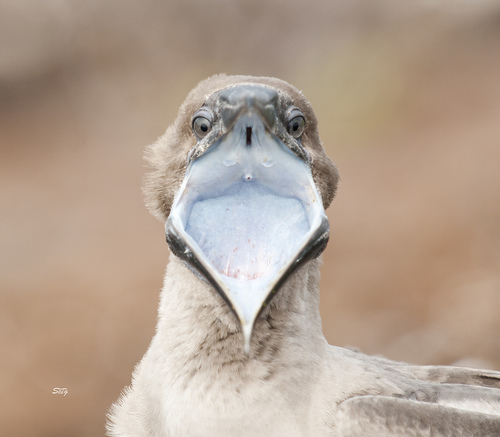 Red-footed Booby
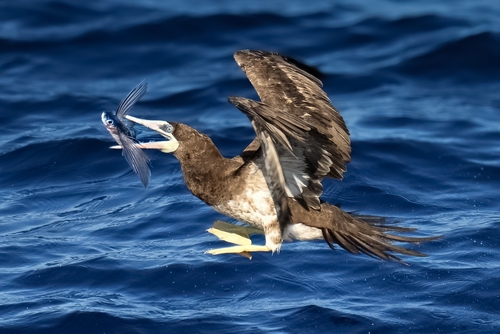 Sula fosca
In breve
Il segno distintivo più affidabile per separare il Red-footed Booby dal Sula fosca in tutte le piumature adulte è il colore dei piedi: il Red-footed Booby ha sempre piedi rossi brillanti, mentre il Sula fosca ha piedi opachi, non rossi. Gli uccelli giovanili e immaturi sono più complicati, ma i giovani Red-footed Booby hanno gambe di un rosa pallido, mentre i giovani Sula fosca hanno gambe opache. In volo, il Red-footed Booby adulto (morfologia bianca) mostra ali superiori bianche con penne volanti nere, mentre il Sula fosca ha sempre ali superiori marroni scure con un ventre bianco. Anche la struttura e le dimensioni aiutano: il Sula fosca è notevolmente più pesante e massiccio, con una corporatura più robusta. Entrambe le specie possono variare nella piumatura, quindi è essenziale prestare attenzione al colore delle parti nude e al motivo delle ali, specialmente per gli immaturi.
Consigli di identificazione
- Il colore dei piedi è diagnostico negli adulti: Il Red-footed Booby ha sempre piedi rossi brillanti in tutte le piumature e morfologie adulte. Il Sula fosca non ha mai piedi rossi; i loro piedi sono opachi e poco notevoli. Questo è il segno distintivo più affidabile.
- Colorazione delle parti nude: Gli adulti Red-footed Booby hanno un becco e una sacca della gola rosa e blu, mentre il Sula fosca ha un becco affilato ma manca della colorazione rosa/blu. I maschi del Sula fosca hanno un anello orbitale blu, le femmine uno giallo.
- Colore delle gambe giovanili: I giovani Red-footed Booby hanno gambe di un rosa pallido, mentre i giovani Sula fosca hanno gambe opache, non rosa. Questo può aiutare con gli uccelli immaturi.
- Contrasto della piumatura (adulti): Il Sula fosca mostra sempre un forte contrasto tra le parti superiori marroni scure (testa, collo, schiena, ali) e un ventre bianco pulito e un petto inferiore bianco. Il Red-footed Booby (morfologia bianca) è per lo più bianco con penne volanti nere; le morfologie marroni sono complessivamente marroni ma possono mostrare bianco sul dorso, sul ventre o sulla coda a seconda della morfologia.
- Ali superiori giovanili/immaturi: I giovani Sula fosca hanno ali superiori grigio-marroni con testa e coda più scure, e macchie marroni sulle parti inferiori bianche. I giovani Red-footed Booby sono più uniformemente marroni con ali più scure, mancando del forte contrasto marrone-su-bianco.
- Colore della coda: Il Red-footed Booby morfologia bianca ha una coda bianca; la morfologia bianca con coda nera ha una coda nera (può essere confusa con il Masked/Nazca Booby, non con il Sula fosca). Il Sula fosca ha sempre una coda scura.
- Forma e colore del becco: Entrambi hanno becchi appuntiti, ma quello del Red-footed Booby è rosa e blu, mentre quello del Sula fosca è più opaco e affilato, senza colorazione rosa/blu.
- Dimensioni e struttura: Il Sula fosca è più pesante e massiccio, con una corporatura più robusta e ali più corte, risultando in una frequenza di battito più veloce. Il Red-footed Booby è più piccolo, più snello, e appare più agile in volo.
- Stile di volo: Il Red-footed Booby è più agile ed efficiente in aria, mentre il Sula fosca ha un battito più veloce e diretto a causa delle ali più corte.
- Comportamento di nidificazione: Il Red-footed Booby spesso nidifica sugli alberi, mentre il Sula fosca nidifica a terra o su scogliere basse. Nidificare sugli alberi è un forte indizio per il Red-footed Booby.
- Contesto dell'habitat: Il Sula fosca è più probabile che venga visto sopra le acque costiere ed è generalmente più comune e diffuso. Il Red-footed Booby preferisce isole remote ed è meno probabile che venga visto vicino a zone popolate.
- Dimorfismo sessuale: Il Sula fosca mostra un certo dimorfismo sessuale nel colore dell'anello orbitale (blu nei maschi, giallo nelle femmine); i sessi del Red-footed Booby sono simili nella piumatura e nelle parti nude.
- Vocalizzazioni: Non è una separazione affidabile; il Sula fosca può grugnire o quackare, ma entrambi sono generalmente silenziosi.
- Trappole: Attenzione ai morfismi marroni del Red-footed Booby, che possono apparire simili al Sula fosca ma mostreranno sempre piedi rossi e diversa colorazione del becco. I giovani Sula fosca possono essere confusi con gli immaturi Red-footed Booby, ma il colore delle gambe e del becco, così come il motivo del marrone su bianco, sono fondamentali.
- Quando in dubbio: Concentrati prima sul colore dei piedi e del becco, poi controlla la nitidezza del contrasto marrone/bianco sul corpo e la posizione del nido se visibile.
Taglia
Il Sula fosca è nettamente più grande e pesante del Red-footed Booby. Il Sula fosca pesa in media circa 1266,5 g, rispetto ai 998 g del Red-footed Booby. Le femmine del Sula fosca possono raggiungere fino a 80 cm di lunghezza e 150 cm di apertura alare, mentre il Red-footed Booby è più piccolo, con circa 70 cm di lunghezza e fino a 152 cm di apertura alare. La differenza di massa e volume è spesso visibile sul campo, con il Sula fosca che appare più robusto e solido, mentre il Red-footed Booby è più snello e agile.
Piumaggio
Uccelli giovanili e immaturi: i giovani Sula fosca assomigliano già agli adulti, con parti superiori grigio-marroni, testa e ali più scure, e parti inferiori pesantemente macchiate di marrone su bianco. Le loro gambe sono opache, mai brillanti. I giovani Red-footed Booby sono complessivamente marroni con ali più scure e gambe di un rosa pallido, mancando del forte contrasto marrone-su-bianco del Sula fosca.
Adulti: Il Red-footed Booby è altamente variabile, con più morfologie. La morfologia bianca è per lo più bianca con penne volanti nere, a volte con una sfumatura giallastra sulla testa. La morfologia marrone è complessivamente marrone, ma la morfologia marrone con coda bianca ha un ventre, un dorso e una coda bianchi. Tutti gli adulti Red-footed Booby hanno piedi rossi brillanti e un becco/sacca della gola rosa e blu. Gli adulti Sula fosca hanno una testa, un collo e parti superiori marroni scure nettamente demarcati, con un ventre e un petto inferiore bianchi puliti in contrasto. Le loro parti nude non sono rosse; i maschi hanno un anello orbitale blu, le femmine uno giallo. Il becco è affilato e le ali sono corte e appuntite.
In volo, il contrasto tra le parti superiori scure e il ventre bianco del Sula fosca è sorprendente, mentre il Red-footed Booby (morfologia bianca) mostra un uccello per lo più bianco con penne volanti nere, e le morfologie marroni sono complessivamente marroni ma possono mostrare bianco sulla coda e sul ventre a seconda della morfologia.
Comportamento
Il Red-footed Booby è agile in volo, utilizzando il vento in modo efficiente, ma è goffo durante il decollo e l'atterraggio. Spesso nidifica sugli alberi e si nutre catturando pesci volanti o immergendosi poco. Il Sula fosca è gregario, si sposta e si nutre a bassa altezza sopra le acque costiere, con una frequenza di battito veloce a causa delle sue ali più corte. Entrambe le specie sono nidificanti coloniali, ma il Red-footed Booby è più probabile che venga visto appollaiato sugli alberi, mentre il Sula fosca è più spesso visto a terra o su rocce basse.
Habitat
Entrambe le specie sono diffuse negli oceani tropicali e spesso si sovrappongono nel loro areale. Il Red-footed Booby nidifica principalmente su isole remote, nidificando frequentemente sugli alberi, il che riduce la predazione. Il Sula fosca è più comune e diffuso, spesso trovato sopra le acque costiere e nidificando a terra o su scogliere basse. Se vedi un booby nidificare in un albero, è quasi certamente un Red-footed Booby; i nidificatori a terra in colonie miste sono più probabilmente Sula fosca, specialmente su isole accessibili.
Voce
Entrambe le specie sono generalmente silenziose, ma il Sula fosca può occasionalmente emettere suoni di grugnito o quack. Il Red-footed Booby non è noto per vocalizzazioni distintive nelle fonti fornite, quindi la voce non è un segno distintivo affidabile per la separazione.