

Avocetta vs Piovanello comune
Recurvirostra avosetta contro Calidris ferruginea
Fai un quiz con Avocetta e Piovanello comune
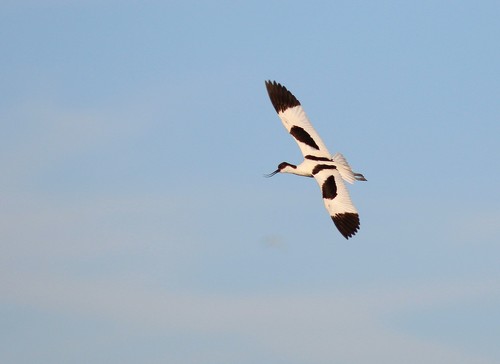 Avocetta
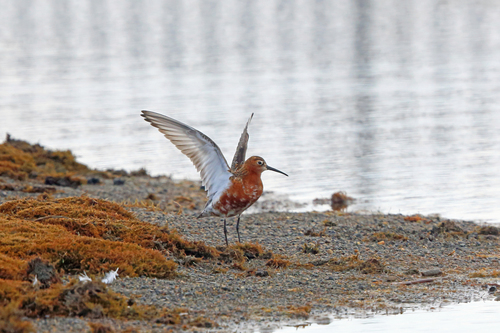 Piovanello comune
In breve
Il segno distintivo più affidabile per separare l'Avocetta dal Piovanello comune è la struttura complessiva: l'Avocetta è molto più grande, con lunghe gambe blu e un becco straordinariamente lungo, sottile e fortemente ricurvo, mentre il Piovanello comune è un uccello limicolo piccolo e compatto con un becco più corto, ricurvo e gambe scure. In volo, l'Avocetta mostra ali audaci in bianco e nero con spalle e punte delle ali nere, mentre il Piovanello comune ha una striscia bianca sull'ala e un evidente sottocoda bianco. I Piovanelli comuni giovani e non in riproduzione sono particolarmente soggetti a confusione, ma la dimensione, la forma del becco e il netto motivo in bianco e nero dell'Avocetta sono sempre distintivi. Se vedi un limicolo in bianco e nero con un becco ricurvo, è un'Avocetta; se l'uccello è più piccolo, con una striscia bianca sull'ala e un sottocoda bianco, e manca del netto motivo in bianco e nero, è un Piovanello comune.
Consigli di identificazione
- La dimensione è il primo controllo: L'Avocetta è quasi due volte più lunga e tre volte più pesante del Piovanello comune. Se l'uccello è grande e si distingue tra gli altri limicoli, sospetta l'Avocetta.
- La forma del becco è diagnostica: Il becco dell'Avocetta è estremamente lungo, sottile e fortemente ricurvo. Il becco del Piovanello comune è molto più corto, snodato e ricurvo (verso il basso), mai ricurvo. Questo è visibile anche da lontano.
- Colore e lunghezza delle gambe: L'Avocetta ha lunghe gambe blu che si estendono ben oltre la coda in volo e sono evidenti quando si muove nell'acqua. Il Piovanello comune ha gambe corte, grigio scuro o nere che non si estendono mai oltre la coda in volo.
- Schema di volo e segni sulle ali (tutte le età): L'Avocetta in volo mostra ali audaci in bianco e nero con spalle e punte delle ali nere, e una coda bianca. Il Piovanello comune mostra una striscia bianca sull'ala e un sottocoda bianco brillante, senza spalle o cappello nero.
- Confusione giovanile: L'Avocetta giovane, sebbene più opaca, ha ancora il motivo in bianco e nero e il becco ricurvo. Il Piovanello comune giovane è squamoso sopra con toni color sabbia, bianco sotto, e mostra sempre la striscia bianca sull'ala e il sottocoda in volo.
- Schema della testa: L'Avocetta ha un cappello nero solido che si estende fino alla nuca; il Piovanello comune ha un supercilio bianco (sopracciglio) e una corona più maculata o semplice, mai un cappello nero solido.
- Forma del corpo e postura: L'Avocetta sta alta, con collo e gambe lunghi, e appare spesso elegante e dritta. Il Piovanello comune è compatto, accovacciato e si muove rapidamente.
- Stagionalità del piumaggio: L'Avocetta non mostra cambiamenti stagionali nel piumaggio; è sempre in bianco e nero. Il Piovanello comune è grigio uniforme sopra e bianco sotto in inverno, rossastro sotto in stagione di riproduzione, ma mai in bianco e nero.
- Coda e sottocoda in volo: La coda dell'Avocetta è bianca, le gambe si estendono ben oltre. Il sottocoda del Piovanello comune è bianco brillante, spesso visibile come un lampo in volo, e la coda è grigio chiaro.
- Comportamento alimentare: L'Avocetta muove il suo becco da lato a lato nell'acqua bassa; il Piovanello comune esplora con il suo becco, raccogliendo dalla superficie o dal fango.
- Contesto dell'habitat: Se l'uccello si trova in una colonia densa o in una laguna salmastra aperta, è più probabile che sia un'Avocetta. Su fanghi di marea con altri piccoli limicoli, il Piovanello comune è tipico.
- Associazione di gruppo: L'Avocetta forma spesso colonie o gruppi sciolti, a volte con sterne e gabbiani. Il Piovanello comune è solitamente in stormi misti di piccoli limicoli.
- Il dimorfismo sessuale non è utile sul campo: Entrambe le specie hanno sottili differenze sessuali, ma queste non sono affidabili per l'identificazione sul campo.
- Colore dell'iride (viste ravvicinate): I maschi di Avocetta hanno iridi marrone rossiccio, le femmine marrone nocciola; il Piovanello comune ha iridi marrone scuro. Utile solo a distanza molto ravvicinata.
- Quando hai dubbi, concentrati su becco e schema delle ali: Anche se il piumaggio è usurato o opaco, il becco ricurvo dell'Avocetta e le ali in bianco e nero sono unici. La striscia bianca dell'ala e il sottocoda del Piovanello comune, e il becco ricurvo, non sono mai abbinati dall'Avocetta.
Taglia
L'Avocetta è un grande limicolo, misurando 42–46 cm di lunghezza con un'apertura alare di 67–77 cm e un peso di 267–382 g [wikipedia][avonet]. Il Piovanello comune è molto più piccolo, lungo 18–23 cm, apertura alare 38–46 cm, e peso 44–117 g [wikipedia][avonet]. L'Avocetta è quasi due volte più lunga e tre volte più pesante del Piovanello comune. Anche da lontano, la dimensione e le lunghe gambe dell'Avocetta sono evidenti rispetto al compatto e corto Piovanello comune.
Piumaggio
- Uccelli giovani/immaturi in volo: I giovani dell'Avocetta hanno copritrici delle ali grigie sporche e dorso/scapolari vermicolati con marrone rossiccio, ma mostrano ancora il netto motivo in bianco e nero delle ali, specialmente spalle e punte nere. I giovani del Piovanello comune sono squamosi sopra con frange color sabbia, un sottocoda bianco e una striscia bianca sull'ala; in volo, la striscia bianca sull'ala e il sottocoda bianco sono chiave, senza spalle o cappello nero.
- Adulti in volo: Gli adulti dell'Avocetta mostrano un cappello nero straordinario, spalle e punte nere, e bianco altrove sull'ala e sulla coda; le gambe si estendono ben oltre la coda. Gli adulti del Piovanello comune in piumaggio non riproduttivo sono grigi uniformi sopra, bianchi sotto, con un supercilio bianco, sottocoda bianco e striscia bianca sull'ala. In piumaggio di riproduzione, il Piovanello comune è rossastro sotto ma mostra ancora la striscia bianca sull'ala e il sottocoda in volo.
- A terra: L'Avocetta è audacemente in bianco e nero con un cappello nero e un becco ricurvo; il Piovanello comune è grigio uniforme sopra e bianco sotto in inverno, o rossastro sotto in estate, con un becco ricurvo e un supercilio bianco. Il giovane Piovanello comune è squamoso e con toni color sabbia sopra, mai in bianco e nero.
Comportamento
L'Avocetta si nutre spesso muovendo il suo becco ricurvo da lato a lato attraverso l'acqua bassa, a volte in piccoli gruppi, ed è tipicamente vista mentre si muove in lagune aperte o paludi. Sta alta e cammina con lunghe falcate. Il Piovanello comune si nutre esplorando nel fango con un passo più tipico da limicolo, spesso in stormi misti con altri piccoli limicoli, e si muove con passi più brevi e veloci. Il comportamento alimentare e la postura dell'Avocetta sono più aggraziati e deliberati, mentre il Piovanello comune è più attivo e meno appariscente.
Habitat
L'Avocetta predilige lagune costiere, paludi salmastre e acque salmastre poco profonde, spesso in aree aperte e non vegetate. Si trova di solito in colonie o gruppi sciolti. Il Piovanello comune è un migratore a lungo raggio, trovato su fanghi di marea, saline e coste estuarine durante la migrazione e l'inverno. Anche se entrambi possono sovrapporsi sui fanghi, l'Avocetta è più legata a lagune salmastre e paludi, e la sua presenza in ampie aree d'acqua aperta è distintiva. Il Piovanello comune è raramente trovato nelle stesse colonie dense e aperte dell'Avocetta.