

Pale Thrush vs Cesena fosca
Turdus pallidus contro Turdus eunomus
Fai un quiz con Pale Thrush e Cesena fosca
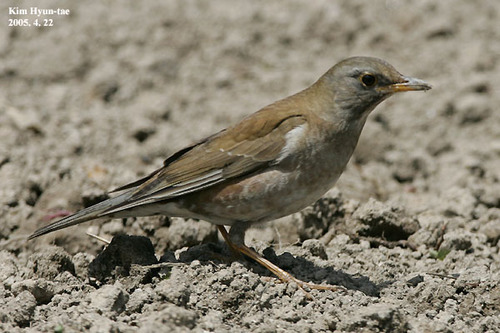 Pale Thrush
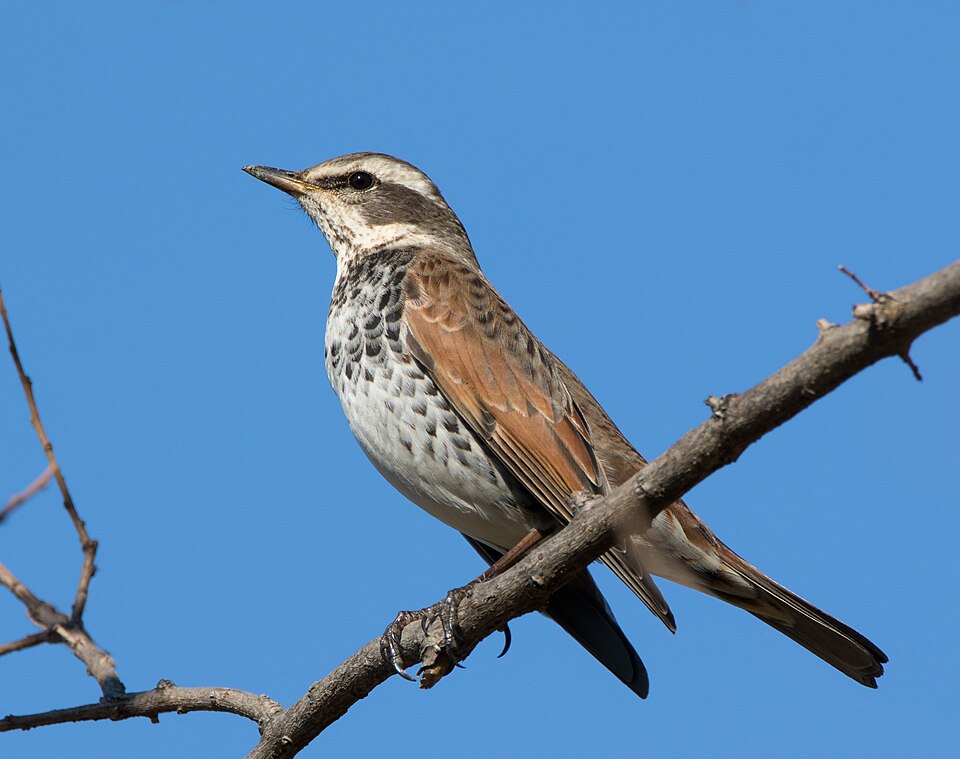 Cesena fosca
In breve
Il segno distintivo più affidabile tra Pale Thrush e Cesena fosca è il colore dell'ala inferiore: Pale Thrush mostra copritrici dell'ala inferiore grigie o bianche, mentre la Cesena fosca ha ali inferiori di un marrone rossiccio distintivo. In tutte le livree, la Cesena fosca si distingue per il suo volto, petto e fianchi neri audaci, e un ventre bianco nitido, mentre il Pale Thrush è complessivamente più semplice con una testa blu-grigia (maschio) e parti inferiori marroni più uniformi. Entrambe le specie sono simili per dimensioni e struttura, ma la Cesena fosca tende a sembrare più robusta e con segni più contrastanti, specialmente negli adulti. Gli uccelli immaturi di entrambe le specie sono più opachi, ma la Cesena fosca mostra ancora un modello facciale più forte. Usa il colore dell'ala inferiore e il modello facciale come tuoi primi controlli, specialmente in volo o quando le viste sono brevi.
Consigli di identificazione
- Colore dell'ala inferiore in volo: La Cesena fosca mostra ali inferiori marroni rossicci, mentre il Pale Thrush ha copritrici dell'ala inferiore grigie o bianche. Questo è il segno migliore quando gli uccelli si alzano in volo o volano sopra (tutte le età).
- Modello facciale: La Cesena fosca ha un audace supercilium chiaro e forti segni neri sul volto, specialmente negli adulti. Il Pale Thrush ha un volto molto più semplice, con solo un contrasto sottile anche nei maschi.
- Segni sul petto e sui fianchi: La Cesena fosca ha macchie nere audaci sul petto e sui fianchi, dando un aspetto notevolmente patternato. Il Pale Thrush è più uniforme, con parti inferiori marroni chiare e fianchi solo leggermente più scuri.
- Ventre e sottocoda: Entrambe le specie hanno ventri e copritrici della sottocoda bianche, ma il contrasto è più netto nella Cesena fosca a causa delle parti superiori scure e delle macchie sui fianchi.
- Colore della schiena e del coda: La Cesena fosca ha una schiena e un coda marrone scuro, mentre il Pale Thrush è marrone sopra con una testa e una gola blu-grigia nei maschi.
- Colore della testa e della gola: I maschi di Pale Thrush hanno una testa e una gola blu-grigia, un segno sottile ma utile a distanza ravvicinata. Le femmine sono più marroni ma mancano ancora del forte modello facciale della Cesena fosca.
- Modello della coda: Il Pale Thrush ha piume della coda grigie scure con punte bianche sulle piume esterne, ma questo è sottile e non sempre visibile.
- Becco e piedi: Il Pale Thrush ha una mandibola superiore grigia e una mandibola inferiore gialla, e piedi di un rosa-marrone chiaro. Questi sono segni minori e richiedono viste ravvicinate.
- Contrasto generale: La Cesena fosca appare più contrastante e audacemente segnata, specialmente sulla testa e sulle parti inferiori. Il Pale Thrush è più morbido e più uniforme nel tono.
- Uccelli immaturi: I giovani Cesena fosca sono più opachi ma mostrano ancora un supercilium chiaro e qualche modello facciale; i Pale Thrush immaturi rimangono semplici e mancano di segni forti.
- Struttura: La Cesena fosca è descritta come più robusta e più simile a una cesena, ma questo è sottile e facilmente trascurabile.
- Differenze sessuali: Le femmine di Pale Thrush sono più opache dei maschi ma mancano ancora del forte modello facciale e del petto della Cesena fosca.
- Habitat e contesto: Non è affidabile per la separazione in aree di sovrapposizione; entrambe le specie utilizzano habitat simili in inverno.
- Vocalizzazioni: Non diagnostiche sul campo; entrambe le specie hanno richiami e canti tipici del genere Turdus.
- Trappole: Fai attenzione agli esemplari di Cesena fosca opachi o immaturi, che possono sembrare meno contrastanti ma mostrano ancora l'ala inferiore rossiccia e il supercilium chiaro. Controlla sempre prima il colore dell'ala inferiore e il modello facciale.
Taglia
Entrambe le specie sono tordi di dimensioni medie, con il Pale Thrush che pesa circa 70 g [wikidata]. La Cesena fosca è descritta come robusta e simile a una piccola cesena, ma non viene fornito un peso preciso. Sul campo, la dimensione da sola non è un separatore affidabile tra queste due, poiché si sovrappongono considerevolmente.
Piumaggio
Per tutte le età, l'ala inferiore è un separatore chiave: il Pale Thrush ha copritrici dell'ala inferiore grigie o bianche, mentre la Cesena fosca mostra ali inferiori marroni rossicci. I maschi adulti di Pale Thrush sono marroni sopra con una testa e una gola blu-grigia, parti inferiori marroni chiare, e un ventre e una sottocoda bianchi; le femmine sono più opache con una testa più marrone e una gola chiara. Gli adulti di Cesena fosca hanno una schiena e un coda marrone scuro, un volto, un petto e macchie sui fianchi nere audaci, e un ventre e una sottocoda bianchi. Entrambi i sessi di Cesena fosca mostrano un supercilium chiaro. I giovani Cesena fosca hanno un patterning più debole ma mantengono ancora il supercilium chiaro e qualche contrasto facciale, mentre i Pale Thrush immaturi sono complessivamente più semplici. La coda del Pale Thrush è grigia scura con punte bianche sulle piume esterne, un segno sottile che è meno ovvio rispetto al contrasto generale nella Cesena fosca. In volo, l'ala inferiore rossiccia della Cesena fosca è spesso visibile, mentre il Pale Thrush manca di questa caratteristica.
Comportamento
Entrambe le specie si comportano come tipici tordi del genere Turdus, spesso foraggiando a terra o in vegetazione bassa. La Cesena fosca può apparire più robusta e più eretta, simile a una piccola cesena, ma le differenze comportamentali sono sottili e non affidabili per la separazione sul campo.
Habitat
Entrambe le specie si trovano in aree di svernamento sovrapposte nell'Asia orientale, frequentando boschi aperti, parchi e aree cespugliose. L'habitat non è un separatore affidabile dove le aree si sovrappongono, anche se l'areale di nidificazione della Cesena fosca si estende ulteriormente a nord e a est.
Voce
Non sono descritte differenze vocali distintive nelle note per la separazione sul campo tra Pale Thrush e Cesena fosca. Si nota che la Cesena fosca ha un canto flautato o fischiante simile a quello del Tordo sassello, ma questo non è un segno pratico per la maggior parte degli osservatori.