

Falco pescatore vs Nibbio bianco
Pandion haliaetus contro Elanus caeruleus
Fai un quiz con Falco pescatore e Nibbio bianco
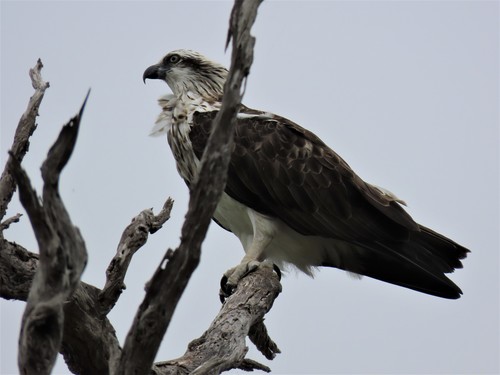 Falco pescatore
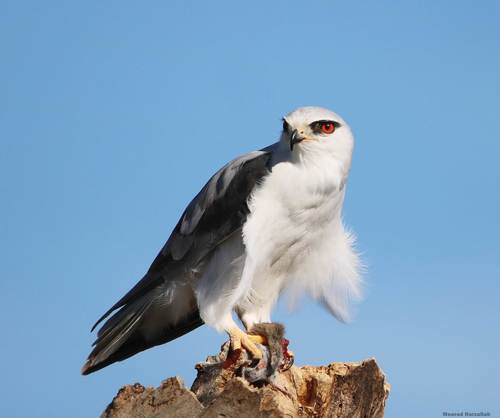 Nibbio bianco
In breve
Il segno di campo più affidabile per separare il Falco pescatore dal Nibbio bianco è la dimensione e la struttura complessive: il Falco pescatore è un rapace massiccio e con ali lunghe, con un corpo inferiore bianco e evidenti macchie scure sui polsi in volo, mentre il Nibbio bianco è molto più piccolo, compatto e sorprendentemente pallido con spalle nere e occhi rossi. I Falchi pescatori giovani mostrano frange color crema e una testa striata, mentre i giovani Nibbi bianchi hanno un lavaggio rossastro sulle parti superiori e sul petto. In volo, le lunghe ali strette del Falco pescatore con punte 'a dita' distinte e la coda corta contrastano fortemente con le ali appuntite e la coda quadrata del nibbio. Il Falco pescatore è solitamente visto sopra l'acqua, spesso in volo stazionario o tuffandosi per pesci, mentre il Nibbio bianco preferisce le praterie aperte ed è famoso per il suo volo stazionario simile a quello di un gheppio. Se vedi un grande rapace con una forte striscia scura sugli occhi e evidenti segni neri sui polsi, è un Falco pescatore; un uccello più piccolo e pallido con spalle nere e occhi rossi è un Nibbio bianco.
Consigli di identificazione
- La dimensione è il primo indizio: il Falco pescatore è molto più grande e massiccio del Nibbio bianco. Se l'uccello sembra enorme e simile a un'aquila, è un Falco pescatore; se è piccolo e delicato, è il nibbio.
- Forma dell'ala in volo: il Falco pescatore ha ali lunghe e strette con quattro lunghe 'dita' e una quinta più corta, e una coda corta. Il Nibbio bianco ha ali lunghe e appuntite e una coda quadrata, senza 'dita' pronunciate.
- Schema dell'ala inferiore: il Falco pescatore mostra sempre evidenti macchie nere sui polsi (macchie carpali) sull'ala inferiore, visibili a tutte le età. Il Nibbio bianco non ha queste; invece, il nero è sulla spalla dell'ala superiore.
- Schema della testa: il Falco pescatore ha una testa bianca con una forte striscia scura sugli occhi (maschera) che attraversa l'occhio. Il Nibbio bianco ha un volto bianco senza maschera scura, ma con occhi rossi sorprendenti.
- Schema dell'ala superiore: nel Falco pescatore, l'ala superiore è marrone scuro con copritrici chiare nei giovani (frange color crema). Il Nibbio bianco mostra spalle nere (copritrici dell'ala superiore) che contrastano con ali grigie chiare.
- Segni giovanili: il giovane Falco pescatore ha frange color crema e una testa striata; il giovane Nibbio bianco ha un lavaggio rossastro-marrone sulle parti superiori e sul petto, mai visto nel Falco pescatore.
- Striscia sul petto: la femmina del Falco pescatore può mostrare una forte striscia marrone sul petto; i maschi hanno una striscia più debole o assente. Il Nibbio bianco ha parti inferiori bianche pulite senza striscia.
- Colore degli occhi: gli occhi del Falco pescatore sono dorati o marroni; quelli del Nibbio bianco sono rossi brillanti e rivolti in avanti, dando un aspetto 'simile a un gufo'.
- Becco e piedi: il Falco pescatore ha un becco nero pesante e un cerchio blu; i piedi sono bianchi con artigli neri. Il Nibbio bianco ha un becco più fine e piedi meno robusti.
- Stile di volo: il Falco pescatore vola con battiti d'ala lenti e profondi e plana sopra l'acqua; il Nibbio bianco volteggia come un gheppio sopra i campi e plana con un volo leggero simile a quello delle sterne.
- Postura in perching: il Falco pescatore si posiziona eretto, spesso su tronchi vicino all'acqua. Il Nibbio bianco si posiziona più delicatamente su fili o rami esposti in campagna aperta.
- Contesto dell'habitat: il Falco pescatore è quasi sempre vicino all'acqua; il Nibbio bianco si trova in praterie aperte e aree agricole, raramente vicino a grandi corpi d'acqua.
- Differenze sessuali: nel Falco pescatore, le femmine hanno una striscia sul petto più forte e una corporatura più massiccia; nel Nibbio bianco, i sessi sono simili sul campo.
- Movimento stagionale: il Falco pescatore può essere migratorio o svernante a seconda della regione; il Nibbio bianco non è migratorio ma nomade, seguendo le esplosioni di roditori.
- Trappole comuni: il Falco pescatore distante può sembrare pallido sotto e può essere scambiato per un nibbio, specialmente in forte luce; controlla la dimensione, le macchie nere sui polsi e la maschera della testa. Il volo stazionario e le macchie nere sulle spalle del Nibbio bianco sono unici tra i piccoli rapaci.
Taglia
Il Falco pescatore è drammaticamente più grande: pesa circa 1400 g e misura 50–66 cm di lunghezza con un'apertura alare fino a 180 cm. Il Nibbio bianco è molto più piccolo e leggero (non ci sono dati precisi qui, ma è un piccolo rapace), con una corporatura più compatta e un'apertura alare più corta. Sul campo, il Falco pescatore appare come un grande rapace pesante con ali lunghe e strette e una coda corta, mentre il Nibbio bianco appare snello, delicato e visibilmente più piccolo, più simile a una grande colomba o a un piccolo corvo per dimensioni.
Piumaggio
- Giovane/immaturo Falco pescatore: mostra frange color crema sulle parti superiori, un tono color crema sotto e una testa striata. In primavera, cerca le barre sulle ali inferiori e sulle piume di volo a causa dell'usura delle piume. L'ala inferiore mostra sempre evidenti 'polsi' neri (macchie carpali) e una striscia scura sugli occhi su una testa bianca.
- Giovane Nibbio bianco: ha un lavaggio rossastro-marrone sulle parti superiori e sul petto, non visto nel Falco pescatore. Questo colore è dovuto ai porfirini e fornisce camuffamento. I giovani nibbi mutano in piumaggio adulto dopo due anni, mostrando a volte un mix di piume vecchie e nuove.
- Adulto Falco pescatore: parti superiori marrone scuro, parti inferiori bianche, testa bianca con una forte maschera scura e macchie nere sui polsi sull'ala inferiore. Coda corta, ali lunghe e strette con quattro lunghe 'dita' e una quinta più corta. La striscia sul petto può essere debole o assente nei maschi, più forte nelle femmine.
- Adulto Nibbio bianco: piumaggio bianco, grigio e nero. Macchie nere sorprendenti sulle spalle (copritrici dell'ala superiore), volto e parti inferiori bianche, e occhi rossi. Nessuna striscia scura sugli occhi come nel Falco pescatore. Le ali sono lunghe e appuntite, la coda è quadrata. Nessuna macchia nera sui polsi; invece, il nero è sulla spalla.
Comportamento
Il Falco pescatore è quasi sempre visto vicino all'acqua, volando con battiti d'ala lenti e profondi, planando brevemente prima di tuffarsi con i piedi per catturare pesci. Raramente plana per lunghi periodi. Il Nibbio bianco è famoso per il suo volo stazionario simile a quello di un gheppio sopra le praterie aperte, spesso mantenendo la posizione per periodi prolungati mentre caccia piccoli mammiferi e insetti. Il Falco pescatore si posiziona eretto su tronchi o pali, spesso con un pesce, mentre il Nibbio bianco si posiziona su fili o rami esposti, apparendo più delicato e eretto. Il volo del Falco pescatore è potente e diretto; il Nibbio bianco è leggero, agile e può apparire quasi simile a una sterna per leggerezza.
Habitat
Il Falco pescatore è legato all'acqua: laghi, fiumi, bacini e coste, raramente avventurandosi lontano dagli habitat ricchi di pesci. Il Nibbio bianco preferisce le praterie aperte, i campi agricoli e le savane, spesso lontano da grandi corpi d'acqua. Se vedi un rapace che plana su un campo o una pianura erbosa, è probabilmente un Nibbio bianco; se è sopra l'acqua, specialmente mentre si tuffa, è quasi certamente un Falco pescatore.