

Motmot

Codone vs Edredone

Anas acuta contro Somateria mollissima

Fai un quiz con Codone e Edredone
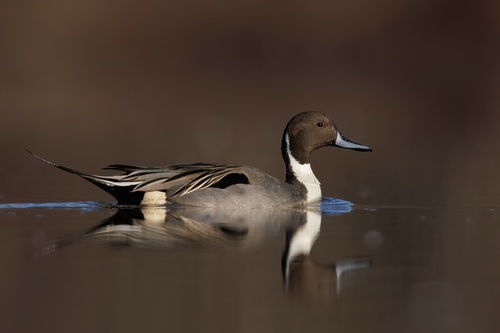
Codone (Anas acuta) Codone
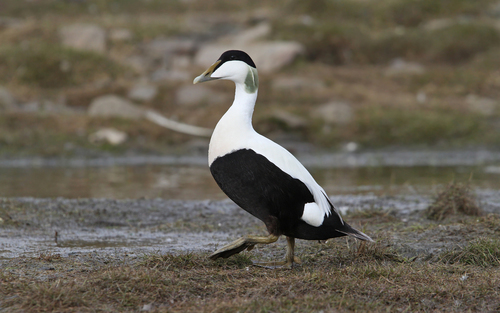
Edredone (Somateria mollissima) Edredone

Media

Caricamento…

In breve

The most reliable field mark to separate Northern Pintail from Common Eider is overall structure: the pintail is slender, long-necked, and pointed-tailed, while the eider is much bulkier with a heavy, wedge-shaped bill. In flight or at rest, immature and female pintails show a long, narrow profile with a distinctly pointed tail, whereas eiders always appear hefty and thick-necked, with a large, sloping bill. Adult male plumage is unmistakable for both, but confusion often arises with females and immatures, especially in distant or poor light. Habitat is also a strong clue: pintails are freshwater or brackish dabblers, while eiders are strictly marine outside rare exceptions.

Consigli di identificazione

  1. Structure is key: Pintails are slim, long-necked, and have a pointed tail; eiders are massive, thick-necked, and have a large, wedge-shaped bill. This difference is visible at all ages and sexes.
  2. Tail shape: Pintails (all ages, especially males) have a long, pointed tail that often projects well beyond the body, especially in flight or when swimming. Eiders have a short, rounded tail, never pointed.
  3. Bill shape: Pintail bills are long and narrow (bluish in both sexes), while eiders have a large, broad, wedge-shaped bill that gives the head a sloping profile.
  4. Flight silhouette: Pintails show a long, sleek profile with swept-back wings and a pointed tail. Eiders look broad-winged, heavy, and barrel-chested in flight, with a thick neck and short tail.
  5. Female/immature plumage: Female pintails are mottled brown with a uniform grey-brown head and a long, pointed tail. Female eiders are also brown but much bulkier, with a heavy bill and blocky head.
  6. Juvenile wing pattern: Juvenile pintails have a dull brown speculum with a narrow trailing edge; females have a dark brown speculum with a prominent white rear border. Eider females lack any speculum pattern and have uniformly brown wings.
  7. Adult male plumage: Breeding male pintails have a chocolate-brown head, white neck stripe, and long central tail feathers. Male eiders are black-and-white with a green nape and massive bill—confusion is unlikely.
  8. Eclipse plumage: Male pintails in eclipse look like females but retain the long tail and male upperwing pattern. Eiders do not show a similar transformation and always look heavy and blocky.
  9. Habitat: Pintails are found on freshwater or brackish wetlands; eiders are almost exclusively marine, seen on rocky coasts and open sea.
  10. Feeding behavior: Pintails dabble or graze; eiders dive for mollusks and crustaceans, often seen diving repeatedly offshore.
  11. Voice: Pintail drakes whistle, eider drakes give a deep "ah-ooo"; females of both quack, but eider's is deeper.
  12. Size impression: Eiders are much heavier and bulkier than pintails; even a female eider dwarfs a male pintail in mass.
  13. Swimming posture: Pintails swim with neck extended and tail up; eiders sit lower, with a thick neck and heavy body.
  14. On land: Pintails walk well and look elegant; eiders are less agile and appear ponderous.
  15. Context: If you see a brown duck with a pointed tail in a marsh, think pintail; if it's a huge, brown, heavy-billed duck on the sea, it's an eider.

Taglia

Common Eider is substantially larger and heavier than Northern Pintail. Eiders average about 2066.5 g in mass, more than double the pintail's 945.5 g. Both species can reach similar lengths (pintail males up to 76 cm, eider up to 71 cm), but the eider is much bulkier, with a broader body and heavier build. In the field, eiders look massive and rounded, while pintails are slim and elongated, especially in the neck and tail. Wingspans overlap (pintail 80–95 cm, eider 80–110 cm), but the eider's wings look broader and the bird sits lower in the water.

Piumaggio

Juvenile and female Northern Pintails are mottled brown with a more uniform grey-brown head and a long, pointed tail, giving a distinctive silhouette in flight or on water. Their upperwing shows a duller brown speculum with a narrow trailing edge (juveniles), and females have a dark brown speculum with a prominent white rear border. In contrast, female and immature Common Eiders are also brown but much more heavily built, lacking the pintail's pointed tail and instead showing a bulky profile with a thick neck and large, wedge-shaped bill. Eider females can be separated from all dabbling ducks by their sheer size and head shape. Adult male pintails are striking with a chocolate-brown head, white neck stripe, and long central tail feathers, while male eiders are unmistakable with black-and-white plumage and a green nape. In eclipse, male pintails resemble females but keep the long tail and male upperwing pattern; male eiders retain their structural bulk and bill shape. In flight, pintails are long and sleek, with swept-back wings, while eiders are broad-winged and heavy-bodied.

Comportamento

Northern Pintails are dabbling ducks, feeding mainly by tipping up in shallow water or grazing on land. They swim with a forward-leaning posture, neck extended, and tail often visible above the water. Pintails walk well on land and are agile. Their flight is fast and direct, with wings swept slightly back. Common Eiders are sea-ducks, rarely seen away from saltwater except in rare inland populations. They dive for food, mainly mollusks and crustaceans, and are often seen diving repeatedly or floating in dense rafts offshore. Eiders are less agile on land and appear more ponderous in flight, with slower, deeper wingbeats and a heavy, direct trajectory.

Habitat

Northern Pintails are found in freshwater and brackish wetlands, lakes, and marshes, breeding across northern Eurasia and North America and wintering southward. They are rarely found on open sea. Common Eiders are strictly coastal, breeding on rocky northern coasts and islands and wintering in large flocks on marine waters. Seeing a duck on the open sea or rocky shore almost always rules out pintail and points to eider, while a slim, long-tailed duck in a marsh or shallow lake is almost certainly a pintail.

Voce

Northern Pintail drakes give a flute-like whistle, while females make rough quacks. Common Eider males have a strange, almost human-like "ah-ooo" call, and females utter hoarse quacks. While both species' females quack, the eider's call is deeper and more guttural, and the male's display call is very distinctive if heard.

Invia una descrizione migliore

Usa le stesse sezioni del confronto. Il testo viene pubblicato subito.

The most reliable field mark to separate Northern Pintail from Common Eider is overall structure: the pintail is slender, long-necked, and pointed-tailed, while the eider is much bulkier with a heavy, wedge-shaped bill. In flight or at rest, immature and female pintails show a long, narrow profile with a distinctly pointed tail, whereas eiders always appear hefty and thick-necked, with a large, sloping bill. Adult male plumage is unmistakable for both, but confusion often arises with females and immatures, especially in distant or poor light. Habitat is also a strong clue: pintails are freshwater or brackish dabblers, while eiders are strictly marine outside rare exceptions.

  1. Structure is key: Pintails are slim, long-necked, and have a pointed tail; eiders are massive, thick-necked, and have a large, wedge-shaped bill. This difference is visible at all ages and sexes.
  2. Tail shape: Pintails (all ages, especially males) have a long, pointed tail that often projects well beyond the body, especially in flight or when swimming. Eiders have a short, rounded tail, never pointed.
  3. Bill shape: Pintail bills are long and narrow (bluish in both sexes), while eiders have a large, broad, wedge-shaped bill that gives the head a sloping profile.
  4. Flight silhouette: Pintails show a long, sleek profile with swept-back wings and a pointed tail. Eiders look broad-winged, heavy, and barrel-chested in flight, with a thick neck and short tail.
  5. Female/immature plumage: Female pintails are mottled brown with a uniform grey-brown head and a long, pointed tail. Female eiders are also brown but much bulkier, with a heavy bill and blocky head.
  6. Juvenile wing pattern: Juvenile pintails have a dull brown speculum with a narrow trailing edge; females have a dark brown speculum with a prominent white rear border. Eider females lack any speculum pattern and have uniformly brown wings.
  7. Adult male plumage: Breeding male pintails have a chocolate-brown head, white neck stripe, and long central tail feathers. Male eiders are black-and-white with a green nape and massive bill—confusion is unlikely.
  8. Eclipse plumage: Male pintails in eclipse look like females but retain the long tail and male upperwing pattern. Eiders do not show a similar transformation and always look heavy and blocky.
  9. Habitat: Pintails are found on freshwater or brackish wetlands; eiders are almost exclusively marine, seen on rocky coasts and open sea.
  10. Feeding behavior: Pintails dabble or graze; eiders dive for mollusks and crustaceans, often seen diving repeatedly offshore.
  11. Voice: Pintail drakes whistle, eider drakes give a deep "ah-ooo"; females of both quack, but eider's is deeper.
  12. Size impression: Eiders are much heavier and bulkier than pintails; even a female eider dwarfs a male pintail in mass.
  13. Swimming posture: Pintails swim with neck extended and tail up; eiders sit lower, with a thick neck and heavy body.
  14. On land: Pintails walk well and look elegant; eiders are less agile and appear ponderous.
  15. Context: If you see a brown duck with a pointed tail in a marsh, think pintail; if it's a huge, brown, heavy-billed duck on the sea, it's an eider.

Common Eider is substantially larger and heavier than Northern Pintail. Eiders average about 2066.5 g in mass, more than double the pintail's 945.5 g. Both species can reach similar lengths (pintail males up to 76 cm, eider up to 71 cm), but the eider is much bulkier, with a broader body and heavier build. In the field, eiders look massive and rounded, while pintails are slim and elongated, especially in the neck and tail. Wingspans overlap (pintail 80–95 cm, eider 80–110 cm), but the eider's wings look broader and the bird sits lower in the water.

Juvenile and female Northern Pintails are mottled brown with a more uniform grey-brown head and a long, pointed tail, giving a distinctive silhouette in flight or on water. Their upperwing shows a duller brown speculum with a narrow trailing edge (juveniles), and females have a dark brown speculum with a prominent white rear border. In contrast, female and immature Common Eiders are also brown but much more heavily built, lacking the pintail's pointed tail and instead showing a bulky profile with a thick neck and large, wedge-shaped bill. Eider females can be separated from all dabbling ducks by their sheer size and head shape. Adult male pintails are striking with a chocolate-brown head, white neck stripe, and long central tail feathers, while male eiders are unmistakable with black-and-white plumage and a green nape. In eclipse, male pintails resemble females but keep the long tail and male upperwing pattern; male eiders retain their structural bulk and bill shape. In flight, pintails are long and sleek, with swept-back wings, while eiders are broad-winged and heavy-bodied.

Northern Pintails are dabbling ducks, feeding mainly by tipping up in shallow water or grazing on land. They swim with a forward-leaning posture, neck extended, and tail often visible above the water. Pintails walk well on land and are agile. Their flight is fast and direct, with wings swept slightly back. Common Eiders are sea-ducks, rarely seen away from saltwater except in rare inland populations. They dive for food, mainly mollusks and crustaceans, and are often seen diving repeatedly or floating in dense rafts offshore. Eiders are less agile on land and appear more ponderous in flight, with slower, deeper wingbeats and a heavy, direct trajectory.

Northern Pintails are found in freshwater and brackish wetlands, lakes, and marshes, breeding across northern Eurasia and North America and wintering southward. They are rarely found on open sea. Common Eiders are strictly coastal, breeding on rocky northern coasts and islands and wintering in large flocks on marine waters. Seeing a duck on the open sea or rocky shore almost always rules out pintail and points to eider, while a slim, long-tailed duck in a marsh or shallow lake is almost certainly a pintail.

Northern Pintail drakes give a flute-like whistle, while females make rough quacks. Common Eider males have a strange, almost human-like "ah-ooo" call, and females utter hoarse quacks. While both species' females quack, the eider's call is deeper and more guttural, and the male's display call is very distinctive if heard.

Scartare le modifiche?

Hai modifiche non salvate. Se esci ora, andranno perse.

Codone · Edredone · I miei uccelli difficili