

Pavoncella vs Cannaiola comune
Vanellus vanellus contro Acrocephalus scirpaceus
Fai un quiz con Pavoncella e Cannaiola comune
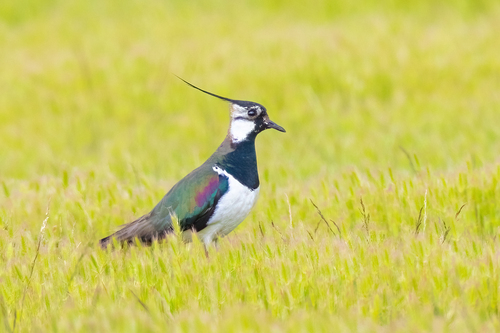 Pavoncella
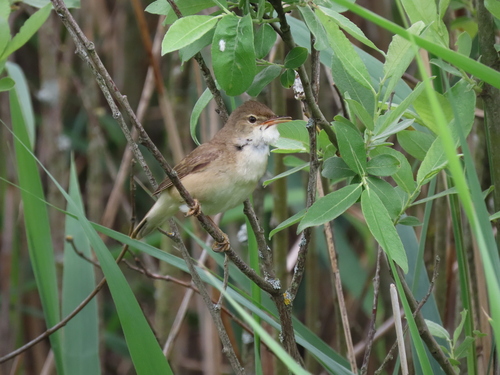 Cannaiola comune
In breve
Northern Lapwing and Common Reed Warbler are extremely unlikely to be confused in the field if seen well: the Lapwing is a large, boldly patterned wader with rounded wings and a distinctive crest, while the Reed Warbler is a small, plain brown songbird of reedbeds. If you see a bird in flight with broad, rounded wings and a strong black-and-white pattern, especially with a greenish back and a crest, you are looking at a Lapwing. Reed Warblers are much smaller, lack any bold wing or tail markings, and are generally seen clinging to reeds or skulking in dense vegetation. Most quiz mix-ups stem from poor or partial views, so focus on body size, wing shape, and habitat context first.
Consigli di identificazione
- Size is the fastest check: Lapwing is nearly three times as long and over ten times as heavy as Reed Warbler. If the bird looks small and sparrow-like, Lapwing is ruled out.
- Wing shape in flight: Lapwing has broad, rounded wings with a bold black-and-white pattern visible from a distance. Reed Warbler's wings are short, pointed, and plain brown, with no contrast.
- Crest and head shape: Lapwing has a prominent crest (longest in males), visible both at rest and in flight. Reed Warbler has a flat forehead and no crest.
- Plumage contrast: Lapwing is boldly patterned with a black crown, throat, and breast, white face, and greenish back. Reed Warbler is uniform brown above and buff below, with no strong facial markings.
- Juvenile confusion: Young Lapwings have shorter crests and less distinct head markings but still show the same bold wing and body pattern. Juvenile Reed Warblers are slightly richer buff below but otherwise similar to adults, with no bold markings.
- Leg length: Lapwing has relatively short legs for a lapwing but still much longer than Reed Warbler's tiny legs, which are rarely visible as the bird clings to reeds.
- Bill shape: Lapwing's bill is short and straight, suited to probing; Reed Warbler's bill is longer, slender, and pointed, adapted for insect catching.
- Display behavior: Lapwing males perform tumbling, acrobatic display flights with loud calling. Reed Warbler does not display in flight and is usually hidden in vegetation.
- Habitat context: Lapwing is found in open fields, meadows, and wetlands; Reed Warbler is almost exclusively in dense reedbeds.
- Vocalization: Lapwing's 'pee-wit' call is loud and distinctive; Reed Warbler's song is a quiet, chattering series of notes, usually heard from within reeds.
- Perched posture: Lapwing stands upright on the ground, often in the open. Reed Warbler clings vertically to reed stems, rarely perching in the open.
- Group behavior: Lapwings are often seen in flocks, especially outside the breeding season. Reed Warblers are solitary or in loose association, rarely forming visible groups.
- Seasonal presence: Both species can occur in Europe in spring and summer, but Lapwing is more likely in open country year-round, while Reed Warbler is present in reedbeds mainly during the breeding season.
- Sex differences: Lapwing males have longer crests and more distinct head markings, but both sexes are unmistakable compared to Reed Warbler. Reed Warbler sexes are identical in the field.
- Common pitfalls: Poor, distant views in flight may make a Lapwing's white underwing appear pale, but the size, shape, and bold pattern are always diagnostic. Reed Warbler is never seen flying high or displaying over open ground.
Taglia
Northern Lapwing is dramatically larger, with a body length of 28–33 cm and a wingspan of 67–87 cm, compared to the Reed Warbler's 13 cm length and 17–21 cm wingspan. Lapwing is also much heavier (128–330 g vs. 12 g). Even at a distance, Lapwing's size and bulk are obvious, especially in flight, where it appears almost gull-sized. Reed Warbler is a typical small songbird, easily dwarfed by Lapwing. If you are unsure, compare to nearby birds or consider the scale of the habitat.
Piumaggio
- Juvenile/immature wing pattern: No distinctive juvenile upperwing pattern is described for either species, but Lapwing of all ages shows a bold black-and-white wing pattern in flight, with rounded wings and a greenish back. Reed Warbler, including juveniles, is plain brown above and buff below, with no wing markings or contrast.
- Adult plumage: Lapwing adults have a striking appearance: black crown, throat, and breast, white face, and a long crest (males especially). The back is iridescent green. Reed Warbler adults are unstreaked brown above and buff below, with a flattened forehead and no strong facial markings. Young Reed Warblers are richer buff below but otherwise similar. There is no overlap in plumage features between these two species.
Comportamento
Lapwings are often seen in open fields, meadows, or wetlands, walking or standing on the ground, sometimes in flocks. Their flight is distinctive: slow, floppy, with broad, rounded wings and frequent display flights involving tumbling and calling. Reed Warblers are secretive, rarely seen in the open, and usually cling to vertical reed stems, moving through dense vegetation with quick, deliberate movements. They rarely walk on the ground or perform aerial displays. If you see a bird flying high and calling loudly over open ground, it's likely a Lapwing; if it's skulking low in reeds, it's a Reed Warbler.
Habitat
Northern Lapwing prefers open habitats such as grasslands, agricultural fields, and wetlands, often far from dense vegetation. Reed Warbler is tightly associated with reedbeds and dense marsh vegetation, rarely venturing into open ground. If your bird is in the middle of a reedbed or clinging to reeds, Lapwing can be safely ruled out. Conversely, a bird in open pasture or flying over fields is almost certainly not a Reed Warbler.
Voce
Lapwing is loud and distinctive, especially in the breeding season, with a shrill 'pee-wit' call and a wheezy, varied display song during flight. Reed Warbler has a much softer, chattering song, described as a slow 'jit-jit-jit' with whistles and mimicry, typical of acrocephaline warblers. If you hear a loud, far-carrying call, think Lapwing; if it's a quiet, chattering song from deep in reeds, it's Reed Warbler.