

Motmot

Fulmaro vs Kermadec Petrel

Fulmarus glacialis contro Pterodroma neglecta

Fai un quiz con Fulmaro e Kermadec Petrel
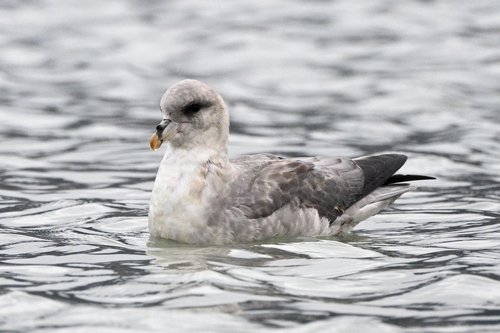
Fulmaro (Fulmarus glacialis) Fulmaro
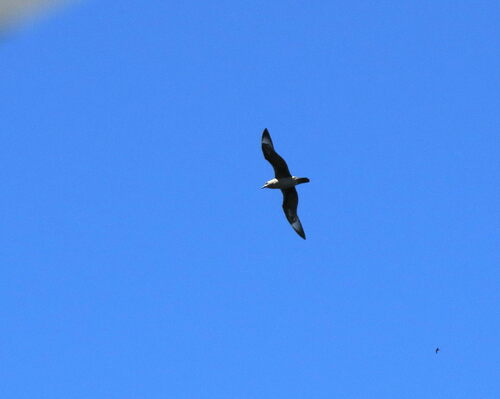
Kermadec Petrel (Pterodroma neglecta) Kermadec Petrel

Media

Caricamento…

In breve

The most reliable field mark to separate Northern Fulmar from Kermadec Petrel is structure: Northern Fulmar is bull-necked and thick-billed with a blunt, heavy look, while Kermadec Petrel is slimmer, longer-winged, and more elegant in flight. Both species are polymorphic, with light and dark morphs, but Fulmar's combination of a pale yellow, thick bill and stiff, shallow wingbeats is distinctive. In flight, Fulmar shows pale inner primaries on the upperwing in all morphs, while Kermadec Petrel lacks this feature. Fulmar is abundant in the North Atlantic and North Pacific, whereas Kermadec Petrel is a rare Pacific breeder and vagrant elsewhere.

Consigli di identificazione

  1. Structure is key: Northern Fulmar is bull-necked, thick-headed, and heavy-bodied with a short, stout, pale yellow bill. Kermadec Petrel is slimmer, with a finer bill and a more elegant, streamlined appearance. This is often the first clue at a distance.
  2. Wing action: Fulmar flies with stiff, shallow wingbeats and a mechanical, pigeon-like flight. Kermadec Petrel has more buoyant, dynamic flight, with deeper wingbeats and more frequent banking and shearing.
  3. Pale inner primaries: In all morphs and ages, Fulmar shows pale inner primaries on the upperwing, visible in flight. Kermadec Petrel lacks this panel, so uniform upperwing color (in dark morphs) or lack of a distinct pale panel (in light morphs) points to Kermadec.
  4. Bill color and shape: Fulmar's bill is always thick, blunt, and pale yellow, often obvious even at some distance. Kermadec Petrel's bill is finer and darker, less prominent in the field.
  5. Head and neck: Fulmar appears bull-necked and thick-headed, while Kermadec Petrel's head and neck are more proportional and less chunky.
  6. Plumage morphs: Both species have light, dark, and intermediate morphs, so color alone is not diagnostic. However, Fulmar's light morph always has a white head and body with grey wings and tail, while Kermadec Petrel's light morph may show a more even coloration.
  7. Underwing pattern: Only dark morph Fulmar has a truly dark underwing; light morphs have mostly white underwings with grey on the wings. Kermadec Petrel's underwing varies with morph but never shows Fulmar's pale inner primaries.
  8. Tail color: Pacific Fulmars may have a darker tail than Atlantic birds, but this is subtle and not always reliable. Kermadec Petrel's tail does not show this contrast.
  9. Habitat and range: In the North Atlantic or North Pacific, Fulmar is the default. Kermadec Petrel is a rare vagrant outside its Pacific breeding islands; location is a strong clue.
  10. Behavior at sea: Fulmar often sits on the water in groups, while Kermadec Petrel is more likely to be seen in dynamic flight, rarely settling.
  11. Walking ability: Fulmar is poor on land, shuffling awkwardly at colonies. Kermadec Petrel, like most Pterodroma, is rarely seen on land except at nest burrows.
  12. Size impression: Fulmar appears bulkier and heavier, especially when seen alongside other seabirds. Kermadec Petrel is more delicate and lighter in build.
  13. Jizz at a glance: If the bird looks like a flying barrel with a thick neck and short bill, it's likely Fulmar. If it looks sleek, with long wings and agile flight, it's likely Kermadec Petrel.
  14. Bill plates (close view): Fulmar's bill is divided into several horny plates, with visible tubular nostrils on top. Kermadec Petrel also has tubular nostrils but is less obviously 'tubenosed' at a distance.
  15. Do not rely on color morph alone: Both species are variable; always check structure and wing pattern before using overall color.

Taglia

Northern Fulmar is slightly larger overall, with a length of 46 cm and a wingspan of 102–112 cm, compared to Kermadec Petrel's 38 cm length and 100 cm wingspan. Body mass for Kermadec Petrel averages around 501 g [wikidata], while Fulmar can range widely (450–1000 g), often appearing bulkier and heavier. Fulmar's build is notably more robust, with a thick neck and head, while Kermadec Petrel is more slender and streamlined.

Piumaggio

Both species are polymorphic, showing light, dark, and intermediate morphs. For all ages and morphs, Northern Fulmar shows pale inner primaries on the upperwing, which is a key field mark in flight. The dark morph Fulmar is uniformly grey, but even then, the underwing is only truly dark on this morph; light morphs have white heads and bodies with grey wings and tail. Kermadec Petrel, in all morphs, lacks the Fulmar's pale inner primary panel. Fulmar's bill is always thick and pale yellow, while Kermadec Petrel's bill is finer. Pacific Fulmars may have a darker tail than Atlantic birds, but this is subtle. No age-specific juvenile/immature wing pattern is described for either species in the sources, so the pale inner primaries of Fulmar are the main age-independent mark. Both species can appear similar at a distance, especially in dark morphs, but Fulmar's bull-necked look and pale bill are reliable.

Comportamento

Northern Fulmar has a distinctive, stiff-winged flight with shallow, rapid wingbeats and glides low over the water, often appearing mechanical or pigeon-like. It is less agile than Kermadec Petrel, which is a classic gadfly petrel: buoyant, dynamic, and more acrobatic, with deeper wingbeats and more frequent banking and shearing. Fulmar is generally less adept at walking and rarely lands on land except at colonies, while Kermadec Petrel, like other Pterodroma, is almost always seen at sea except during breeding.

Habitat

Northern Fulmar is abundant in subarctic and temperate North Atlantic and North Pacific oceans, often seen from ships or coastal cliffs, rarely straying far from these regions. Kermadec Petrel breeds on remote Pacific islands (notably the Kermadecs and Lord Howe), and is a rare vagrant elsewhere, especially in the North Atlantic. If seen in the North Atlantic, Fulmar is vastly more likely. Habitat context is thus a strong clue: Fulmar is expected in northern oceans, Kermadec Petrel only as a rare vagrant.

Invia una descrizione migliore

Usa le stesse sezioni del confronto. Il testo viene pubblicato subito.

The most reliable field mark to separate Northern Fulmar from Kermadec Petrel is structure: Northern Fulmar is bull-necked and thick-billed with a blunt, heavy look, while Kermadec Petrel is slimmer, longer-winged, and more elegant in flight. Both species are polymorphic, with light and dark morphs, but Fulmar's combination of a pale yellow, thick bill and stiff, shallow wingbeats is distinctive. In flight, Fulmar shows pale inner primaries on the upperwing in all morphs, while Kermadec Petrel lacks this feature. Fulmar is abundant in the North Atlantic and North Pacific, whereas Kermadec Petrel is a rare Pacific breeder and vagrant elsewhere.

  1. Structure is key: Northern Fulmar is bull-necked, thick-headed, and heavy-bodied with a short, stout, pale yellow bill. Kermadec Petrel is slimmer, with a finer bill and a more elegant, streamlined appearance. This is often the first clue at a distance.
  2. Wing action: Fulmar flies with stiff, shallow wingbeats and a mechanical, pigeon-like flight. Kermadec Petrel has more buoyant, dynamic flight, with deeper wingbeats and more frequent banking and shearing.
  3. Pale inner primaries: In all morphs and ages, Fulmar shows pale inner primaries on the upperwing, visible in flight. Kermadec Petrel lacks this panel, so uniform upperwing color (in dark morphs) or lack of a distinct pale panel (in light morphs) points to Kermadec.
  4. Bill color and shape: Fulmar's bill is always thick, blunt, and pale yellow, often obvious even at some distance. Kermadec Petrel's bill is finer and darker, less prominent in the field.
  5. Head and neck: Fulmar appears bull-necked and thick-headed, while Kermadec Petrel's head and neck are more proportional and less chunky.
  6. Plumage morphs: Both species have light, dark, and intermediate morphs, so color alone is not diagnostic. However, Fulmar's light morph always has a white head and body with grey wings and tail, while Kermadec Petrel's light morph may show a more even coloration.
  7. Underwing pattern: Only dark morph Fulmar has a truly dark underwing; light morphs have mostly white underwings with grey on the wings. Kermadec Petrel's underwing varies with morph but never shows Fulmar's pale inner primaries.
  8. Tail color: Pacific Fulmars may have a darker tail than Atlantic birds, but this is subtle and not always reliable. Kermadec Petrel's tail does not show this contrast.
  9. Habitat and range: In the North Atlantic or North Pacific, Fulmar is the default. Kermadec Petrel is a rare vagrant outside its Pacific breeding islands; location is a strong clue.
  10. Behavior at sea: Fulmar often sits on the water in groups, while Kermadec Petrel is more likely to be seen in dynamic flight, rarely settling.
  11. Walking ability: Fulmar is poor on land, shuffling awkwardly at colonies. Kermadec Petrel, like most Pterodroma, is rarely seen on land except at nest burrows.
  12. Size impression: Fulmar appears bulkier and heavier, especially when seen alongside other seabirds. Kermadec Petrel is more delicate and lighter in build.
  13. Jizz at a glance: If the bird looks like a flying barrel with a thick neck and short bill, it's likely Fulmar. If it looks sleek, with long wings and agile flight, it's likely Kermadec Petrel.
  14. Bill plates (close view): Fulmar's bill is divided into several horny plates, with visible tubular nostrils on top. Kermadec Petrel also has tubular nostrils but is less obviously 'tubenosed' at a distance.
  15. Do not rely on color morph alone: Both species are variable; always check structure and wing pattern before using overall color.

Northern Fulmar is slightly larger overall, with a length of 46 cm and a wingspan of 102–112 cm, compared to Kermadec Petrel's 38 cm length and 100 cm wingspan. Body mass for Kermadec Petrel averages around 501 g [wikidata], while Fulmar can range widely (450–1000 g), often appearing bulkier and heavier. Fulmar's build is notably more robust, with a thick neck and head, while Kermadec Petrel is more slender and streamlined.

Both species are polymorphic, showing light, dark, and intermediate morphs. For all ages and morphs, Northern Fulmar shows pale inner primaries on the upperwing, which is a key field mark in flight. The dark morph Fulmar is uniformly grey, but even then, the underwing is only truly dark on this morph; light morphs have white heads and bodies with grey wings and tail. Kermadec Petrel, in all morphs, lacks the Fulmar's pale inner primary panel. Fulmar's bill is always thick and pale yellow, while Kermadec Petrel's bill is finer. Pacific Fulmars may have a darker tail than Atlantic birds, but this is subtle. No age-specific juvenile/immature wing pattern is described for either species in the sources, so the pale inner primaries of Fulmar are the main age-independent mark. Both species can appear similar at a distance, especially in dark morphs, but Fulmar's bull-necked look and pale bill are reliable.

Northern Fulmar has a distinctive, stiff-winged flight with shallow, rapid wingbeats and glides low over the water, often appearing mechanical or pigeon-like. It is less agile than Kermadec Petrel, which is a classic gadfly petrel: buoyant, dynamic, and more acrobatic, with deeper wingbeats and more frequent banking and shearing. Fulmar is generally less adept at walking and rarely lands on land except at colonies, while Kermadec Petrel, like other Pterodroma, is almost always seen at sea except during breeding.

Northern Fulmar is abundant in subarctic and temperate North Atlantic and North Pacific oceans, often seen from ships or coastal cliffs, rarely straying far from these regions. Kermadec Petrel breeds on remote Pacific islands (notably the Kermadecs and Lord Howe), and is a rare vagrant elsewhere, especially in the North Atlantic. If seen in the North Atlantic, Fulmar is vastly more likely. Habitat context is thus a strong clue: Fulmar is expected in northern oceans, Kermadec Petrel only as a rare vagrant.

Scartare le modifiche?

Hai modifiche non salvate. Se esci ora, andranno perse.

Fulmaro · Kermadec Petrel · I miei uccelli difficili