

Madagascar Partridge vs Quaglia
Margaroperdix madagarensis contro Coturnix coturnix
Fai un quiz con Madagascar Partridge e Quaglia
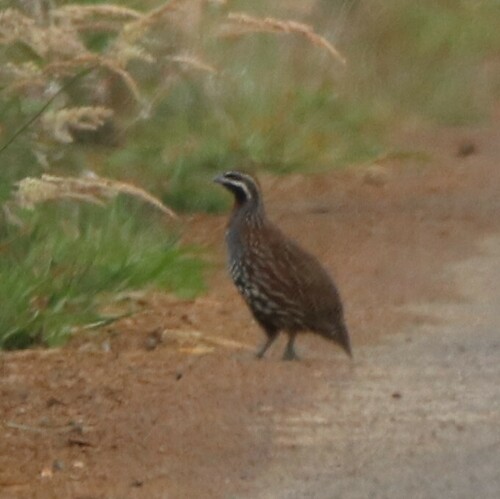 Madagascar Partridge
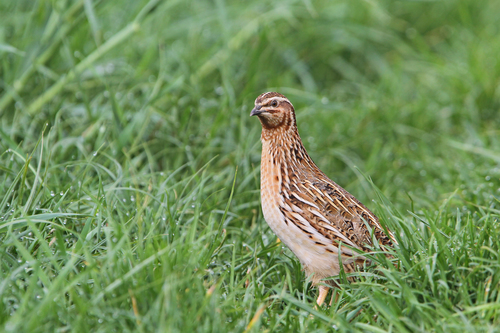 Quaglia
In breve
The most reliable field mark to separate Madagascar Partridge from Common Quail is overall structure and wing shape: Common Quail is noticeably smaller, with a compact body and long, pointed wings suited for migration, while Madagascar Partridge is bulkier and more rounded. In flight, Common Quail shows longer, narrower wings compared to the short, rounded wings of Madagascar Partridge. Plumage differences are subtle but Common Quail often shows a pale eyestripe and, in males, a white chin, while Madagascar Partridge lacks these features. Habitat and context also help: Madagascar Partridge is endemic to Madagascar (except the far south), while Common Quail is a Palearctic migrant, rarely present except as a vagrant. Voice is distinctive if heard: Common Quail gives a repeated three-note call, while Madagascar Partridge is less often heard and lacks this pattern.
Consigli di identificazione
- Wing shape in flight: Common Quail has long, pointed wings, especially noticeable when flushed; Madagascar Partridge has short, rounded wings. This is a key separation at any age.
- Overall size and build: Madagascar Partridge is bulkier and heavier-set, with a deeper body and shorter wings/tail; Common Quail is smaller, more compact, and lighter.
- Facial markings: Common Quail shows a pale eyestripe and, in males, a white chin—look for these on perched or walking birds. Madagascar Partridge lacks both features.
- Plumage tone: Both are cryptic and brown, but Common Quail is more streaked, especially on the back and flanks, while Madagascar Partridge is more uniform and earth-toned.
- Flight style: Common Quail takes off with a rapid, direct flight on long wings, often flying farther; Madagascar Partridge explodes up with a short, heavy, and less agile flight.
- Habitat and range: In Madagascar, a partridge-like bird is almost always Madagascar Partridge; Common Quail is not native and would be exceptional.
- Group size: Madagascar Partridge is often in pairs or small coveys; Common Quail is usually solitary or in small groups.
- Voice: If you hear a repeated three-note 'wet-my-lips' call, it is Common Quail. Madagascar Partridge does not give this call.
- Bill and head shape: Common Quail has a proportionally smaller, finer bill and a more compact head; Madagascar Partridge's bill and head are larger and heavier.
- Tail length: Common Quail has a relatively short tail, but it is proportionate to its body; Madagascar Partridge's tail is even shorter and less noticeable.
- Behavior when flushed: Common Quail may fly a considerable distance; Madagascar Partridge usually lands quickly after a short, heavy burst.
- Seasonal context: If observed outside Madagascar, especially in Europe, North Africa, or Asia, the bird is almost certainly Common Quail.
- Sex differences: Only male Common Quail shows a white chin; females and all Madagascar Partridges lack this feature.
- Juvenile/immature marks: No distinctive juvenile upperwing or age-specific marks are described for either species in the sources, so rely on structure and facial pattern.
- Potential confusion: Both are cryptic and ground-dwelling, so be careful with brief views—prioritize structure, wing shape, and facial markings for confident ID.
Taglia
Common Quail is significantly smaller and lighter (16–18 cm length, 32–35 cm wingspan, 70–140 g) [wikipedia]. Madagascar Partridge is larger and bulkier, though precise measurements are not provided in the notes. In the field, Madagascar Partridge will appear more robust and heavier-set, with a deeper body and proportionally shorter wings and tail. Common Quail's small, compact form and relatively long wings are especially noticeable in flight.
Piumaggio
For all ages, Common Quail shows a streaked brown plumage with a clear pale eyestripe and, in males, a white chin. Its wings are long and pointed, reflecting its migratory lifestyle. Madagascar Partridge, by contrast, lacks a pale eyestripe and white chin, and is generally more uniformly patterned and earth-toned, with a bulkier appearance. No distinctive age-specific upperwing or juvenile pattern is described for either species in the sources, so separation relies on overall coloration and structure. Both are cryptically patterned, but Common Quail's facial markings (eyes stripe, chin) are more pronounced, especially in adult males. In flight, the Common Quail's long, pointed wings contrast with the short, rounded wings of Madagascar Partridge.
Comportamento
Common Quail is a migratory species, often encountered as a skulking ground-dweller that flushes with rapid, direct flight on long wings. It is more likely to be heard than seen, and is generally solitary or in small groups. Madagascar Partridge is a resident, non-migratory species, usually found in pairs or small coveys, and tends to walk or run rather than fly unless disturbed. When flushed, its flight is short and explosive, with rounded wings and a heavier, less agile appearance than Common Quail.
Habitat
Madagascar Partridge is endemic to Madagascar (except the extreme south) and has been introduced to Réunion and Mauritius [wikipedia]. It is found in a variety of habitats across the island. Common Quail breeds across the Palearctic and winters in Africa and southern India, but is not native to Madagascar. Thus, location is a strong clue: a small, streaked gamebird in Madagascar is almost certainly Madagascar Partridge, unless there is evidence of vagrancy or introduction. Common Quail prefers open grasslands, fields, and agricultural areas in its range.
Voce
Common Quail has a distinctive call: three repeated chirps in quick succession, often described as 'wet-my-lips' or similar, and is more often heard than seen [wikipedia]. Madagascar Partridge does not have a described vocalization in the provided notes, but does not give the repeated three-note call of Common Quail. If you hear the characteristic quail call, it is almost certainly Common Quail.