
Himalayan Flameback vs Black-rumped Flameback
Dinopium shorii contro Dinopium benghalense
Fai un quiz con Himalayan Flameback e Black-rumped Flameback
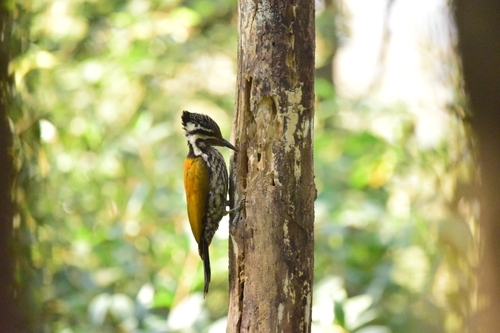 Himalayan Flameback
 Black-rumped Flameback
In breve
Il modo più affidabile per separare il Himalayan Flameback dal Black-rumped Flameback è concentrarsi sulla gola e sul posteriore: il Himalayan Flameback mostra una gola con centro marrone (a volte estendendosi sul petto) con macchie nere irregolari, mentre il Black-rumped Flameback ha sempre una gola nera ben definita finemente segnata di bianco e un distintivo posteriore nero. Il Himalayan Flameback ha anche un collo posteriore nero e una striscia moustachiale indistinta, spesso marrone, mentre il Black-rumped non ha affatto una striscia moustachiale scura. Entrambe le specie sono simili nell'aspetto complessivo dorato, ma prestare attenzione a questi dettagli della testa e del posteriore, insieme al contesto dell'habitat, risolverà la maggior parte delle confusioni. Le piume dei giovani e delle femmine possono essere particolarmente ingannevoli, quindi cerca prima il modello della gola e del posteriore prima di fare affidamento sul colore o sulla dimensione della cresta.
Consigli di identificazione
- Modello della gola: Il Himalayan Flameback mostra una gola con centro marrone (a volte rossastra nei maschi), spesso estendendosi sul petto e bordata da macchie nere irregolari. Il Black-rumped Flameback ha sempre una gola nera ben definita finemente segnata di bianco. Questo è il segno di campo più consistente per tutte le età e i sessi.
- Colore del posteriore: Il Black-rumped Flameback ha un posteriore nero (mai rosso o dorato), che è unico tra i picchi dorati nella regione. Il Himalayan Flameback non ha un posteriore nero; il suo dorso e posteriore si fondono con le tonalità dorate o ramee delle ali.
- Striscia moustachiale: Il Himalayan Flameback ha una striscia moustachiale indistinta, spesso marrone (a volte rossastra nei maschi), mentre il Black-rumped Flameback non ha alcuna striscia moustachiale scura. Questo è particolarmente utile in viste ravvicinate della testa.
- Colore della cresta (specifico per sesso): Il maschio del Himalayan Flameback ha una fronte e una cresta di colore rosso-giallastro a rosso, mentre la cresta della femmina è completamente nera striata di bianco. Nel Black-rumped Flameback, i maschi hanno una corona e una cresta rossa, ma le femmine hanno una corona anteriore nera con macchie bianche e rosso solo sulla cresta posteriore. I giovani del Black-rumped assomigliano alla femmina ma sono più opachi. Il colore della cresta può essere utile ma è variabile e si sovrappone in alcune viste.
- Collo posteriore: Il Himalayan Flameback ha un collo posteriore nero, che è meno prominente o assente nel Black-rumped Flameback.
- Colore degli occhi: Il Himalayan Flameback può mostrare occhi rossastri o marroni, ma questo è sottile e non sempre visibile sul campo.
- Modello del petto: Il petto del Himalayan Flameback è irregolarmente striato di nero o può essere completamente bianco. Il Black-rumped Flameback ha parti inferiori bianche con marcature a chevron scure, un aspetto più regolare e patternizzato.
- Colore delle ali: Le ali del Himalayan Flameback sono marrone rameo a rosso, mentre il Black-rumped Flameback ha copritrici delle ali giallo dorato. In volo, questo può essere sottile, ma gli uccelli in posa possono mostrare la differenza in forte luce.
- Conteggio delle dita: Entrambe le specie hanno tre dita (piedi zigodattili), ma questo è notato solo come un tratto diagnostico per il Himalayan Flameback nelle fonti. Non è solitamente visibile sul campo.
- Dimensione del becco: Il Himalayan Flameback ha un becco più piccolo rispetto alla dimensione della testa rispetto al più robusto Black-rumped Flameback, ma questa è una differenza sottile e non sempre affidabile.
- Dimensione e struttura: Il Black-rumped Flameback è più grande e bulkier, ma la sovrapposizione delle dimensioni e la mancanza di confronto diretto rendono questo inaffidabile per gli uccelli solitari.
- Habitat: Il Himalayan Flameback si trova in foreste mature delle pendici himalayane e evita le aree urbane. Il Black-rumped Flameback è comune in foreste aperte, terreni coltivati e parchi urbani, raramente in veri habitat himalayani. Il contesto può aiutare, ma fai attenzione alla sovrapposizione dell'areale nelle pendici.
- Comportamento: Il Black-rumped Flameback si adatta bene agli ambienti umani ed è spesso visto in coppie o piccoli gruppi, mentre il Himalayan Flameback è più dipendente dalla foresta e meno probabile negli ambienti urbani.
- Voce: Le chiamate non sono separabili in modo affidabile sul campo in base alle descrizioni attuali, ma la chiamata del Black-rumped Flameback è descritta come un rumore di fruscio, mentre quella del Himalayan Flameback è una serie più morbida e lenta di "klak-klak-klak".
- Trappole: Le femmine e i giovani di entrambe le specie possono essere confusi, specialmente se la cresta non è visibile. Controlla sempre prima il modello della gola e del posteriore, poi cerca la striscia moustachiale e il contesto dell'habitat.
Taglia
I dati diretti sulla massa sono disponibili solo per il Black-rumped Flameback (110 g [wikidata]), ma il Himalayan Flameback è descritto come più piccolo nel complesso con un becco più piccolo. Il Black-rumped Flameback è un grande picchio (26–29 cm di lunghezza), e sul campo appare spesso più massiccio e robusto, specialmente in habitat urbani o aperti. Il Himalayan Flameback, pur essendo simile nella forma, è generalmente più snello e leggermente più piccolo, ma questa differenza è sottile e non sempre affidabile senza un confronto diretto.
Piumaggio
- Uccelli giovani/immaturi: Non sono descritti modelli specifici delle ali o segni di volo per nessuna delle due specie, quindi la separazione si basa sul modello della testa, della gola e del posteriore a tutte le età.
- Adulti: Il Himalayan Flameback ha un collo posteriore nero e una gola con centro marrone (a volte rossastra nei maschi), spesso estendendosi sul petto e bordata da macchie nere irregolari. Il petto può essere irregolarmente striato di nero o occasionalmente completamente bianco. Le sue ali sono marrone rameo a rosso. I maschi hanno una cresta di colore rosso-giallastro a rosso, mentre le femmine hanno una cresta nera e striata di bianco. La striscia moustachiale è indistinta e marrone (a volte rossastra nei maschi).
Il Black-rumped Flameback ha una gola nera finemente segnata di bianco, un posteriore nero (mai rosso) e copritrici delle ali giallo dorato. Le parti inferiori sono bianche con marcature a chevron scure. La testa è biancastra con un nape e gola neri, e una macchia oculare grigia. I maschi hanno una corona e una cresta rossa; le femmine hanno una corona anteriore nera con macchie bianche e rosso solo sulla cresta posteriore. I giovani assomigliano alla femmina ma sono più opachi. Non c'è alcuna striscia moustachiale scura in nessuna età o sesso.
La presenza di tre dita (piedi zigodattili) è condivisa, ma solo il Himalayan Flameback ha questo notato come un tratto diagnostico nelle note.
Comportamento
Entrambe le specie cercano cibo in gruppi misti e sono spesso viste nutrirsi con altri picchi. Il Black-rumped Flameback è più frequentemente visto in coppie o piccoli gruppi ed è noto per la sua adattabilità agli ambienti modificati dall'uomo, inclusi parchi e giardini urbani. Il Himalayan Flameback è meno studiato, ma tende a radunarsi e nutrirsi con altri uccelli in foreste mature. Entrambe le specie si nutrono principalmente di insetti, utilizzando il comportamento tipico dei picchi (saltellando sui tronchi, tamburellando, sondando la corteccia).
Habitat
Il Himalayan Flameback è principalmente ristretto a foreste decidue tropicali e subtropicali mature o semi-everdi nelle pendici inferiori e medie dell'Himalaya, con una preferenza per le foreste di Ficus e Bombax in pianura. È un residente tutto l'anno nella regione himalayana, in Bangladesh, Bhutan, India, Myanmar e Nepal, con una popolazione disgiunta nei Ghati sudorientali. Il Black-rumped Flameback è molto più diffuso, trovato in tutto il subcontinente indiano in foreste aperte, coltivazioni e persino aree urbane con viali alberati. È raramente trovato sopra i 1200 m ed è assente dalla vera zona himalayana, preferendo altitudini più basse e paesaggi alterati dall'uomo.
Voce
Il Himalayan Flameback emette una serie di chiamate ripetute rapidamente "klak-klak-klak-klak-klak", che sono più lente e più morbide di quelle del Greater Goldenback. Il Black-rumped Flameback ha una chiamata caratteristica di fruscio e tamburella frequentemente durante la stagione riproduttiva. Le differenze vocali tra queste due specie di Dinopium non sono ben descritte nelle fonti, quindi le chiamate non sono il segno di campo più affidabile per la separazione.
Himalayan Flameback · Black-rumped Flameback · I miei uccelli difficili