

Heuglin's Spurfowl vs Red-necked Spurfowl
Pternistis icterorhynchus contro Pternistis afer
Fai un quiz con Heuglin's Spurfowl e Red-necked Spurfowl
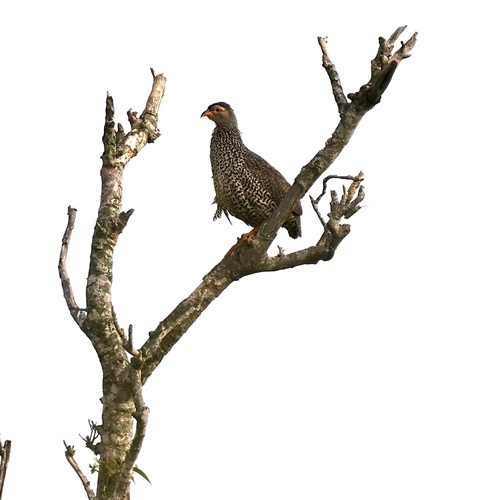 Heuglin's Spurfowl
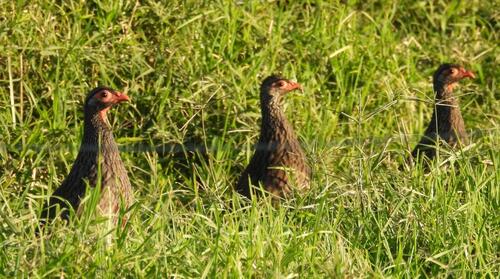 Red-necked Spurfowl
In breve
Il segno distintivo più affidabile per separare Heuglin's Spurfowl da Red-necked Spurfowl è il colore delle parti nude: Red-necked Spurfowl mostra un becco rosso brillante, pelle facciale, collo e gambe, mentre Heuglin's Spurfowl non presenta questa estesa colorazione rossa. Entrambi sono spurfowl scuri, terrestri, ma Red-necked Spurfowl è generalmente più grande e robusto, con parti nude rosse più evidenti. Le differenze nel piumaggio sono sottili, quindi concentrati sul colore e sulla dimensione delle parti nude quando osservi con i binocoli. L'habitat e la distribuzione sono anche utili: Heuglin's si trova in Africa centrale, mentre Red-necked è residente in Africa meridionale.
Consigli di identificazione
- Il colore delle parti nude è fondamentale: Red-necked Spurfowl ha un becco rosso brillante, pelle facciale, collo e gambe. Heuglin's Spurfowl non ha questo, mostrando invece un becco giallastro e nessun rosso sul collo o sul viso. Questo è il segno più affidabile in tutte le età e stagioni.
- Dimensione e struttura: Red-necked Spurfowl è più grande e massiccio, con una massa media registrata di 586 g e lunghezza fino a 38 cm. Heuglin's è più piccolo e meno robusto, ma questo può essere difficile da giudicare senza un confronto diretto.
- Motivo delle parti inferiori: Red-necked Spurfowl ha parti inferiori grigie o bianche striate di nero, che possono apparire più contrastanti rispetto alle parti inferiori meno distintamente marcate di Heuglin's. Tuttavia, questo è sottile e variabile.
- Colore del becco: Il becco di Red-necked è rosso brillante, mentre quello di Heuglin's è giallastro (come indicato nel suo nome scientifico). Controlla sempre il colore del becco se la testa è visibile.
- Pelle facciale e del collo: Solo Red-necked Spurfowl mostra una pelle nuda rossa estesa sul viso e sul collo. Heuglin's ha una pelle facciale semplice, non rossa.
- Colore delle gambe: Le gambe di Red-necked sono rosse brillanti; quelle di Heuglin's non lo sono. Questo può essere visibile quando gli uccelli camminano o corrono.
- Distribuzione geografica: Se ti trovi in Africa meridionale, Red-necked Spurfowl è la specie attesa. In Africa centrale, Heuglin's è il default. L'overlap non è documentato, quindi la distribuzione è un forte indizio.
- Nessun motivo specifico per età sulle ali: Nessuna delle due specie è descritta come avente motivi distintivi per le ali superiori giovanili o immature in volo, quindi non fare affidamento su questo per la separazione.
- Comportamento: Entrambe le specie sono terrestri e preferiscono correre piuttosto che volare; il comportamento non è un separatore affidabile.
- Sesso e stagione: Non è descritto alcun dimorfismo sessuale o cambiamento del piumaggio stagionale per nessuna delle due specie, quindi i segni sopra si applicano tutto l'anno e a entrambi i sessi.
- Trappole del piumaggio: Entrambi sono generalmente scuri con parti superiori marroni, quindi non fare affidamento solo sul colore o sulla scurezza complessiva.
- Voce: Non sono descritte differenze vocali nelle fonti, quindi non usare la voce per la separazione.
- Contesto: Se vedi uno spurfowl con un becco e collo rossi brillanti, è Red-necked. Se questi sono assenti e il becco è giallastro, è Heuglin's.
- Attenzione con gli immaturi: Poiché il piumaggio giovanile non è descritto, usa il colore delle parti nude e la distribuzione come tuoi indizi principali, e fai attenzione con gli uccelli giovani.
- Controllo veloce: Con i binocoli, cerca il rosso sul becco, sul viso, sul collo e sulle gambe—se presente, è Red-necked; se assente e il becco è giallastro, è Heuglin's.
Taglia
Red-necked Spurfowl è notevolmente più grande, con una massa corporea media registrata di 586 g [wikidata], e un intervallo di lunghezza di 25–38 cm [wikipedia]. La massa di Heuglin's Spurfowl non è specificata nelle fonti, ma è generalmente considerata più piccola e meno robusta rispetto a Red-necked Spurfowl. Sul campo, Red-necked appare spesso più massiccio e robusto, specialmente quando visto fianco a fianco o con esperienza.
Piumaggio
Entrambe le specie sono generalmente spurfowl scuri con parti superiori marroni. Red-necked Spurfowl ha marrone sopra e parti inferiori grigie o bianche striate di nero, ma la caratteristica più evidente è il rosso brillante sul becco, sul viso, sul collo e sulle gambe. Heuglin's Spurfowl non mostra questo rosso esteso; il suo becco è descritto come giallastro (il nome 'icterorhynchus' si riferisce al becco giallo itterico), e manca del collo rosso e della pelle facciale. Nessun motivo specifico per età o volo è descritto per nessuna delle due specie nelle fonti, quindi le differenze nel piumaggio sono principalmente nelle parti nude e nelle striature sottili delle parti inferiori. I piumaggi giovanili e immaturi non sono dettagliati nelle fonti, quindi è necessaria cautela con gli uccelli giovani.
Comportamento
Entrambe le specie sono spurfowl terrestri che preferiscono correre piuttosto che volare quando disturbate. Non è stata notata alcuna differenza comportamentale diagnostica nelle fonti per la separazione sul campo. Entrambi possono essere timidi e rapidi a scomparire nel riparo.
Habitat
Heuglin's Spurfowl si trova in paesi dell'Africa centrale come Repubblica Centrafricana, Repubblica Democratica del Congo, Sud Sudan e Uganda [wikipedia]. Red-necked Spurfowl è residente in Africa meridionale [wikipedia]. Se stai osservando gli uccelli in Africa meridionale, Red-necked è molto più probabile; in Africa centrale, Heuglin's è il default. Le preferenze habitat all'interno delle loro aree non sono dettagliate, ma entrambi sono tipici di paesaggi aperti, cespugli e bordi di bosco.
Heuglin's Spurfowl · Red-necked Spurfowl · I miei uccelli difficili