

Harlequin Quail vs Quaglia tridattila
Coturnix delegorguei contro Turnix sylvaticus
Fai un quiz con Harlequin Quail e Quaglia tridattila
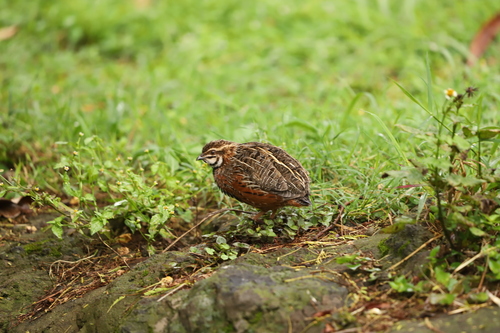 Harlequin Quail
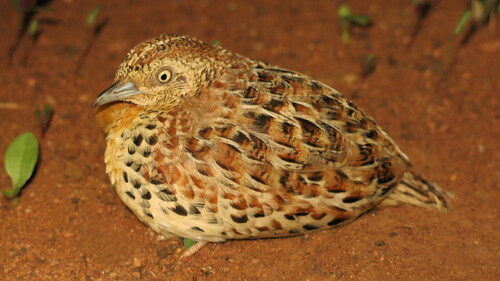 Quaglia tridattila
In breve
The most reliable field mark is the whitish wingbar on the Small Buttonquail's upperwing in flight, which is absent in Harlequin Quail of all ages. Immature Small Buttonquail also show more spotting below than adults, while Harlequin Quail lack this feature. Structurally, Harlequin Quail are heavier-bodied and more robust, whereas Small Buttonquail are smaller, rounder, and tend to run rather than fly. In perched or flushed views, focus on the buttonquail's plain face and sandy, streaked upperparts versus the more patterned look of Harlequin Quail. Both species can be elusive, but their flight style and wing pattern are key for separation.
Consigli di identificazione
- Look for the whitish wingbar in flight: Only Small Buttonquail shows a clear whitish wingbar on a greyish wing when flushed; Harlequin Quail never shows this mark. This is visible in all ages and sexes of Small Buttonquail.
- Check for underpart spotting in immatures: Immature Small Buttonquail have more obvious spotting below, especially on the belly and flanks. Harlequin Quail immatures lack this strong spotting.
- Assess overall size and build: Harlequin Quail is heavier and more robust, while Small Buttonquail is tiny, round-bodied, and delicate. This is most apparent in direct comparison or with experience, but can be subtle in the field.
- Face pattern: Small Buttonquail has a plain face, lacking strong facial markings. Harlequin Quail is more patterned and does not show the same plain-faced look.
- Upperparts: Small Buttonquail is sandy-brown and streaked above, while Harlequin Quail is more richly patterned.
- Flank markings: Small Buttonquail shows black flank markings on buff underparts; Harlequin Quail's flanks are not as distinctly marked in this way.
- Flight style: Small Buttonquail is very reluctant to fly, usually running and only flushing at the last moment. Its flight is weak and low, quickly dropping back into cover. Harlequin Quail flushes more readily and flies more strongly.
- Behavior on the ground: If you see the bird running rather than flying, suspect Small Buttonquail. Harlequin Quail may run but is more likely to flush.
- Sex differences are not reliable: Both species have similar-looking sexes in the field; do not rely on sex for separation.
- Habitat overlap: Both can occur in open grassland, but Small Buttonquail may prefer drier, sparser areas. Use habitat only as a supporting clue.
- Vocalizations are not covered in the sources; do not rely on call for separation here.
- If only a brief view is had, prioritize wing pattern and overall size/shape over plumage details.
- If you see a bird with a wingbar and spotted belly, it is almost certainly a Small Buttonquail, especially if it runs rather than flies.
- If you flush a robust, patterned quail with no wingbar and no strong underpart spotting, suspect Harlequin Quail.
- In ambiguous views, remember that buttonquails are not true quails and may appear subtly different in posture and movement, often more hunched and scurrying.
Taglia
Harlequin Quail is significantly heavier (75g) than Small Buttonquail (no direct mass given, but described as 'tiny' and only 15 cm long) [wikidata][wikipedia]. In the field, Harlequin Quail appears bulkier and more robust, while Small Buttonquail is noticeably smaller, lighter, and more delicate in build. This size difference is often apparent when flushed or seen side by side, but may be harder to judge on lone, brief views.
Piumaggio
- Immature/juvenile birds: Small Buttonquail immatures are more spotted below, especially on the underparts, while Harlequin Quail juveniles lack this strong spotting.
- In flight (all ages): Small Buttonquail shows a distinct whitish wingbar contrasting with the grey wing, a feature not present in Harlequin Quail.
- Adults: Small Buttonquail has streaked sandy-brown upperparts, buff underparts with black flank markings, and a plain face. Harlequin Quail is more patterned overall, lacking the plain-faced look and wingbar of the buttonquail.
- Sexes: Both species have similar sexes in the field, though buttonquail females may be slightly brighter, but this is not a reliable mark for separation between these two.
Comportamento
Small Buttonquail is a ground-dweller that strongly prefers running to flying, often staying hidden and only flushing at very close range. When it does fly, its flight is weak and low, quickly dropping back into cover. Harlequin Quail, while also secretive, is more likely to flush with a stronger, more sustained flight. Observing the bird's reluctance to fly and its running behavior is a good behavioral clue for Small Buttonquail.
Habitat
Both species can occur in similar open habitats, such as grasslands and fields, so habitat alone is not always diagnostic. However, Small Buttonquail is often found in drier, more open, and sometimes sparser grass or scrub, while Harlequin Quail may be present in slightly denser or moister grassland. In regions where both occur, do not rely solely on habitat for separation.
Harlequin Quail · Quaglia tridattila · I miei uccelli difficili