

Motmot

Guira Cuckoo vs Common Pauraque

Guira guira contro Nyctidromus albicollis

Fai un quiz con Guira Cuckoo e Common Pauraque
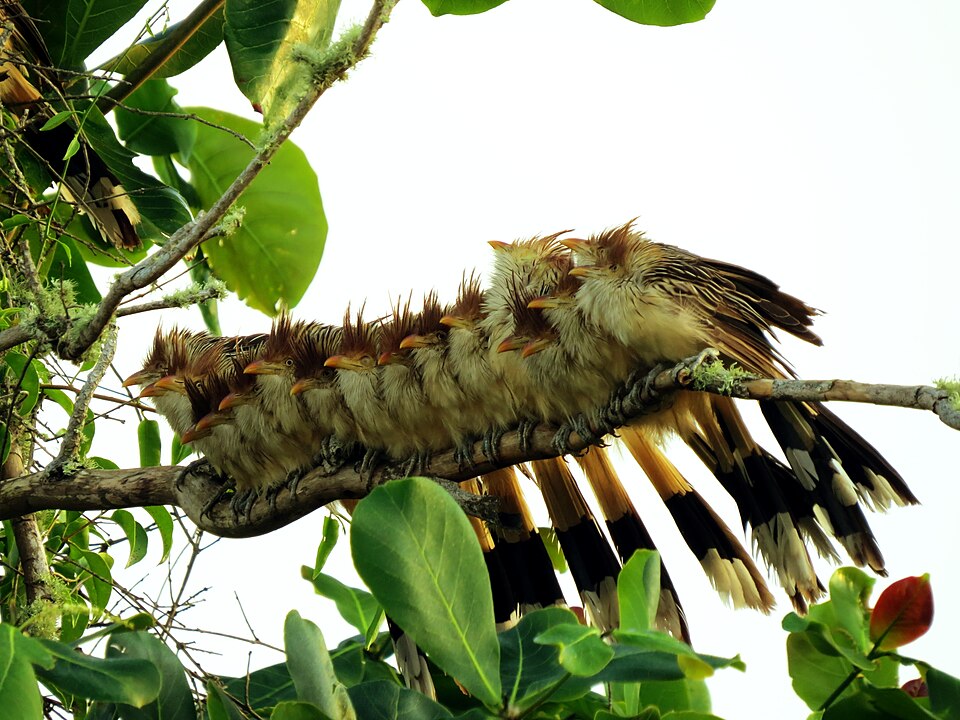
Guira Cuckoo (Guira guira) Guira Cuckoo
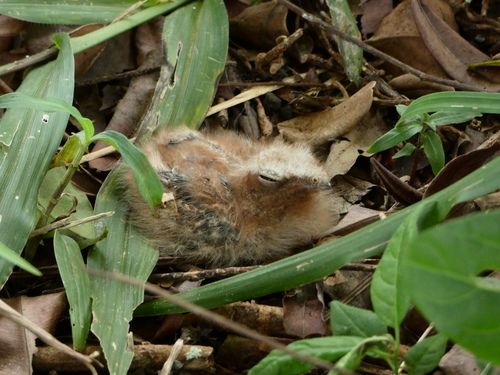
Common Pauraque (Nyctidromus albicollis) Common Pauraque

Media

Caricamento…

In breve

The most reliable way to separate Guira Cuckoo from Common Pauraque is by their structure and behavior: Guira Cuckoo is a large, upright, social cuckoo with a long, broad tail, prominent orange crest, and active daytime habits, while Common Pauraque is a much smaller, cryptic nightjar with a rounded head, short bill, and nocturnal, ground-roosting behavior. In flight, Guira Cuckoo appears heavy and awkward with a broad, white-tipped tail, whereas Pauraque is buoyant with rounded wings and, in males, a white wing band and white outer tail feathers. Plumage is also a strong clue: Guira Cuckoo is streaky brown above with a rufous crest and pale underparts, while Pauraque is intricately patterned in grayish- or rufous-brown, with a buff facial stripe and eye-ring. Habitat and activity time are strong context clues: Guira Cuckoo is active in open areas by day, Pauraque is nocturnal and favors woodland edges.

Consigli di identificazione

  1. Time of activity: If the bird is seen by day, especially in a group, Guira Cuckoo is far more likely; Pauraque is almost never active or visible in daylight except when flushed from a roost.
  2. Perched posture: Guira Cuckoo sits upright, often on exposed branches, with a long, broad tail and a prominent orange crest. Pauraque sits horizontally, flat against the ground or a low perch, with no crest and a rounded head.
  3. Tail pattern: Guira Cuckoo’s tail is broad, dark brown with a clear white tip (all ages). Pauraque’s tail is long and rounded, with adult males showing mostly white outer feathers and females showing less white; this is best seen in flight or when the tail is spread.
  4. Wing pattern in flight: Pauraque adult males have a white band near the wing tips, visible in flight; Guira Cuckoo has no white in the wing. This is a strong mark for flying males, but less so for females and immatures.
  5. Facial markings: Pauraque has a buff eye-ring and facial stripe, with reddish sides to the face, giving a masked look. Guira Cuckoo lacks any facial stripes or eye-ring, instead showing a plain pale face and a striking orange crest.
  6. Crest: Only Guira Cuckoo has a prominent orange-rufous crest, always visible when alert; Pauraque has a smooth, rounded head with no crest.
  7. Plumage texture: Guira Cuckoo is boldly streaked above and pale below, with a contrasting, almost scruffy look. Pauraque is intricately patterned and camouflaged, with mottled gray or rufous tones and no strong streaks.
  8. Bill shape: Guira Cuckoo has a long, slightly downcurved bill, suited to probing; Pauraque’s bill is short, broad, and flat, adapted for catching insects in flight.
  9. Flight style: Guira Cuckoo flies awkwardly and briefly, often gliding between perches. Pauraque’s flight is buoyant, fluttery, and usually at dusk or night, sometimes showing white wing and tail flashes (males).
  10. Group size: Guira Cuckoo is often in flocks, sometimes up to 18 birds. Pauraque is solitary or in pairs, rarely in groups.
  11. Habitat context: Guira Cuckoo prefers open, human-modified habitats; Pauraque is tied to woodland edges, scrub, or dense ground cover, and is rarely seen in open lawns or parks by day.
  12. Vocalizations: Loud, shrill, whistling-wailing calls in the day point to Guira Cuckoo. Soft, musical, whistled or whip-like calls at night indicate Pauraque.
  13. Odor: Guira Cuckoo reportedly gives off a strong, pungent smell; Pauraque does not.
  14. Size impression: Guira Cuckoo is much larger and bulkier than Pauraque; if seen near other birds, use this as a check.
  15. Juvenile confusion: Both species’ juveniles resemble adults, so age is not a major pitfall, but beware that Pauraque’s white wing/tail marks are sex- and age-dependent, and Guira Cuckoo’s crest is always present.

Taglia

Guira Cuckoo is much larger and heavier, with a body mass of about 134 g and a length of roughly 34 cm. It has a robust, upright build and a long, broad tail. In contrast, Common Pauraque is smaller and lighter, at about 53 g and 22–28 cm in length, with a more delicate, horizontally elongated body and proportionally shorter bill. When seen together or with familiar birds for scale, Guira Cuckoo is noticeably bulkier and longer-tailed.

Piumaggio

Juvenile and adult Guira Cuckoos look similar, both showing dark brown upperparts streaked with white, a pale buffy underbody, and a broad, dark brown tail with white tips. The orange-rufous crest is always prominent. By contrast, Common Pauraque (both sexes and all ages) is intricately patterned in grayish- or rufous-brown, with a buff eye-ring and facial stripe, and reddish sides to the face. Adult male Pauraques have a white band near the wing tips and mostly white outer tail feathers, while females show less white in these areas. The Guira Cuckoo lacks any white wing band or facial stripes, and its plumage is less cryptic and more contrasting. In flight, Pauraque's white wing and tail markings (in males) are distinctive, while Guira Cuckoo’s flight is marked by its broad, white-tipped tail and lack of wing pattern.

Comportamento

Guira Cuckoo is diurnal and highly social, often seen in noisy flocks, gliding or hopping between perches, and foraging both in trees and on the ground. It is a poor flier, usually making only short, direct flights. Common Pauraque is strictly nocturnal, roosting motionless on the ground during the day, often on roads or leaf litter, and becoming active at dusk. Pauraque may run rather than fly when disturbed, and is rarely seen in groups. Its flight is buoyant and fluttery, often low to the ground, and it feeds by flycatching insects from perches or while foraging over open ground.

Habitat

Guira Cuckoo is found in open and semi-open habitats, including savannas, grasslands, suburban parks, and gardens, often in areas modified by humans. Its range is eastern and southeastern South America. Common Pauraque prefers open woodland, scrub, and edges of forests, but also uses crop fields and areas with dense ground cover for daytime roosting. It is distributed from southern Texas through Central and much of South America, but is patchier at the southern edge of its range. Guira Cuckoo is almost always seen by day, Pauraque almost exclusively at night or at dusk.

Voce

Guira Cuckoo gives long, shrill calls, somewhere between a whistle and a wail, often heard in chorus from a flock. Its voice is loud and distinctive, and the species is very vocal by day. Common Pauraque’s song is a variable, whistled 'weeeow wheeooo' (sometimes rendered as 'who-r-you'), along with soft 'puk puk' notes and a whip-like call during courtship. Pauraque calls are given at night or dusk, and are softer and more musical than the Guira Cuckoo’s harsh cries.

Invia una descrizione migliore

Usa le stesse sezioni del confronto. Il testo viene pubblicato subito.

The most reliable way to separate Guira Cuckoo from Common Pauraque is by their structure and behavior: Guira Cuckoo is a large, upright, social cuckoo with a long, broad tail, prominent orange crest, and active daytime habits, while Common Pauraque is a much smaller, cryptic nightjar with a rounded head, short bill, and nocturnal, ground-roosting behavior. In flight, Guira Cuckoo appears heavy and awkward with a broad, white-tipped tail, whereas Pauraque is buoyant with rounded wings and, in males, a white wing band and white outer tail feathers. Plumage is also a strong clue: Guira Cuckoo is streaky brown above with a rufous crest and pale underparts, while Pauraque is intricately patterned in grayish- or rufous-brown, with a buff facial stripe and eye-ring. Habitat and activity time are strong context clues: Guira Cuckoo is active in open areas by day, Pauraque is nocturnal and favors woodland edges.

  1. Time of activity: If the bird is seen by day, especially in a group, Guira Cuckoo is far more likely; Pauraque is almost never active or visible in daylight except when flushed from a roost.
  2. Perched posture: Guira Cuckoo sits upright, often on exposed branches, with a long, broad tail and a prominent orange crest. Pauraque sits horizontally, flat against the ground or a low perch, with no crest and a rounded head.
  3. Tail pattern: Guira Cuckoo’s tail is broad, dark brown with a clear white tip (all ages). Pauraque’s tail is long and rounded, with adult males showing mostly white outer feathers and females showing less white; this is best seen in flight or when the tail is spread.
  4. Wing pattern in flight: Pauraque adult males have a white band near the wing tips, visible in flight; Guira Cuckoo has no white in the wing. This is a strong mark for flying males, but less so for females and immatures.
  5. Facial markings: Pauraque has a buff eye-ring and facial stripe, with reddish sides to the face, giving a masked look. Guira Cuckoo lacks any facial stripes or eye-ring, instead showing a plain pale face and a striking orange crest.
  6. Crest: Only Guira Cuckoo has a prominent orange-rufous crest, always visible when alert; Pauraque has a smooth, rounded head with no crest.
  7. Plumage texture: Guira Cuckoo is boldly streaked above and pale below, with a contrasting, almost scruffy look. Pauraque is intricately patterned and camouflaged, with mottled gray or rufous tones and no strong streaks.
  8. Bill shape: Guira Cuckoo has a long, slightly downcurved bill, suited to probing; Pauraque’s bill is short, broad, and flat, adapted for catching insects in flight.
  9. Flight style: Guira Cuckoo flies awkwardly and briefly, often gliding between perches. Pauraque’s flight is buoyant, fluttery, and usually at dusk or night, sometimes showing white wing and tail flashes (males).
  10. Group size: Guira Cuckoo is often in flocks, sometimes up to 18 birds. Pauraque is solitary or in pairs, rarely in groups.
  11. Habitat context: Guira Cuckoo prefers open, human-modified habitats; Pauraque is tied to woodland edges, scrub, or dense ground cover, and is rarely seen in open lawns or parks by day.
  12. Vocalizations: Loud, shrill, whistling-wailing calls in the day point to Guira Cuckoo. Soft, musical, whistled or whip-like calls at night indicate Pauraque.
  13. Odor: Guira Cuckoo reportedly gives off a strong, pungent smell; Pauraque does not.
  14. Size impression: Guira Cuckoo is much larger and bulkier than Pauraque; if seen near other birds, use this as a check.
  15. Juvenile confusion: Both species’ juveniles resemble adults, so age is not a major pitfall, but beware that Pauraque’s white wing/tail marks are sex- and age-dependent, and Guira Cuckoo’s crest is always present.

Guira Cuckoo is much larger and heavier, with a body mass of about 134 g and a length of roughly 34 cm. It has a robust, upright build and a long, broad tail. In contrast, Common Pauraque is smaller and lighter, at about 53 g and 22–28 cm in length, with a more delicate, horizontally elongated body and proportionally shorter bill. When seen together or with familiar birds for scale, Guira Cuckoo is noticeably bulkier and longer-tailed.

Juvenile and adult Guira Cuckoos look similar, both showing dark brown upperparts streaked with white, a pale buffy underbody, and a broad, dark brown tail with white tips. The orange-rufous crest is always prominent. By contrast, Common Pauraque (both sexes and all ages) is intricately patterned in grayish- or rufous-brown, with a buff eye-ring and facial stripe, and reddish sides to the face. Adult male Pauraques have a white band near the wing tips and mostly white outer tail feathers, while females show less white in these areas. The Guira Cuckoo lacks any white wing band or facial stripes, and its plumage is less cryptic and more contrasting. In flight, Pauraque's white wing and tail markings (in males) are distinctive, while Guira Cuckoo’s flight is marked by its broad, white-tipped tail and lack of wing pattern.

Guira Cuckoo is diurnal and highly social, often seen in noisy flocks, gliding or hopping between perches, and foraging both in trees and on the ground. It is a poor flier, usually making only short, direct flights. Common Pauraque is strictly nocturnal, roosting motionless on the ground during the day, often on roads or leaf litter, and becoming active at dusk. Pauraque may run rather than fly when disturbed, and is rarely seen in groups. Its flight is buoyant and fluttery, often low to the ground, and it feeds by flycatching insects from perches or while foraging over open ground.

Guira Cuckoo is found in open and semi-open habitats, including savannas, grasslands, suburban parks, and gardens, often in areas modified by humans. Its range is eastern and southeastern South America. Common Pauraque prefers open woodland, scrub, and edges of forests, but also uses crop fields and areas with dense ground cover for daytime roosting. It is distributed from southern Texas through Central and much of South America, but is patchier at the southern edge of its range. Guira Cuckoo is almost always seen by day, Pauraque almost exclusively at night or at dusk.

Guira Cuckoo gives long, shrill calls, somewhere between a whistle and a wail, often heard in chorus from a flock. Its voice is loud and distinctive, and the species is very vocal by day. Common Pauraque’s song is a variable, whistled 'weeeow wheeooo' (sometimes rendered as 'who-r-you'), along with soft 'puk puk' notes and a whip-like call during courtship. Pauraque calls are given at night or dusk, and are softer and more musical than the Guira Cuckoo’s harsh cries.

Scartare le modifiche?

Hai modifiche non salvate. Se esci ora, andranno perse.

Guira Cuckoo · Common Pauraque · I miei uccelli difficili