

Gray-breasted Martin vs Cave Swallow
Progne chalybea contro Petrochelidon fulva
Fai un quiz con Gray-breasted Martin e Cave Swallow
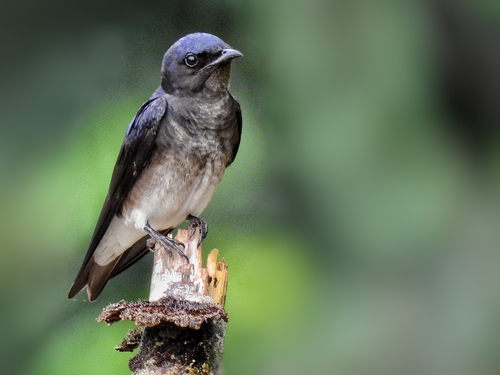 Gray-breasted Martin
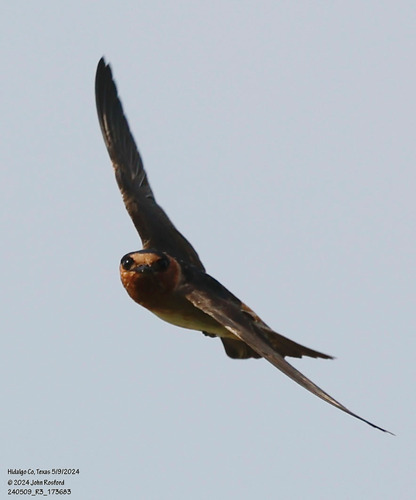 Cave Swallow
In breve
The most reliable field mark between Grey-breasted Martin and Cave Swallow is overall size and structure: Grey-breasted Martin is much larger, bulkier, and longer-winged, while Cave Swallow is smaller, more compact, and has a squarer tail. In flight, Cave Swallow shows a distinctive squarish tail and a warm brownish-tangerine throat and forehead, contrasting with the martin’s grey-brown breast and white belly. Juvenile Grey-breasted Martins are dull brown above, lacking the rich colors of Cave Swallow. Both species are swallows, but their proportions and underpart patterns are quite different when seen well. Always consider age and posture, as young martins can look less glossy and more similar to Cave Swallow at a distance.
Consigli di identificazione
- Size and Bulk: Grey-breasted Martin is much larger and heavier than Cave Swallow. If you see a swallow that looks notably big and robust, especially in a mixed flock, it is likely a martin.
- Tail Shape: Martins have a distinctly forked tail, while Cave Swallow’s tail is squarish and only shallowly notched. This is best seen in flight or when perched with the tail spread.
- Wing Structure: Grey-breasted Martin has broader wings and a longer wingspan, giving it a more powerful, direct flight. Cave Swallow’s wings are proportionally shorter and more triangular, with a fluttery flight style.
- Underpart Contrast: Adult martins show a clear contrast between the grey-brown throat/breast and the white belly. Cave Swallow’s underparts are more uniform and pale, lacking this sharp division.
- Throat and Forehead Color: Cave Swallow has a warm brown-tangerine throat and forehead, a key mark at all ages. Martins never show this color; their throat is grey-brown at best.
- Upperpart Gloss: Adult male martins are glossy blue-black above. Cave Swallow is grey-blue above, lacking the deep gloss of the martin.
- Juvenile Plumage: Young martins are dull brown above and can look less distinctive, but still lack the rich throat color of Cave Swallow juveniles.
- Perched Posture: Martins often perch upright and appear bulky, while Cave Swallows are more compact and may huddle in groups.
- Habitat Context: Swallows seen entering or leaving caves, sinkholes, or under bridges are likely Cave Swallows. Martins are more generalist in habitat and not cave-dependent.
- Flock Structure: Martins may form loose, larger flocks, often higher in the air. Cave Swallow flocks are tighter and often near nesting sites.
- Voice: If heard, the martin’s gurgly chew-chew may help, but this is not a strong separator from Cave Swallow in the field.
- Sex Differences: Both species show minimal sexual dimorphism in the field; focus on structure and plumage, not sex.
- Seasonal Pitfalls: In non-breeding season, plumage may be duller, especially in juveniles, so rely more on size, structure, and throat color.
- Mixed Flocks: When both species are present, compare individuals directly for size and tail shape. The martin will always stand out as larger and longer-winged.
- Potential Confusion: Juvenile martins can appear drab and less glossy, but never show the Cave Swallow’s warm throat and forehead. Always check for that key color patch in good light.
Taglia
Grey-breasted Martin is substantially larger and heavier than Cave Swallow. The martin averages 16–18 cm in length and about 42 g in mass, making it a large swallow with broad wings and a robust build. In contrast, Cave Swallow is 12–14 cm long and averages only 19 g, giving it a noticeably smaller and lighter appearance. In direct comparison, the martin’s size and bulk are obvious, especially when seen perched or flying near Cave Swallows.
Piumaggio
Juvenile and immature Grey-breasted Martins are dull brown above, lacking the gloss of adults and the rich throat color of Cave Swallow. Adult male martins are glossy blue-black above with a grey-brown throat and breast, sharply contrasting with white lower underparts. Females are duller but show the same pattern. Cave Swallow of all ages has grey-blue upperparts, but its most striking feature is the brown-tangerine (warm orange-brown) forehead and throat, which stands out against its pale underparts. The Cave Swallow’s underparts are generally paler and more uniform, lacking the martin’s sharp contrast between breast and belly. Tail shape is also a clue: Grey-breasted Martin has a forked tail, while Cave Swallow’s tail is squarish and less deeply notched.
Comportamento
Both species are aerial insectivores and often seen hunting on the wing. Grey-breasted Martins are notably gregarious and may form large, loose flocks, especially around water or open areas. Cave Swallows also form flocks, but their flight is more fluttery and less powerful than the martin’s strong, direct flight. Martins often perch on wires or exposed branches, appearing upright and bulky; Cave Swallows are more likely to be seen near cave entrances, under bridges, or in tight groups on wires.
Habitat
Grey-breasted Martins are widespread in open areas across Central and South America, often near water and human habitation. They are not tied to caves and will use a variety of open-country habitats. Cave Swallows, as their name suggests, are closely associated with caves, sinkholes, and increasingly, man-made structures like highway culverts and bridges. In North America, finding swallows nesting or roosting in caves or under bridges strongly points to Cave Swallow, while martins are more likely to be seen in open, urban, or semi-urban settings.
Voce
Grey-breasted Martin gives a gurgly chew-chew call, similar to Caribbean Martin, but vocalizations are not typically a strong field mark between these two species. Cave Swallow’s calls are not described in the provided notes, so voice is not a reliable separator here.
Gray-breasted Martin · Cave Swallow · I miei uccelli difficili