
Aquila reale vs Aquila di Bonelli
Aquila chrysaetos contro Aquila fasciata
Fai un quiz con Aquila reale e Aquila di Bonelli
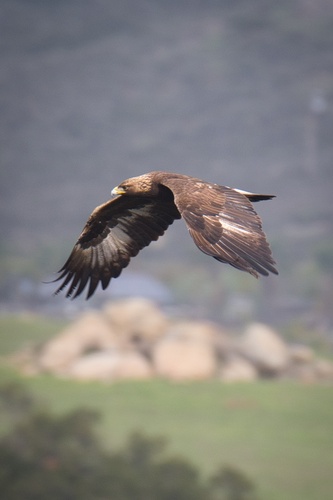 Aquila reale
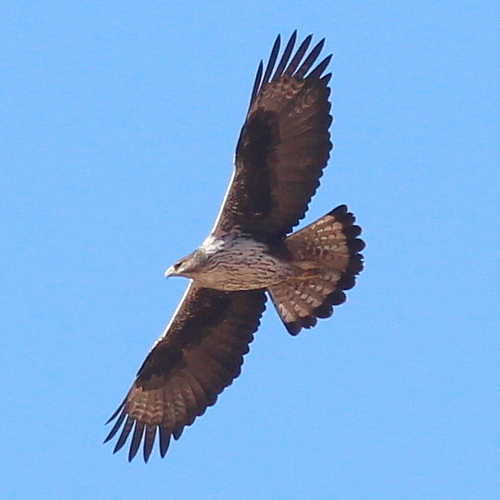 Aquila di Bonelli
In breve
Il segno di campo più affidabile tra l'Aquila reale e l'Aquila di Bonelli è la dimensione: l'Aquila reale è quasi due volte più pesante e molto più grande in tutte le proporzioni, rendendo poco probabile la confusione quando vengono viste insieme o con una buona scala. Per gli immaturi in volo, i giovani Aquile reali mostrano ampie macchie bianche alla base delle primarie e della coda, mentre i giovani Aquile di Bonelli sono più chiare sotto ma mancano di queste grandi macchie bianche sulle ali e sulla coda. Strutturalmente, l'Aquila reale è più massiccia con una coda più lunga e ali più larghe, mentre l'Aquila di Bonelli è più snella e spesso mostra una macchia bianca sul mantello negli adulti. Entrambe le specie sono aquile brune, ma un'attenta attenzione al modello delle ali, alla struttura e alla dimensione le separerà in quasi tutte le situazioni di campo.
Consigli di identificazione
- La dimensione è il primo controllo: L'Aquila reale è quasi due volte più pesante e molto più grande in tutte le proporzioni. Se l'uccello sembra davvero massiccio, specialmente in confronto ad altri rapaci, è probabile che sia un'Aquila reale.
- Modello delle ali e della coda degli immaturi: I giovani Aquile reali mostrano grandi macchie bianche ben definite alla base delle primarie e una larga banda bianca alla base della coda, entrambe visibili in volo. I giovani Aquile di Bonelli non mostrano mai un bianco così esteso; le loro ali e la coda sono più uniformemente brune e barrate.
- Macchia del mantello negli adulti: Gli adulti Aquile di Bonelli hanno spesso una macchia bianca sul mantello (parte superiore della schiena), che non è mai presente nell'Aquila reale. Se vedi una macchia bianca sulla schiena di un adulto in perching o in volo, è un'Aquila di Bonelli.
- Colore del nape: Gli adulti dell'Aquila reale hanno un nape dorato a rufoso (parte posteriore del collo), in contrasto con il resto del piumaggio bruno scuro. L'Aquila di Bonelli ha una testa bruna scura con un collo più chiaro e striato ma manca del nape dorato.
- Modello della coda: La coda dell'Aquila reale adulta è lunga, bruna scura e priva di barre, mentre la coda dell'Aquila di Bonelli è grigia con barre sottili, una larga banda subterminale nera e una punta bianca. La coda del giovane Bonelli è più chiaramente barrata rispetto a quella dell'adulto, ma mai con una base bianca audace.
- Parti inferiori: Gli adulti dell'Aquila di Bonelli sono crema sotto con striature scure, specialmente sul petto e sui fianchi; le Aquile reali sono più uniformemente brune scure sotto, a volte con un'area leggermente più chiara ma mai crema con striature.
- Silhouette in volo: L'Aquila reale è più massiccia con ali più larghe e una coda più lunga, spesso volando con un dihedro pronunciato (ali sollevate). L'Aquila di Bonelli è più snella, con ali leggermente rientrate e una coda relativamente larga e quadrata.
- Proiezione della testa: In volo, l'Aquila di Bonelli mostra una testa ben proiettata e un corpo compatto; la testa dell'Aquila reale è meno prominente rispetto alla massa del corpo.
- Variabilità della muta delle ali: Le ali dell'Aquila di Bonelli possono apparire variabili nella forma a causa della muta, a volte più lunghe e più strette, ma mai così massicce come l'Aquila reale.
- Comportamento in volo: L'Aquila reale vola con battiti d'ali lenti, potenti e costanti; l'Aquila di Bonelli ha battiti più sciolti e superficiali ed è spesso vista volare in coppie.
- Contesto dell'habitat: L'Aquila reale è più probabile che si trovi in aree settentrionali, aperte o ad alta quota; l'Aquila di Bonelli preferisce paesaggi rocciosi, mediterranei o collinari.
- Dimorfismo sessuale: Le femmine delle Aquile di Bonelli sono più scure e più marcate sotto rispetto ai maschi, ma questo è sottile e non è una separazione affidabile dall'Aquila reale.
- Invecchiamento: L'Aquila di Bonelli impiega 4-5 anni per raggiungere il piumaggio adulto, quindi gli uccelli intermedi possono mostrare un mix di caratteristiche, ma non avranno mai le audaci macchie bianche sulle ali e sulla coda dei giovani Aquile reali.
- Uccelli in perching: Dimensione, macchia del mantello (Bonelli) e colore del nape (Reale) sono i migliori indizi. La dimensione del becco non è un forte separatore tra questi due.
- Quando hai dei dubbi: Concentrati sulla dimensione, sul modello delle ali e della coda degli immaturi e sul colore del mantello/nape degli adulti per la separazione più affidabile.
Taglia
Aquila reale is much larger and heavier, with an average body mass of 4383 g compared to Aquila di Bonelli's 2190 g. In the field, Aquila reale appears bulkier, with broader wings and a longer tail. Even a large female Aquila di Bonelli is dwarfed by a Aquila reale. When perched, the size difference is striking, and in flight, Aquila reale's wingspan and body bulk are unmistakable. Aquila di Bonelli, while large for a raptor, is noticeably more slender and compact.
Piumaggio
-
Juvenile/immature birds in flight: Juvenile Golden Eagles show large, crisp white patches at the base of the primaries (forming a 'window') and a broad white band at the base of the tail, both sharply contrasting with the otherwise dark plumage. These white areas are extensive and well-defined, fading as the bird matures. In contrast, juvenile Bonelli's Eagles are paler brown above with some pale edges, but do not show large white patches on the wings or tail; their underparts are warm buff to rufous with minimal black streaks, and the tail is more evenly barred with a thin white tip but no bold white base.
-
Adults: Aquila reale adults are uniformly dark brown with a golden to rufous nape, lacking any white on the mantle or back. Aquila di Bonelli adults are dark brown above with a variable white mantle patch (never present in Aquila reale), a grey tail with thin bars and a broad black subterminal band, and a cream base color below with dark streaks, especially on the breast and flanks. The adult Aquila di Bonelli's head is dark brown with a paler, streaky neck and white throat, while Aquila reale's nape is golden but the rest of the head is dark.
-
Aging: Aquila di Bonelli takes 4–5 years to reach adult plumage, gradually increasing streaking below and developing the adult tail pattern. Aquila reale's white wing and tail patches are most prominent in juveniles and fade with age.
Comportamento
Le Aquile reali volano con ali larghe e leggermente sollevate (dihedro) e un volo potente e costante. È più probabile vederle da sole o in coppie, spesso planando ad altezze elevate. Le Aquile di Bonelli volano anche, ma più spesso con ali piatte o solo leggermente sollevate, con una tendenza a battiti d'ali potenti ma più sciolti e superficiali. Le Aquile di Bonelli volano frequentemente in coppie e possono apparire più agili e rapide in volo. Quando planano, le ali dell'Aquila di Bonelli sono leggermente rientrate al corpo e possono apparire variabili nella forma a causa della muta. Il volo dell'Aquila reale è più lento e pesante, corrispondente alla sua struttura più massiccia.
Habitat
Entrambe le specie si trovano in habitat aperti o montuosi, ma l'Aquila reale ha un'area molto più ampia nel emisfero settentrionale ed è trovata in una varietà più ampia di paesaggi aperti, inclusi tundra, steppa e alte montagne. L'Aquila di Bonelli è più ristretta all'Europa meridionale, all'Africa del Nord e a parti dell'Asia, preferendo colline rocciose, scogliere e paesaggi di tipo mediterraneo. L'overlap è limitato e il contesto può aiutare: l'Aquila reale è più probabile che si trovi in regioni settentrionali o ad alta quota, mentre l'Aquila di Bonelli preferisce habitat più caldi, rocciosi e mediterranei.