
Far Eastern Curlew vs Chiurlo maggiore
Numenius madagascariensis contro Numenius arquata
Fai un quiz con Far Eastern Curlew e Chiurlo maggiore
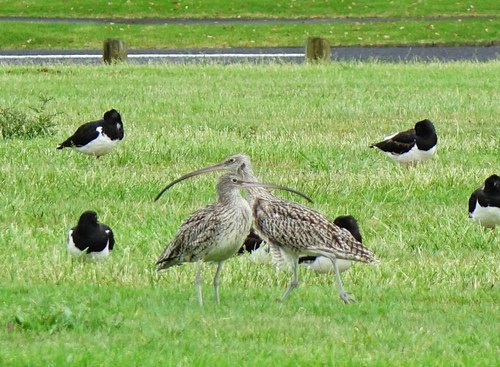 Far Eastern Curlew
 Chiurlo maggiore
In breve
Il segno di campo più affidabile per separare il Far Eastern Curlew dal Chiurlo maggiore è il motivo dell'ala inferiore e del sopracciglio in volo: il Far Eastern Curlew mostra un'ala inferiore marrone uniforme e un sopracciglio marrone, mentre il Chiurlo maggiore ha un dorso e un sopracciglio bianchi e manca dell'ala inferiore marrone uniforme. Il Far Eastern Curlew è anche leggermente più grande nel complesso con un becco proporzionalmente più lungo e pesante. Entrambe le specie sono grandi, limicoli marroni con lunghi becchi ricurvi, e la confusione è più probabile quando si osservano uccelli lontani o in volo, specialmente immaturi. Le differenze strutturali e di piumaggio sono sottili ma costanti se ci si concentra sul sopracciglio e sull'ala inferiore in volo, e sulla lunghezza e sul colore del becco quando sono posati.
Consigli di identificazione
- Sopracciglio e parte bassa del dorso in volo: il Far Eastern Curlew mostra un sopracciglio e una parte bassa del dorso marroni, mentre il Chiurlo maggiore ha un dorso e un sopracciglio bianchi. Questo è il segno più affidabile in tutte le età e stagioni quando gli uccelli volano via o sopra di noi.
- Motivo dell'ala inferiore: il Far Eastern Curlew ha un'ala inferiore marrone uniforme, in contrasto con l'ala inferiore più chiara e meno uniforme del Chiurlo maggiore. Controlla questo in volo o quando gli uccelli allungano le ali.
- Lunghezza e forma del becco: il Far Eastern Curlew ha un becco estremamente lungo e ricurvo (12.8–20.1 cm), che appare spesso proporzionalmente più lungo e pesante rispetto al Chiurlo maggiore. Questo è più evidente nelle femmine adulte, ma fai attenzione a sovrapposizioni e variazioni.
- Colorazione generale: il Far Eastern Curlew tende ad essere più uniformemente marrone, specialmente sulle parti superiori e sull'ala inferiore, mentre il Chiurlo maggiore è più marrone-grigiastro con un dorso bianco in contrasto.
- Colore delle gambe: il Chiurlo maggiore ha gambe grigio-blu; il colore delle gambe è meno enfatizzato per il Far Eastern Curlew ma non è un separatore primario.
- Dimensioni e struttura: il Far Eastern Curlew è leggermente più lungo e massiccio, con un collo e un becco più lunghi, ma questo è sottile e non sempre ovvio sul campo. Usa solo come prova di supporto.
- Uccelli posati: quando entrambi sono in piedi, cerca il dorso bianco del Chiurlo maggiore rispetto alle parti superiori più uniformemente marroni del Far Eastern Curlew, ma fai attenzione che l'illuminazione e la postura possano oscurare questi segni.
- Aspetto in volo: entrambe le specie hanno lunghi becchi ricurvi e lunghe gambe che si allungano in volo, ma il Far Eastern Curlew può apparire più massiccio e più pesante nella parte anteriore a causa del suo becco e collo più lunghi.
- Voce: impara la differenza tra il fischio acuto e chiaro del Far Eastern Curlew ('cuuue-reee') e il richiamo più gorgogliante e prolungato del Chiurlo maggiore ('curloo-oo'). Usa i richiami come conferma, non come separatore primario.
- Habitat e contesto: nell'Asia orientale, entrambe le specie possono verificarsi insieme, quindi non fare affidamento solo sulla posizione. In Europa, ci si aspetta solo il Chiurlo maggiore.
- Sesso e età: entrambe le specie mostrano variazione nella lunghezza del becco per sesso (femmine con becco più lungo), ma questo non è un segno di campo affidabile a meno che gli uccelli non siano accoppiati. Non sono stati descritti segni di volo specifici per età, quindi concentrati su sopracciglio e ala inferiore in tutte le età.
- Composizione del branco: grandi branchi nell'Asia orientale possono contenere entrambe le specie; cerca il sopracciglio marrone e l'ala inferiore uniforme per individuare il Far Eastern Curlew tra i Chiurli maggiori.
- Trappole: gli uccelli immaturi di entrambe le specie sembrano simili agli adulti nella struttura e nel piumaggio, quindi non assumere che un uccello più piccolo o più opaco sia un giovanile di una specie; fai affidamento su sopracciglio e ala inferiore.
- Sovrapposizione del becco: alcuni Chiurli maggiori, specialmente le femmine, possono avere becchi lunghi che si avvicinano a quelli del Far Eastern Curlew, quindi conferma sempre con il motivo del sopracciglio e dell'ala inferiore.
- Illuminazione e distanza: in condizioni di scarsa illuminazione o a lunga distanza, i segni del sopracciglio e dell'ala inferiore potrebbero essere difficili da vedere; in questi casi, usa una combinazione di struttura, lunghezza del becco e colore generale, ma sii cauto e annota l'incertezza.
Taglia
Entrambe le specie sono tra i più grandi limicoli, ma il Far Eastern Curlew è leggermente più lungo (60–66 cm contro 50–60 cm) e ha un'apertura alare più ampia (fino a 110 cm contro 106 cm). Nonostante ciò, il Chiurlo maggiore pesa mediamente un po' di più (805.5 g contro 752.6 g), probabilmente a causa della variazione individuale e sessuale. Sul campo, la differenza di dimensioni è sottile e raramente diagnostica a meno che entrambe le specie non siano affiancate, ma il Far Eastern Curlew appare spesso più massiccio e con un collo più lungo, con una presenza più imponente.
Piumaggio
Per tutte le età, la differenza chiave è nel sopracciglio e nell'ala inferiore: il Far Eastern Curlew ha un'ala inferiore marrone uniforme e un sopracciglio e parte bassa del dorso marroni, visibili in volo. Il Chiurlo maggiore, al contrario, ha un dorso e un sopracciglio bianchi, che si distinguono in volo, e la sua ala inferiore non è descritta come uniformemente marrone. Entrambe le specie sono per lo più marroni sopra e chiare sotto, ma il Chiurlo maggiore è descritto come più marrone-grigiastro nel complesso, con un dorso bianco e gambe grigio-blu. Non sono stati descritti motivi specifici per le parti superiori per età per nessuna delle due specie, quindi queste caratteristiche del sopracciglio e dell'ala inferiore si applicano sia agli adulti che agli immaturi. Quando sono posati, i due sono molto simili, ma il Far Eastern Curlew tende a sembrare più uniformemente marrone, mentre il Chiurlo maggiore mostra più contrasto tra le parti superiori marroni e il dorso bianco.
Comportamento
Entrambe le specie si nutrono sondando il fango o il terreno morbido con i loro lunghi becchi ricurvi, spesso in branchi durante la migrazione o al riposo. Il Far Eastern Curlew può nutrirsi in solitaria ma generalmente si riunisce in grandi branchi per la migrazione o il riposo, simile al Chiurlo maggiore. Non sono state notate differenze comportamentali significative che possano separarle in modo affidabile sul campo.
Habitat
Entrambe le specie occupano habitat umidi aperti simili, come fanghi, estuari e paludi costiere, specialmente durante la migrazione e in inverno. Il Chiurlo maggiore nidifica in tutta l'Europa temperata e in Asia in prati e pascoli aperti, mentre il Far Eastern Curlew è più ristretto all'Asia orientale e all'Australasia. Nelle aree di sovrapposizione dell'areale (ad es., Asia orientale), l'habitat non è un separatore affidabile.
Voce
Il Far Eastern Curlew emette un fischio acuto e chiaro, 'cuuue-reee', spesso ripetuto. Il richiamo del Chiurlo maggiore è un forte 'curloo-oo'. Entrambi hanno richiami distintivi e che si sentono a distanza, ma questi non sono facilmente confondibili se ascoltati bene. Tuttavia, in branchi misti o a distanza, i richiami potrebbero essere attribuiti erroneamente, quindi usa le vocalizzazioni come prova di supporto piuttosto che come unico separatore.
Far Eastern Curlew · Chiurlo maggiore · I miei uccelli difficili