

Ghiandaia marina vs Abyssinian Roller
Coracias garrulus contro Coracias abyssinicus
Fai un quiz con Ghiandaia marina e Abyssinian Roller
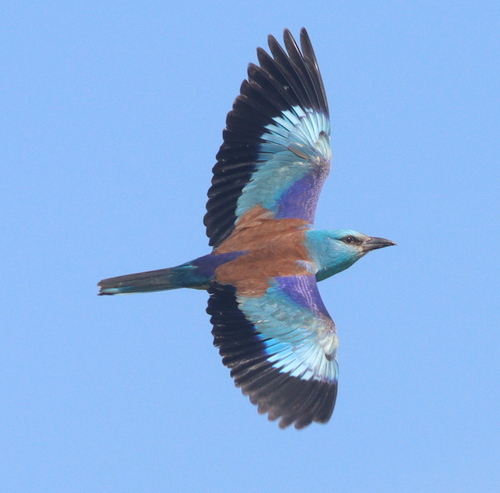 Ghiandaia marina
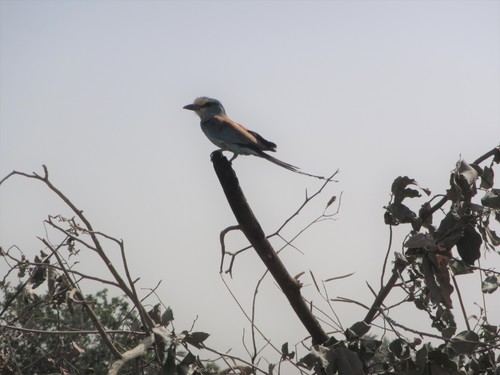 Abyssinian Roller
In breve
Il segno di campo più affidabile per separare la Ghiandaia marina dall'Abyssinian Roller è la presenza di lunghe streamers della coda in volo nell'Abyssinian Roller adulto, che sono assenti nella Ghiandaia marina di qualsiasi età. Entrambe le specie sono principalmente blu con un dorso marrone caldo, ma le streamers della coda dell'Abyssinian Roller e la forma leggermente più piccola e allungata sono distintive, specialmente in volo. I giovani di entrambe le specie sono più opachi, ma la differenza delle streamers della coda rimane fondamentale. Negli uccelli posati, cerca la proporzione di marrone sul dorso e la forma della coda. Entrambe le specie possono mostrare forti contrasti blu in volo, ma le streamers della coda dell'Abyssinian e il blu più esteso sulle ali sono diagnostici.
Consigli di identificazione
- Tail streamers (adults): Gli adulti dell'Abyssinian Roller hanno lunghe streamers della coda appuntite (circa 12 cm) che si allungano dietro in volo e sono visibili quando posati. La Ghiandaia marina non mostra mai streamers della coda a qualsiasi età.
- Tail shape (all ages): La Ghiandaia marina ha una coda più quadrata e corta, mentre la coda dell'Abyssinian Roller è più allungata a causa delle streamers. Questo è più ovvio in volo ma può essere visto quando posato se la coda non è oscurata.
- Upperwing pattern (adults): Entrambe le specie mostrano ali blu brillanti in volo, ma la Ghiandaia marina ha punte blu-nerastre nelle penne alari, che possono essere viste in buona luce. Le ali dell'Abyssinian Roller sono più uniformemente blu senza una punta nera così marcata.
- Back color: Entrambe hanno un dorso marrone caldo, ma questo è più esteso e ricco nella Ghiandaia marina. Nell'Abyssinian Roller, il marrone è presente ma può apparire meno contrastante a causa del blu più esteso altrove.
- Body shape: La Ghiandaia marina è più robusta e robusta, mentre l'Abyssinian Roller appare più snella e allungata, specialmente con le streamers della coda.
- Perched posture: Entrambe si posano erette su rami o fili esposti, ma le streamers della coda dell'Abyssinian spesso pendono sotto il posatoio, facendolo apparire con una coda più lunga.
- Juvenile plumage: I giovani di entrambe le specie sono più opachi e meno contrastanti, ma la differenza delle streamers della coda rimane il miglior separatore non appena l'Abyssinian raggiunge il piumaggio adulto.
- Flight jizz: Entrambe le specie hanno un volo forte e diretto e eseguono voli acrobatici di esibizione. Le streamers della coda dell'Abyssinian svolazzano e si allungano durante le esibizioni in volo, mentre il volo della Ghiandaia marina è più compatto e privo di streamers.
- Voice: Entrambe emettono richiami aspri, simili a quelli di un corvo, che non sono separabili in modo affidabile sul campo a meno che non si sia molto esperti con entrambe le specie.
- Range and context: In Europa e nel Maghreb, è presente solo la Ghiandaia marina. Nel Sahel e in Africa tropicale, predomina l'Abyssinian Roller. In Africa subsahariana durante l'inverno settentrionale, entrambe possono verificarsi, quindi fai affidamento sulla forma e sulla struttura della coda.
- Sex differences: Entrambe le specie sono sessualmente monomorfiche nel piumaggio, quindi non usare il sesso come separatore.
- Seasonal variation: La Ghiandaia marina è un migratore a lungo raggio, assente dall'Europa in inverno; l'Abyssinian Roller è residente o un migratore a breve distanza all'interno dell'Africa.
- Subspecies: Le differenze tra le sottospecie della Ghiandaia marina sono sottili e non è probabile che causino confusione con l'Abyssinian Roller.
- Habitat: Entrambe utilizzano terreni aperti con alberi sparsi, quindi non fare affidamento solo sull'habitat dove le aree si sovrappongono.
- Common pitfalls: Non fare affidamento esclusivamente sulla colorazione blu o sul dorso marrone, poiché entrambe le specie condividono queste caratteristiche. Concentrati sulla forma e sulla lunghezza della coda, specialmente in volo o quando posate con la coda visibile.
Taglia
Entrambe le specie sono simili in dimensioni complessive, con la Ghiandaia marina che misura 29–32 cm di lunghezza e l'Abyssinian Roller a 28–30 cm. Tuttavia, l'Abyssinian Roller appare con una coda più lunga a causa delle sue streamers di 12 cm negli adulti, conferendogli un aspetto più allungato in volo e quando posato. Le aperture alari non sono confrontate direttamente, ma entrambe sono nella gamma di un Ghiandaia eurasiatica o di un Corvo. Sul campo, la dimensione da sola non è un separatore affidabile, ma le streamers della coda dell'Abyssinian Roller lo fanno apparire più lungo e più snello in silhouette.
Piumaggio
I giovani di entrambe le specie sono versioni più opache degli adulti, privi della piena intensità di blu e marrone, ma la differenza delle streamers della coda è presente fin dal primo piumaggio adulto nell'Abyssinian Roller. La Ghiandaia marina mostra un corpo principalmente blu con un dorso marrone arancio ricco e punte blu-nerastre in volo. L'Abyssinian Roller ha anche un dorso marrone ma è altrimenti blu, con gli adulti che mostrano lunghe streamers della coda appuntite che sono assenti nella Ghiandaia marina. In volo, entrambe le specie sono sorprendentemente blu, ma le streamers della coda dell'Abyssinian si allungano notevolmente dietro, e il suo blu può essere più esteso sulle ali. Le punte delle penne alari blu-nerastre della Ghiandaia marina possono essere viste in forte luce. I sessi sono simili in entrambe le specie, quindi il sesso non è un utile separatore. La variazione delle sottospecie nella Ghiandaia marina (C. g. semenowi) è sottile e non è probabile che causi confusione sul campo.
Comportamento
Entrambe le specie si posano in modo prominente su rami, fili o pali esposti, cercando prede e spesso lanciandosi in un volo forte e diretto. Entrambe eseguono voli acrobatici di esibizione con torsioni e giri. L'Abyssinian Roller è noto per essere particolarmente audace, a volte tuffandosi verso gli intrusi, e può essere visto lanciarsi nel fumo per cercare insetti. L'esibizione della Ghiandaia marina è più aerea, con volo rotolante e torcente, che è l'origine del suo nome inglese. Entrambe le specie possono apparire simili a un'averla nella loro postura eretta, ma le streamers della coda dell'Abyssinian sono spesso visibili anche quando posate.
Habitat
La Ghiandaia marina nidifica in aree aperte e calde di pianura con alberi sparsi in tutta l'Europa meridionale e orientale, in Asia occidentale e in Nord Africa, svernando in savane boschive secche e pianure cespugliose dell'Africa subsahariana. L'Abyssinian Roller è residente o un migratore a breve distanza attraverso il Sahel e l'Africa tropicale a sud del Sahara, favorendo terreni aperti con alberi. Nelle aree di sovrapposizione invernale (Africa subsahariana), il contesto è meno utile, ma in Europa e nel Maghreb, è prevista solo la Ghiandaia marina. Entrambe le specie utilizzano habitat aperti simili con alberi sparsi, quindi l'habitat non è un forte separatore dove le aree si sovrappongono.
Voce
Entrambe le specie emettono richiami aspri, simili a quelli di un corvo. Il richiamo della Ghiandaia marina è descritto come un suono rauco, simile a quello di un corvo, specialmente quando allarmato. L'Abyssinian Roller emette un aspro 'gak' o un 'aaaargh' stridulo. In pratica, i loro richiami sono simili e non sono un separatore affidabile a meno che non si sia molto familiari con entrambe.
Ghiandaia marina · Abyssinian Roller · I miei uccelli difficili