

Taccola vs House Crow
Coloeus monedula contro Corvus splendens
Fai un quiz con Taccola e House Crow
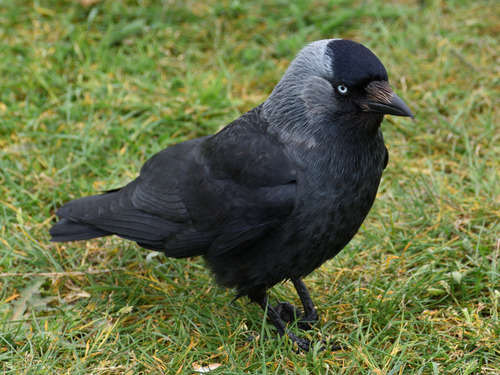 Taccola
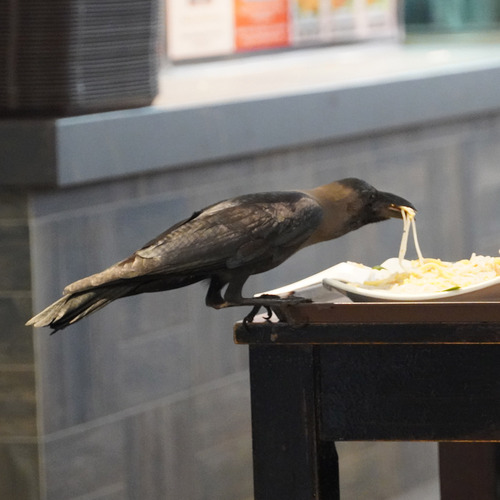 House Crow
In breve
The most reliable field mark to separate Eurasian Jackdaw from House Crow is the jackdaw’s pale silvery or whitish eye (adult), contrasting with the House Crow’s dark eye. In all plumages, jackdaws show a short, stubby bill and a distinctive pale grey nape and sides of the neck, while House Crow has a slimmer, longer bill and a more extensive pale area on the lower neck and breast, with a glossy black crown and throat. In flight, jackdaws are smaller, more compact, and have faster, deeper wingbeats, while House Crow appears longer, slimmer, and more languid. Juvenile jackdaws can be trickier, but their sooty, less sharply demarcated head pattern and blue-grey eyes still help. Always check the eye color and the shape of the bill and head for a confident ID.
Consigli di identificazione
- Eye color is the fastest check: Adult Eurasian Jackdaws have pale silvery or whitish eyes, visible even at a distance in good light. House Crows always have dark eyes, regardless of age. Juvenile jackdaws have blue-grey or brownish eyes, but these are still paler than the House Crow’s.
- Bill shape and size: Jackdaws have a short, stubby bill, about 75% the length of the head behind it, giving the face a blunt, compact look. House Crow’s bill is longer, slimmer, and more pointed, contributing to a sleeker profile.
- Nape and neck pattern: Jackdaws show a sharply defined pale grey or silvery nape and sides of the neck, contrasting with the black crown and cheeks. House Crow’s pale area is more extensive, covering the lower neck and upper breast, but is brownish-grey and less sharply demarcated from the black crown and throat.
- Crown and throat: Both species have glossy black crowns, but House Crow’s black extends further down the throat and upper breast, while jackdaw’s throat is less glossy and merges into the grey underparts.
- Underparts: Jackdaw underparts are slate-grey, blending with the grey nape, while House Crow’s breast is paler grey-brown, often contrasting more with the black throat.
- Flight shape and wingbeats: Jackdaws are smaller, with shorter, broader wings and a compact, short-tailed look. Their wingbeats are fast and jerky, and they often fly in tight flocks. House Crows are longer, slimmer, with longer wings and tail, and have slower, steadier wingbeats.
- Jizz on the ground: Jackdaws stand upright and strut briskly, appearing short-legged and compact. House Crows are lankier, with a more horizontal posture and longer legs.
- Juvenile confusion: Young jackdaws are duller, with a sooty head and less distinct nape, but their blue-grey or brownish eyes and compact shape still separate them from House Crow juveniles, which are similar to adults but may be browner overall.
- Regional context: In Europe and western Asia, a small, pale-naped corvid is almost always a jackdaw; House Crow is rare and found mainly in ports. In South Asia or introduced populations, check all marks carefully.
- Flock structure: Jackdaws often form tight, swirling flocks, especially at roost, while House Crows are more loosely social.
- Sex and season: Both species are sexually monomorphic in the field. Jackdaw males may show more faded head and neck plumage before molt, but this is subtle and not a primary ID mark.
- Bill color: Both have black bills, but jackdaw’s is shorter and stubbier.
- Leg color: Both species have black legs; not useful for separation.
- Voice: Not covered in the sources, so not reliable here.
- Pitfalls: In poor light, jackdaw’s pale nape and eye can be missed, making it appear darker and more crow-like. Always look for the eye color and head pattern, especially in juveniles or worn birds.
Taglia
House Crow is distinctly larger and heavier than Eurasian Jackdaw, measuring about 40 cm in length and averaging 293.5 g in mass [wikidata], compared to the jackdaw’s 34–39 cm and ~240 g [wikipedia]. House Crow is also slimmer and longer-bodied, while jackdaw is more compact and short-necked. In mixed flocks or side-by-side, House Crow stands out as the larger, rangier bird.
Piumaggio
Adult Eurasian Jackdaw shows a shiny black crown and nape with a purple or blue sheen, but the most distinctive feature is the pale grey to silvery nape and sides of the neck, sharply contrasting with the blackish crown and cheeks. The underparts are slate-grey. The pale, silvery-white iris is striking in adults. Juvenile jackdaws are duller, with a sooty black head and less distinct grey nape, and their eyes are blue-grey, becoming brownish before whitening at about a year old. House Crow, by contrast, has a glossy black forehead, crown, throat, and upper breast, but the neck and lower breast are a lighter grey-brown, often more extensive and less sharply demarcated than the jackdaw’s nape patch. The wings, tail, and legs are black in both species, but House Crow lacks the jackdaw’s pale nape and has a dark eye at all ages. Regional variation in House Crow can alter the depth of the grey, but the pattern remains: black crown and throat, pale lower neck and breast. In flight, neither species shows strong upperwing panels or contrasting flight feathers, but jackdaw is more compact and has proportionately shorter wings and tail.
Comportamento
Jackdaws are agile, tight fliers, often seen in compact, coordinated flocks with fast, jerky wingbeats and frequent gliding. On the ground, they have an upright posture and brisk, strutting gait. House Crows are more languid in flight, with slower, more measured wingbeats, and often appear longer and slimmer. House Crows are also more likely to be seen in loose groups or pairs, and their behavior is less tightly coordinated than jackdaws. Both species are highly social and opportunistic, but jackdaws are more aerially acrobatic.
Habitat
Jackdaws are widespread across Europe and western Asia, favoring open country, farmland, towns, and cities, often nesting in cavities. House Crow is native to South Asia but has spread to many urban and coastal areas worldwide, especially ports and cities, where it is closely associated with human habitation. In Europe, House Crow is rare and typically found only in port cities as an introduced species, so context can help: a crow with a pale nape in a European city is almost certainly a jackdaw.