

Motmot

Lodolaio vs Sacro

Falco subbuteo contro Falco cherrug

Fai un quiz con Lodolaio e Sacro
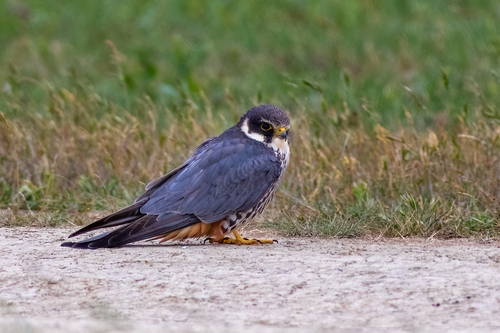
Lodolaio (Falco subbuteo) Lodolaio
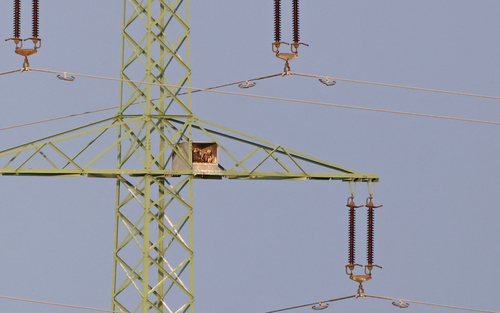
Sacro (Falco cherrug) Sacro

Media

Caricamento…

In breve

The most reliable way to separate Eurasian Hobby from Saker Falcon is by size and structure: the Hobby is a slim, small falcon with long, pointed wings and a square tail, while the Saker is much larger, bulkier, and broader-winged. In flight, adult Hobbies show contrasting rufous 'trousers' and vent, while Sakers are browner overall and lack this feature. Juvenile Hobbies are browner above with buffy, streaked thighs, but still appear much more delicate than any Saker. If you see a falcon that looks swift-like, agile, and sickle-winged, it is almost certainly a Hobby; a large, powerful, broad-winged bird is a Saker. Both can show streaked underparts, but the Hobby's streaking is finer and more limited.

Consigli di identificazione

  1. Size is decisive: If the bird is anywhere near buzzard-sized, it is a Saker; Hobbies are much smaller, closer to a kestrel in size.
  2. Structure in flight: Hobbies are slim, with long, pointed, sickle-shaped wings and a square tail, giving a swift-like appearance. Sakers are broad-winged, deep-chested, and powerful, lacking the swift-like jizz.
  3. Adult Hobby plumage: Look for slate-grey upperparts, a dark crown, two short moustache stripes, and especially the clean, unstreaked rufous 'trousers' and vent—unique among falcons in this region.
  4. Juvenile Hobby plumage: Brown above with scaled patterning and buffy, streaked thighs and undertail coverts. Still much slimmer and more elegant than any Saker.
  5. Saker plumage: Always browner overall, with variable but generally heavy streaking below. No rufous vent or 'trousers.' Young Sakers are even darker and more heavily streaked.
  6. Underpart streaking: Hobby shows fine, vertical streaks on whitish underparts; Saker's streaking is heavier and more extensive, often with a browner wash.
  7. Facial pattern: Hobby has two short, sharp moustache stripes; Saker's facial markings are less distinct and lack the Hobby's crispness.
  8. Flight style: Hobbies are agile, fast, and often seen catching insects or birds in mid-air, sometimes eating on the wing. Sakers are more direct, with slower, deeper wingbeats, and rarely show the same aerial agility.
  9. Perched jizz: Hobbies look slim, long-winged, and upright; Sakers are bulkier, with a heavier bill and a more horizontal posture.
  10. Habitat context: Hobbies are more likely near water, marshes, or scattered trees; Sakers are birds of open steppe, plains, or semi-desert.
  11. Group behavior: Hobbies may be seen in small groups on migration; Sakers are almost always alone or in pairs.
  12. Voice: Saker gives a sharp 'kiy-ee' or 'kyak-kyak-kyak'; Hobby's call is not described here, so do not rely on this unless you know the Saker's voice.
  13. Sex and age: Both species show little sexual dimorphism in plumage, but Saker females are much larger than males; Hobby sexes are similar in both size and plumage.
  14. Confusion risk: Juvenile Hobbies are browner and could be mistaken for a small falcon, but never approach the bulk or heavy streaking of a Saker. If in doubt, use size and structure as your primary clues.
  15. Pitfall: Do not rely on underpart streaking alone—both can show streaks, but the Hobby's are finer and more limited, and the overall impression is much cleaner and more elegant.

Taglia

Size is the most decisive difference. The Eurasian Hobby is a small falcon (body mass ~211g, length 29–36 cm, wingspan 74–84 cm), while the Saker Falcon is a true giant by comparison (body mass ~1002.5g, length 45–57 cm, wingspan 97–126 cm). Even at a distance, the Saker appears much heavier, with a deeper chest and broader wings. There is no overlap: any falcon approaching buzzard size is a Saker, not a Hobby.

Piumaggio

Juvenile Hobbies are generally browner above than adults, with scaled upperparts and buffy, streaked thighs and undertail coverts. Adults have a slate-grey back, dark crown, two short moustache stripes, and distinctive unstreaked rufous 'trousers' and vent, with the rest of the underparts whitish and finely streaked. Saker Falcons, by contrast, are variable but always much browner overall, with heavier streaking below, and never show the Hobby's rufous vent or 'trousers.' Both sexes and ages of Saker are similar except for size, but young birds are darker and more heavily streaked. The Saker lacks the Hobby's swift-like wing pattern and rufous highlights. In all ages, the Saker is bulkier and browner, while the Hobby is slim, clean-marked, and shows more contrast between the pale underparts and dark upperparts.

Comportamento

Eurasian Hobby is extremely agile and swift-like in flight, often seen catching insects or small birds on the wing, sometimes eating prey in flight. It often glides with wings swept back, resembling a large swift. Saker Falcon is powerful and direct, with slower, deeper wingbeats and a more ponderous flight style. Sakers hunt larger prey, often from a perch or with a fast, low attack. Hobbies may be seen hawking in small groups on migration, while Sakers are typically solitary or in pairs.

Habitat

Hobbies prefer open country with scattered trees, such as farmland, marshes, taiga, and savannah, usually in lowland areas. Saker Falcons are birds of steppe, open plains, and semi-desert, often far from water and trees, but can also be found in mountainous regions. While both can be seen in open landscapes, Hobbies are more likely near woods or wetlands, Sakers in vast, treeless expanses.

Voce

The Saker Falcon gives a sharp 'kiy-ee' or repeated 'kyak-kyak-kyak.' No vocalization is described for the Eurasian Hobby in the provided notes, so voice is not a reliable separator here.

Invia una descrizione migliore

Usa le stesse sezioni del confronto. Il testo viene pubblicato subito.

The most reliable way to separate Eurasian Hobby from Saker Falcon is by size and structure: the Hobby is a slim, small falcon with long, pointed wings and a square tail, while the Saker is much larger, bulkier, and broader-winged. In flight, adult Hobbies show contrasting rufous 'trousers' and vent, while Sakers are browner overall and lack this feature. Juvenile Hobbies are browner above with buffy, streaked thighs, but still appear much more delicate than any Saker. If you see a falcon that looks swift-like, agile, and sickle-winged, it is almost certainly a Hobby; a large, powerful, broad-winged bird is a Saker. Both can show streaked underparts, but the Hobby's streaking is finer and more limited.

  1. Size is decisive: If the bird is anywhere near buzzard-sized, it is a Saker; Hobbies are much smaller, closer to a kestrel in size.
  2. Structure in flight: Hobbies are slim, with long, pointed, sickle-shaped wings and a square tail, giving a swift-like appearance. Sakers are broad-winged, deep-chested, and powerful, lacking the swift-like jizz.
  3. Adult Hobby plumage: Look for slate-grey upperparts, a dark crown, two short moustache stripes, and especially the clean, unstreaked rufous 'trousers' and vent—unique among falcons in this region.
  4. Juvenile Hobby plumage: Brown above with scaled patterning and buffy, streaked thighs and undertail coverts. Still much slimmer and more elegant than any Saker.
  5. Saker plumage: Always browner overall, with variable but generally heavy streaking below. No rufous vent or 'trousers.' Young Sakers are even darker and more heavily streaked.
  6. Underpart streaking: Hobby shows fine, vertical streaks on whitish underparts; Saker's streaking is heavier and more extensive, often with a browner wash.
  7. Facial pattern: Hobby has two short, sharp moustache stripes; Saker's facial markings are less distinct and lack the Hobby's crispness.
  8. Flight style: Hobbies are agile, fast, and often seen catching insects or birds in mid-air, sometimes eating on the wing. Sakers are more direct, with slower, deeper wingbeats, and rarely show the same aerial agility.
  9. Perched jizz: Hobbies look slim, long-winged, and upright; Sakers are bulkier, with a heavier bill and a more horizontal posture.
  10. Habitat context: Hobbies are more likely near water, marshes, or scattered trees; Sakers are birds of open steppe, plains, or semi-desert.
  11. Group behavior: Hobbies may be seen in small groups on migration; Sakers are almost always alone or in pairs.
  12. Voice: Saker gives a sharp 'kiy-ee' or 'kyak-kyak-kyak'; Hobby's call is not described here, so do not rely on this unless you know the Saker's voice.
  13. Sex and age: Both species show little sexual dimorphism in plumage, but Saker females are much larger than males; Hobby sexes are similar in both size and plumage.
  14. Confusion risk: Juvenile Hobbies are browner and could be mistaken for a small falcon, but never approach the bulk or heavy streaking of a Saker. If in doubt, use size and structure as your primary clues.
  15. Pitfall: Do not rely on underpart streaking alone—both can show streaks, but the Hobby's are finer and more limited, and the overall impression is much cleaner and more elegant.

Size is the most decisive difference. The Eurasian Hobby is a small falcon (body mass ~211g, length 29–36 cm, wingspan 74–84 cm), while the Saker Falcon is a true giant by comparison (body mass ~1002.5g, length 45–57 cm, wingspan 97–126 cm). Even at a distance, the Saker appears much heavier, with a deeper chest and broader wings. There is no overlap: any falcon approaching buzzard size is a Saker, not a Hobby.

Juvenile Hobbies are generally browner above than adults, with scaled upperparts and buffy, streaked thighs and undertail coverts. Adults have a slate-grey back, dark crown, two short moustache stripes, and distinctive unstreaked rufous 'trousers' and vent, with the rest of the underparts whitish and finely streaked. Saker Falcons, by contrast, are variable but always much browner overall, with heavier streaking below, and never show the Hobby's rufous vent or 'trousers.' Both sexes and ages of Saker are similar except for size, but young birds are darker and more heavily streaked. The Saker lacks the Hobby's swift-like wing pattern and rufous highlights. In all ages, the Saker is bulkier and browner, while the Hobby is slim, clean-marked, and shows more contrast between the pale underparts and dark upperparts.

Eurasian Hobby is extremely agile and swift-like in flight, often seen catching insects or small birds on the wing, sometimes eating prey in flight. It often glides with wings swept back, resembling a large swift. Saker Falcon is powerful and direct, with slower, deeper wingbeats and a more ponderous flight style. Sakers hunt larger prey, often from a perch or with a fast, low attack. Hobbies may be seen hawking in small groups on migration, while Sakers are typically solitary or in pairs.

Hobbies prefer open country with scattered trees, such as farmland, marshes, taiga, and savannah, usually in lowland areas. Saker Falcons are birds of steppe, open plains, and semi-desert, often far from water and trees, but can also be found in mountainous regions. While both can be seen in open landscapes, Hobbies are more likely near woods or wetlands, Sakers in vast, treeless expanses.

The Saker Falcon gives a sharp 'kiy-ee' or repeated 'kyak-kyak-kyak.' No vocalization is described for the Eurasian Hobby in the provided notes, so voice is not a reliable separator here.

Scartare le modifiche?

Hai modifiche non salvate. Se esci ora, andranno perse.

Lodolaio · Sacro · I miei uccelli difficili