
Motmot

Emperor Goose vs Grifone di Rüppell

Anser canagicus contro Gyps rueppelli

Fai un quiz con Emperor Goose e Grifone di Rüppell
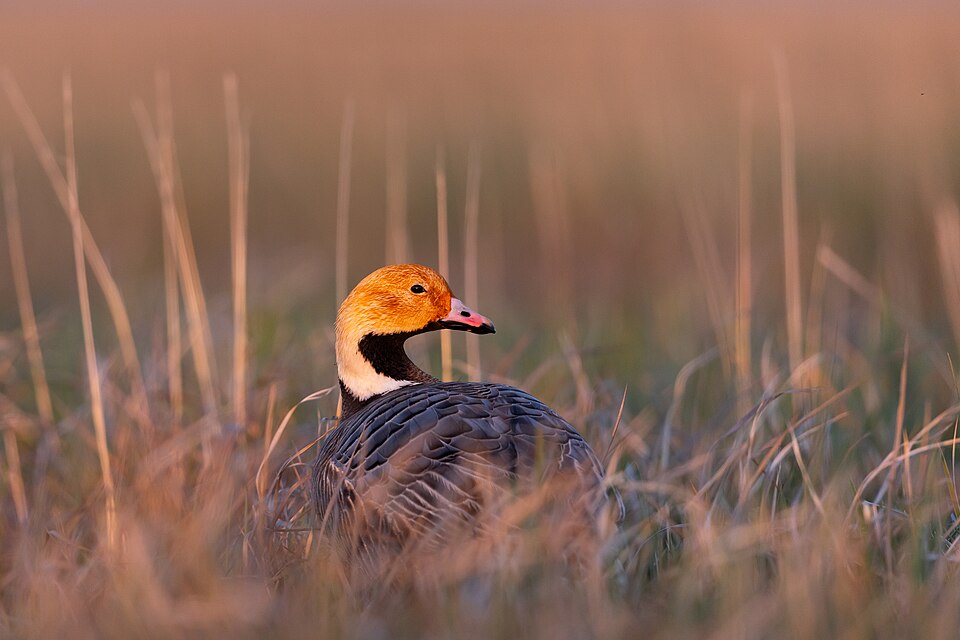
Emperor Goose (Anser canagicus) Emperor Goose
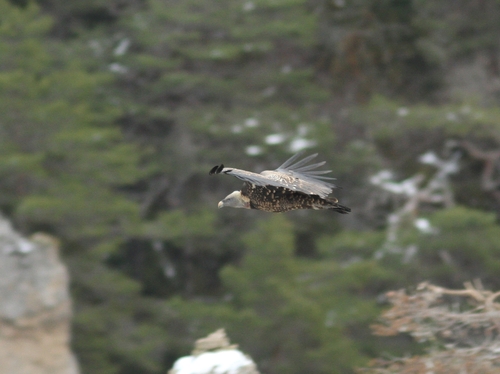
Grifone di Rüppell (Gyps rueppelli) Grifone di Rüppell

Media

Caricamento…

In breve

The most reliable field mark to separate Emperor Goose from Rüppell's Griffon is overall structure and jizz: Emperor Goose is a compact, heavy-bodied waterfowl with a short neck and scaled blue-gray plumage, while Rüppell's Griffon is a massive, long-winged vulture with a bare head and a striking white neck ruff. In flight, Emperor Goose shows gray underwings and a white tail, while Rüppell's Griffon displays huge, broad wings and a long, wedge-shaped tail. Juvenile Emperor Geese can be dusky-headed but never show the vulture's bare, featherless head. Habitat is also a giveaway: Emperor Goose is found in arctic coastal wetlands, while Rüppell's Griffon soars over African savannas and cliffs. Confusion is unlikely except in captivity or a quiz, but structural and plumage differences are absolute.

Consigli di identificazione

  1. Head and neck: Rüppell's Griffon always has a bare, featherless head and neck with dirty-white fluff and a white neck ruff—never shown by Emperor Goose of any age. Emperor Goose has a feathered head and neck, white in adults, dusky in juveniles.
  2. Bill shape and color: Emperor Goose has a short, pink bill tipped white (black in goslings); Rüppell's Griffon has a long, hooked, dark bill typical of vultures.
  3. Legs and feet: Emperor Goose shows yellow-orange legs (gray/black in juveniles); Rüppell's Griffon has strong, dark legs adapted for walking on carcasses.
  4. Plumage pattern: Emperor Goose is blue-gray with black and white spots, giving a scaled look; Rüppell's Griffon is mottled brown-black with a pale underbelly and no scaled pattern.
  5. Tail: Emperor Goose has a short, white tail; Rüppell's Griffon has a long, wedge-shaped dark tail.
  6. Underwing: In flight, Emperor Goose shows gray underwings; Rüppell's Griffon has broad, dark underwings with no gray panel.
  7. Size and structure: Rüppell's Griffon is enormous, with a wingspan over twice that of Emperor Goose, and a long neck and wings; Emperor Goose is compact, short-necked, and heavy-bodied.
  8. Flight style: Emperor Goose flies low with slow, deep wingbeats, rarely soaring; Rüppell's Griffon soars high on thermals, rarely flapping for long periods.
  9. Juvenile confusion: Young Emperor Geese have dusky heads and gray bodies but always feathered heads and a compact shape; juvenile Rüppell's Griffons are larger, bare-headed, and lack any goose-like features.
  10. Habitat: Emperor Goose is strictly arctic/subarctic and coastal; Rüppell's Griffon is strictly African and prefers dry, open country and cliffs.
  11. Social behavior: Emperor Goose is unsocial, seen in small groups; Rüppell's Griffon is highly social at carcasses and nesting cliffs.
  12. Feeding: Emperor Goose grazes or dabbles in water; Rüppell's Griffon feeds exclusively on carrion, often inside large carcasses.
  13. Voice: Not diagnostic; both species are generally silent or not heard in typical field encounters.
  14. Seasonal marks: Adult Emperor Goose may show rusty staining on the head in summer from feeding in iron-rich pools, never seen in the vulture.
  15. Context: If seen together, the vulture would utterly dwarf the goose; confusion is only possible in photos or quizzes, not in the field.

Taglia

Rüppell's Griffon is vastly larger than Emperor Goose in every dimension. The vulture reaches 85–103 cm in length and weighs around 7,570 g, with a wingspan of 2.26–2.6 m—making it one of the world's largest flying birds. Emperor Goose is much smaller and more compact, with males 66–71 cm long and weighing 2,316–3,129 g, and a wingspan of 119 cm. Even the largest Emperor Goose is dwarfed by the smallest Rüppell's Griffon. In the field, the vulture's size, bulk, and especially its immense wingspan are unmistakable.

Piumaggio

Juvenile and immature Emperor Geese are mostly gray with a dusky head and scattered white, gradually acquiring the white head and neck of adults by their first winter. Their upperparts always show a scaled blue-gray pattern, and the underwings are gray (never black or white). Adults have a white head and nape (often stained rusty in summer), a black throat, pink bill, and yellow-orange legs, with a white tail. In contrast, all ages of Rüppell's Griffon have a bare, featherless head and neck covered in dirty-white fluff, a prominent white neck ruff, and a mottled brown-black body with a whitish-brown underbelly. The vulture's wings are long, broad, and dark, with no scaled pattern or white tail. Juvenile Rüppell's Griffons are similar to adults but may be darker overall. The bare head and neck are unique to the vulture at all ages and never shown by the goose.

Comportamento

Emperor Goose is unsocial for a goose, usually seen in small family groups or loose flocks, and stays low over water or tundra, flying with slow, deep wingbeats. It rarely soars and is almost always seen near water, feeding by dabbling or grazing. Rüppell's Griffon is a soaring specialist, often seen circling high on thermals, sometimes at extreme altitudes. It is highly social at carcasses and nesting cliffs, gathering in large groups. Its flight is powerful and buoyant, with long glides and minimal flapping. The vulture's behavior—soaring, scavenging, and cliff-nesting—is utterly different from the goose's.

Habitat

Emperor Goose breeds in remote coastal tundra near the Bering Sea in Alaska and the Russian Far East, and winters on ice-free mudflats and coasts, rarely straying far from arctic or subarctic shorelines. Rüppell's Griffon is native to the Sahel and East Africa, inhabiting open savannas, grasslands, and mountainous regions, especially near cliffs for nesting. The goose is never found in Africa or dry grasslands, and the vulture is never found in arctic wetlands. Habitat alone is usually diagnostic.

Invia una descrizione migliore

Usa le stesse sezioni del confronto. Il testo viene pubblicato subito.

The most reliable field mark to separate Emperor Goose from Rüppell's Griffon is overall structure and jizz: Emperor Goose is a compact, heavy-bodied waterfowl with a short neck and scaled blue-gray plumage, while Rüppell's Griffon is a massive, long-winged vulture with a bare head and a striking white neck ruff. In flight, Emperor Goose shows gray underwings and a white tail, while Rüppell's Griffon displays huge, broad wings and a long, wedge-shaped tail. Juvenile Emperor Geese can be dusky-headed but never show the vulture's bare, featherless head. Habitat is also a giveaway: Emperor Goose is found in arctic coastal wetlands, while Rüppell's Griffon soars over African savannas and cliffs. Confusion is unlikely except in captivity or a quiz, but structural and plumage differences are absolute.

  1. Head and neck: Rüppell's Griffon always has a bare, featherless head and neck with dirty-white fluff and a white neck ruff—never shown by Emperor Goose of any age. Emperor Goose has a feathered head and neck, white in adults, dusky in juveniles.
  2. Bill shape and color: Emperor Goose has a short, pink bill tipped white (black in goslings); Rüppell's Griffon has a long, hooked, dark bill typical of vultures.
  3. Legs and feet: Emperor Goose shows yellow-orange legs (gray/black in juveniles); Rüppell's Griffon has strong, dark legs adapted for walking on carcasses.
  4. Plumage pattern: Emperor Goose is blue-gray with black and white spots, giving a scaled look; Rüppell's Griffon is mottled brown-black with a pale underbelly and no scaled pattern.
  5. Tail: Emperor Goose has a short, white tail; Rüppell's Griffon has a long, wedge-shaped dark tail.
  6. Underwing: In flight, Emperor Goose shows gray underwings; Rüppell's Griffon has broad, dark underwings with no gray panel.
  7. Size and structure: Rüppell's Griffon is enormous, with a wingspan over twice that of Emperor Goose, and a long neck and wings; Emperor Goose is compact, short-necked, and heavy-bodied.
  8. Flight style: Emperor Goose flies low with slow, deep wingbeats, rarely soaring; Rüppell's Griffon soars high on thermals, rarely flapping for long periods.
  9. Juvenile confusion: Young Emperor Geese have dusky heads and gray bodies but always feathered heads and a compact shape; juvenile Rüppell's Griffons are larger, bare-headed, and lack any goose-like features.
  10. Habitat: Emperor Goose is strictly arctic/subarctic and coastal; Rüppell's Griffon is strictly African and prefers dry, open country and cliffs.
  11. Social behavior: Emperor Goose is unsocial, seen in small groups; Rüppell's Griffon is highly social at carcasses and nesting cliffs.
  12. Feeding: Emperor Goose grazes or dabbles in water; Rüppell's Griffon feeds exclusively on carrion, often inside large carcasses.
  13. Voice: Not diagnostic; both species are generally silent or not heard in typical field encounters.
  14. Seasonal marks: Adult Emperor Goose may show rusty staining on the head in summer from feeding in iron-rich pools, never seen in the vulture.
  15. Context: If seen together, the vulture would utterly dwarf the goose; confusion is only possible in photos or quizzes, not in the field.

Rüppell's Griffon is vastly larger than Emperor Goose in every dimension. The vulture reaches 85–103 cm in length and weighs around 7,570 g, with a wingspan of 2.26–2.6 m—making it one of the world's largest flying birds. Emperor Goose is much smaller and more compact, with males 66–71 cm long and weighing 2,316–3,129 g, and a wingspan of 119 cm. Even the largest Emperor Goose is dwarfed by the smallest Rüppell's Griffon. In the field, the vulture's size, bulk, and especially its immense wingspan are unmistakable.

Juvenile and immature Emperor Geese are mostly gray with a dusky head and scattered white, gradually acquiring the white head and neck of adults by their first winter. Their upperparts always show a scaled blue-gray pattern, and the underwings are gray (never black or white). Adults have a white head and nape (often stained rusty in summer), a black throat, pink bill, and yellow-orange legs, with a white tail. In contrast, all ages of Rüppell's Griffon have a bare, featherless head and neck covered in dirty-white fluff, a prominent white neck ruff, and a mottled brown-black body with a whitish-brown underbelly. The vulture's wings are long, broad, and dark, with no scaled pattern or white tail. Juvenile Rüppell's Griffons are similar to adults but may be darker overall. The bare head and neck are unique to the vulture at all ages and never shown by the goose.

Emperor Goose is unsocial for a goose, usually seen in small family groups or loose flocks, and stays low over water or tundra, flying with slow, deep wingbeats. It rarely soars and is almost always seen near water, feeding by dabbling or grazing. Rüppell's Griffon is a soaring specialist, often seen circling high on thermals, sometimes at extreme altitudes. It is highly social at carcasses and nesting cliffs, gathering in large groups. Its flight is powerful and buoyant, with long glides and minimal flapping. The vulture's behavior—soaring, scavenging, and cliff-nesting—is utterly different from the goose's.

Emperor Goose breeds in remote coastal tundra near the Bering Sea in Alaska and the Russian Far East, and winters on ice-free mudflats and coasts, rarely straying far from arctic or subarctic shorelines. Rüppell's Griffon is native to the Sahel and East Africa, inhabiting open savannas, grasslands, and mountainous regions, especially near cliffs for nesting. The goose is never found in Africa or dry grasslands, and the vulture is never found in arctic wetlands. Habitat alone is usually diagnostic.

Scartare le modifiche?

Hai modifiche non salvate. Se esci ora, andranno perse.

Emperor Goose · Grifone di Rüppell · I miei uccelli difficili