

Motmot

Crested Bobwhite vs Black-breasted Wood-Quail

Colinus cristatus contro Odontophorus leucolaemus

Fai un quiz con Crested Bobwhite e Black-breasted Wood-Quail
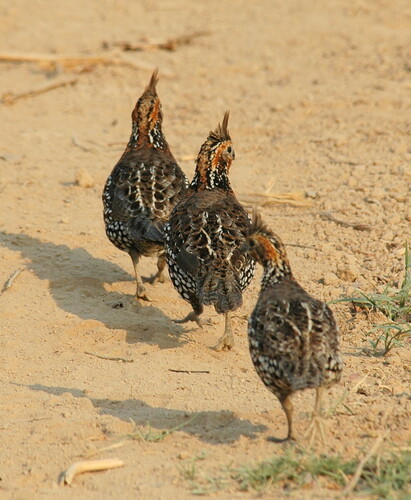
Crested Bobwhite (Colinus cristatus) Crested Bobwhite
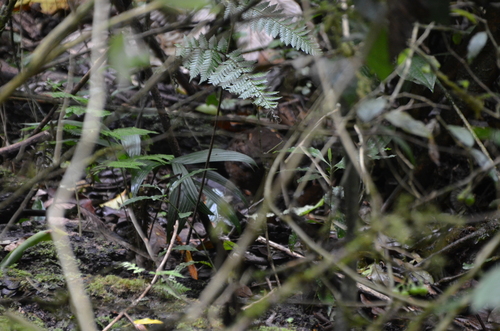
Black-breasted Wood-Quail (Odontophorus leucolaemus) Black-breasted Wood-Quail

Media

Caricamento…

In breve

The most reliable field mark between Crested Bobwhite and Black-breasted Wood-Quail is the presence of a prominent pale or white crest on the bobwhite, which is never shown by the wood-quail. In addition, the bobwhite is distinctly smaller and paler overall, with a mottled, patterned appearance and pale underparts, while the wood-quail is larger, darker, and shows a solid blackish breast with a white throat. These differences are visible in both perched and flushed birds, but the bobwhite's crest and paler, more patterned plumage are especially useful at a distance or in poor light. Habitat is also a strong clue: bobwhites prefer open or edge habitats, while wood-quail are restricted to dense montane forest.

Consigli di identificazione

  1. Crested or pale crown: Only Crested Bobwhite shows a prominent pale buff or white crest (long forehead and crown feathers). Wood-quail never shows a crest; its crown is dark and plain. This is the single best field mark at any age or season.
  2. Breast color: Black-breasted Wood-Quail has a solid blackish breast, sharply contrasting with its white throat. Crested Bobwhite has pale underparts with buff, cinnamon, and black markings, never a solid black breast.
  3. Throat pattern: Both species can show a white or buff throat, but only the bobwhite's is sometimes spotted with black. The wood-quail's throat is white and clean, bordered by the blackish breast.
  4. Back and flanks: Bobwhite is heavily mottled and marbled on the back and sides of the neck (black, brown, grey, white), giving a patterned look. Wood-quail is much plainer and darker overall, lacking the intricate patterning.
  5. Overall color tone: Bobwhite appears paler and warmer (buff, cinnamon, white), while wood-quail is darker, more somber, and less contrasting except for the white throat.
  6. Size and structure: Wood-quail is much larger and bulkier, with a deeper body and heavier build. Bobwhite is smaller, more compact, and delicate. Size difference is obvious if seen together, but can be subtle at a distance.
  7. Sex differences: Both species have sexes that are similar in the field. Female bobwhites are slightly browner, but still show the crest and patterning. Wood-quail sexes are indistinguishable visually.
  8. Group size and behavior: Bobwhites are in small groups (often 3–8), more likely to be seen in the open or flushed. Wood-quail are in larger coveys (10–15), very shy, and rarely seen except as a group moving through dense forest undergrowth.
  9. Habitat: Bobwhite is in open or edge habitats (grassland, scrub, farmland); wood-quail is strictly in dense, humid montane forest. Habitat alone can often separate them.
  10. Vocalizations: Listen for the bobwhite's clear, whistled 'bob-white' or 'oh, wheet' calls in open country. Wood-quail calls are group territorial duets at dawn, not similar to bobwhite and not given at dusk.
  11. Flight views: No distinctive upperwing or flight pattern marks are described for either species, so rely on overall size, shape, and plumage.
  12. Leg color: Bobwhite has bluish-grey legs, but this is rarely diagnostic in the field. Wood-quail leg color is not described.
  13. Bill color: Bobwhite has a black bill; wood-quail bill color is not specified, but not a primary field mark.
  14. Range: If in northern South America, Aruba, or the Antilles, it is always bobwhite. In Costa Rica, both occur but in sharply different habitats. Wood-quail is very rare or absent in Panama.
  15. Common pitfalls: Immature or female bobwhites are only slightly browner than males and still show the crest and patterning. Wood-quail never shows a crest or the bobwhite's mottled look at any age.

Taglia

Crested Bobwhite is noticeably smaller, measuring 17.8–21.6 cm in length, compared to the Black-breasted Wood-Quail's 22–25.5 cm. The wood-quail is also much heavier (females average 286 g, males 300 g) than the bobwhite (no precise mass given, but substantially lighter by appearance and typical Colinus mass). In the field, the wood-quail appears bulkier and more robust, with a deeper body and heavier build, while the bobwhite is more compact and delicate.

Piumaggio

No age-specific upperwing or flight pattern marks are described for either species, so focus is on adult and general plumage. Crested Bobwhite of all ages and sexes shows a distinctive pale buff or white crest (long forehead and crown feathers), a white or buff throat (sometimes with black spots), and a heavily mottled back and flanks with black, brown, and grey. Underparts are pale with buff, cinnamon, and black markings. Females are slightly browner but still show the pale crest and patterned look. In contrast, Black-breasted Wood-Quail lacks any crest, and both sexes are similar: they have a solid blackish breast, a white throat, and overall much darker, plainer plumage with less obvious patterning. The wood-quail's face and underparts are darker, and the bird lacks the bobwhite's intricate marbling and pale tones. The wood-quail's plumage is more uniform and somber, especially on the breast and belly.

Comportamento

Crested Bobwhite is usually seen in small groups on the ground, often at the edge of cover or in open country, and is more likely to be flushed into short flights. Its behavior is similar to Northern Bobwhite: approachable, often visible, and vocal during the breeding season. Black-breasted Wood-Quail is highly gregarious, moving in coveys of 10–15, but is much shyer and sticks to dense undergrowth in montane forest. It rarely flushes, preferring to walk away unseen, and is seldom seen in the open. Wood-quail coveys defend territories together and roost in low branches, while bobwhites are more terrestrial and less secretive.

Habitat

Habitat is a strong separator. Crested Bobwhite is found in open or edge habitats, including grasslands, scrub, and agricultural areas, from northern South America through Panama and barely into Costa Rica. It is common and widespread in these open settings. Black-breasted Wood-Quail is restricted to subtropical or tropical moist montane forest in Costa Rica (possibly extinct in Panama), and is never found in open country. If you see a quail in dense, humid mountain forest, it is almost certainly a wood-quail; if in open or edge habitat, it is a bobwhite.

Voce

Crested Bobwhite males give a fast, husky, three-syllable 'quoit bob-white' or a two-syllable 'oh, wheet' during the breeding season, which is distinctive and reminiscent of Northern Bobwhite. Black-breasted Wood-Quail coveys call back and forth with neighboring groups at dawn, but do not vocalize at dusk and their calls are not described as similar to the bobwhite's. Bobwhite calls are more likely to be heard in open country, while wood-quail calls are given in forest at dawn and are associated with group territoriality.

Invia una descrizione migliore

Usa le stesse sezioni del confronto. Il testo viene pubblicato subito.

The most reliable field mark between Crested Bobwhite and Black-breasted Wood-Quail is the presence of a prominent pale or white crest on the bobwhite, which is never shown by the wood-quail. In addition, the bobwhite is distinctly smaller and paler overall, with a mottled, patterned appearance and pale underparts, while the wood-quail is larger, darker, and shows a solid blackish breast with a white throat. These differences are visible in both perched and flushed birds, but the bobwhite's crest and paler, more patterned plumage are especially useful at a distance or in poor light. Habitat is also a strong clue: bobwhites prefer open or edge habitats, while wood-quail are restricted to dense montane forest.

  1. Crested or pale crown: Only Crested Bobwhite shows a prominent pale buff or white crest (long forehead and crown feathers). Wood-quail never shows a crest; its crown is dark and plain. This is the single best field mark at any age or season.
  2. Breast color: Black-breasted Wood-Quail has a solid blackish breast, sharply contrasting with its white throat. Crested Bobwhite has pale underparts with buff, cinnamon, and black markings, never a solid black breast.
  3. Throat pattern: Both species can show a white or buff throat, but only the bobwhite's is sometimes spotted with black. The wood-quail's throat is white and clean, bordered by the blackish breast.
  4. Back and flanks: Bobwhite is heavily mottled and marbled on the back and sides of the neck (black, brown, grey, white), giving a patterned look. Wood-quail is much plainer and darker overall, lacking the intricate patterning.
  5. Overall color tone: Bobwhite appears paler and warmer (buff, cinnamon, white), while wood-quail is darker, more somber, and less contrasting except for the white throat.
  6. Size and structure: Wood-quail is much larger and bulkier, with a deeper body and heavier build. Bobwhite is smaller, more compact, and delicate. Size difference is obvious if seen together, but can be subtle at a distance.
  7. Sex differences: Both species have sexes that are similar in the field. Female bobwhites are slightly browner, but still show the crest and patterning. Wood-quail sexes are indistinguishable visually.
  8. Group size and behavior: Bobwhites are in small groups (often 3–8), more likely to be seen in the open or flushed. Wood-quail are in larger coveys (10–15), very shy, and rarely seen except as a group moving through dense forest undergrowth.
  9. Habitat: Bobwhite is in open or edge habitats (grassland, scrub, farmland); wood-quail is strictly in dense, humid montane forest. Habitat alone can often separate them.
  10. Vocalizations: Listen for the bobwhite's clear, whistled 'bob-white' or 'oh, wheet' calls in open country. Wood-quail calls are group territorial duets at dawn, not similar to bobwhite and not given at dusk.
  11. Flight views: No distinctive upperwing or flight pattern marks are described for either species, so rely on overall size, shape, and plumage.
  12. Leg color: Bobwhite has bluish-grey legs, but this is rarely diagnostic in the field. Wood-quail leg color is not described.
  13. Bill color: Bobwhite has a black bill; wood-quail bill color is not specified, but not a primary field mark.
  14. Range: If in northern South America, Aruba, or the Antilles, it is always bobwhite. In Costa Rica, both occur but in sharply different habitats. Wood-quail is very rare or absent in Panama.
  15. Common pitfalls: Immature or female bobwhites are only slightly browner than males and still show the crest and patterning. Wood-quail never shows a crest or the bobwhite's mottled look at any age.

Crested Bobwhite is noticeably smaller, measuring 17.8–21.6 cm in length, compared to the Black-breasted Wood-Quail's 22–25.5 cm. The wood-quail is also much heavier (females average 286 g, males 300 g) than the bobwhite (no precise mass given, but substantially lighter by appearance and typical Colinus mass). In the field, the wood-quail appears bulkier and more robust, with a deeper body and heavier build, while the bobwhite is more compact and delicate.

No age-specific upperwing or flight pattern marks are described for either species, so focus is on adult and general plumage. Crested Bobwhite of all ages and sexes shows a distinctive pale buff or white crest (long forehead and crown feathers), a white or buff throat (sometimes with black spots), and a heavily mottled back and flanks with black, brown, and grey. Underparts are pale with buff, cinnamon, and black markings. Females are slightly browner but still show the pale crest and patterned look. In contrast, Black-breasted Wood-Quail lacks any crest, and both sexes are similar: they have a solid blackish breast, a white throat, and overall much darker, plainer plumage with less obvious patterning. The wood-quail's face and underparts are darker, and the bird lacks the bobwhite's intricate marbling and pale tones. The wood-quail's plumage is more uniform and somber, especially on the breast and belly.

Crested Bobwhite is usually seen in small groups on the ground, often at the edge of cover or in open country, and is more likely to be flushed into short flights. Its behavior is similar to Northern Bobwhite: approachable, often visible, and vocal during the breeding season. Black-breasted Wood-Quail is highly gregarious, moving in coveys of 10–15, but is much shyer and sticks to dense undergrowth in montane forest. It rarely flushes, preferring to walk away unseen, and is seldom seen in the open. Wood-quail coveys defend territories together and roost in low branches, while bobwhites are more terrestrial and less secretive.

Habitat is a strong separator. Crested Bobwhite is found in open or edge habitats, including grasslands, scrub, and agricultural areas, from northern South America through Panama and barely into Costa Rica. It is common and widespread in these open settings. Black-breasted Wood-Quail is restricted to subtropical or tropical moist montane forest in Costa Rica (possibly extinct in Panama), and is never found in open country. If you see a quail in dense, humid mountain forest, it is almost certainly a wood-quail; if in open or edge habitat, it is a bobwhite.

Crested Bobwhite males give a fast, husky, three-syllable 'quoit bob-white' or a two-syllable 'oh, wheet' during the breeding season, which is distinctive and reminiscent of Northern Bobwhite. Black-breasted Wood-Quail coveys call back and forth with neighboring groups at dawn, but do not vocalize at dusk and their calls are not described as similar to the bobwhite's. Bobwhite calls are more likely to be heard in open country, while wood-quail calls are given in forest at dawn and are associated with group territoriality.

Scartare le modifiche?

Hai modifiche non salvate. Se esci ora, andranno perse.

Crested Bobwhite · Black-breasted Wood-Quail · I miei uccelli difficili