

Motmot

Coqui Francolin vs Shelley's Francolin

Campocolinus coqui contro Scleroptila shelleyi

Fai un quiz con Coqui Francolin e Shelley's Francolin
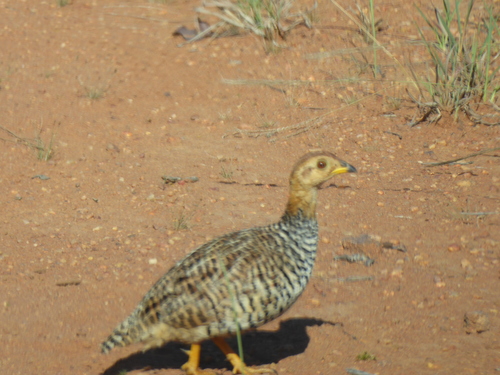
Coqui Francolin (Campocolinus coqui) Coqui Francolin
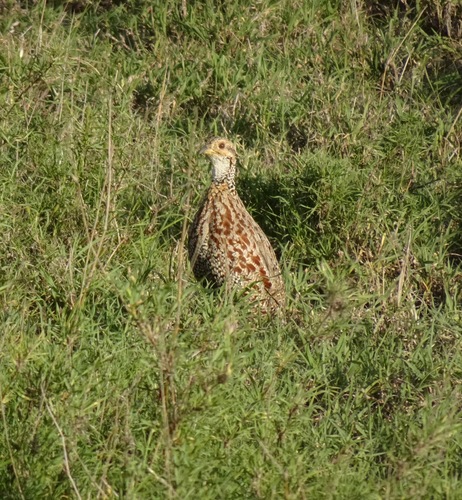
Shelley's Francolin (Scleroptila shelleyi) Shelley's Francolin

Media

Caricamento…

In breve

Field separation between Coqui Francolin and Shelley's Francolin is challenging due to limited published differences in plumage, especially for immatures and in flight. Both are small, ground-dwelling francolins in the Phasianidae family, and can appear similar at a glance. No distinctive age-specific wing or flight pattern marks are documented for either species in the available sources. Therefore, identification relies on subtle differences in structure, context, and any available local knowledge. Be cautious: without clear adult views or vocalizations, confusion is easy.

Consigli di identificazione

  1. No distinctive juvenile or immature wing pattern: Neither species has a documented unique upperwing or flight mark for young birds, so do not rely on wing pattern in flight for separation.
  2. Structure and jizz: Both are small, compact francolins with similar structure. Bill shape, tail length, and wing formula are not described as different in the sources, so these features are not helpful for separation.
  3. Adult plumage: No specific differences in body or head pattern are provided. Both species have cryptic, earth-toned plumage typical of francolins.
  4. Sex and season: No seasonal or sexual differences are described that would aid identification.
  5. Vocalizations: Calls and songs are not detailed in the sources, so cannot be used for separation here.
  6. Habitat and context: No habitat differences are described, so do not rely on habitat for separation based on these notes.
  7. Pitfalls: Both species can be easily confused, especially in poor light or brief views, and especially for immatures or birds in flight.
  8. Local abundance: If one species is much more common locally (check eBird for your region), this may help, but always confirm with direct observation.
  9. Community knowledge: In the absence of clear field marks, local birders may have practical tips based on experience, but these are not detailed in the sources provided.
  10. Photographic documentation: If uncertain, try to obtain photos for later review, as subtle differences may be apparent with reference material not covered here.
  11. Be cautious with field guides: Some guides may illustrate differences not supported by these sources; always cross-check with up-to-date, regionally relevant references.
  12. Report uncertainty: If you cannot separate the two with confidence, it is best to record as "francolin sp." rather than risk a misidentification.

Taglia

No direct size or mass data are available in the provided sources for either species. Both are small francolins, and size is not a reliable field mark for separating these two in the field.

Piumaggio

No age-specific or adult wing pattern, upperwing, or flight marks are documented for either Coqui Francolin or Shelley's Francolin in the available sources. Both species share the typical cryptic, earth-toned plumage of francolins, and no unique juvenile or immature features are described. Subtle differences in body patterning or coloration may exist, but these are not detailed in the sources provided.

Comportamento

Both species are ground-dwelling and secretive, typical of francolins. No behavioral differences are described in the sources that would reliably separate Coqui from Shelley's Francolin in the field.

Habitat

Habitat is not described in the provided notes for either species, so cannot be used for separation here.

Voce

No vocalization details are provided for either species in the available sources, so calls and songs cannot be used for separation based on these notes.

Invia una descrizione migliore

Usa le stesse sezioni del confronto. Il testo viene pubblicato subito.

Field separation between Coqui Francolin and Shelley's Francolin is challenging due to limited published differences in plumage, especially for immatures and in flight. Both are small, ground-dwelling francolins in the Phasianidae family, and can appear similar at a glance. No distinctive age-specific wing or flight pattern marks are documented for either species in the available sources. Therefore, identification relies on subtle differences in structure, context, and any available local knowledge. Be cautious: without clear adult views or vocalizations, confusion is easy.

  1. No distinctive juvenile or immature wing pattern: Neither species has a documented unique upperwing or flight mark for young birds, so do not rely on wing pattern in flight for separation.
  2. Structure and jizz: Both are small, compact francolins with similar structure. Bill shape, tail length, and wing formula are not described as different in the sources, so these features are not helpful for separation.
  3. Adult plumage: No specific differences in body or head pattern are provided. Both species have cryptic, earth-toned plumage typical of francolins.
  4. Sex and season: No seasonal or sexual differences are described that would aid identification.
  5. Vocalizations: Calls and songs are not detailed in the sources, so cannot be used for separation here.
  6. Habitat and context: No habitat differences are described, so do not rely on habitat for separation based on these notes.
  7. Pitfalls: Both species can be easily confused, especially in poor light or brief views, and especially for immatures or birds in flight.
  8. Local abundance: If one species is much more common locally (check eBird for your region), this may help, but always confirm with direct observation.
  9. Community knowledge: In the absence of clear field marks, local birders may have practical tips based on experience, but these are not detailed in the sources provided.
  10. Photographic documentation: If uncertain, try to obtain photos for later review, as subtle differences may be apparent with reference material not covered here.
  11. Be cautious with field guides: Some guides may illustrate differences not supported by these sources; always cross-check with up-to-date, regionally relevant references.
  12. Report uncertainty: If you cannot separate the two with confidence, it is best to record as "francolin sp." rather than risk a misidentification.

No direct size or mass data are available in the provided sources for either species. Both are small francolins, and size is not a reliable field mark for separating these two in the field.

No age-specific or adult wing pattern, upperwing, or flight marks are documented for either Coqui Francolin or Shelley's Francolin in the available sources. Both species share the typical cryptic, earth-toned plumage of francolins, and no unique juvenile or immature features are described. Subtle differences in body patterning or coloration may exist, but these are not detailed in the sources provided.

Both species are ground-dwelling and secretive, typical of francolins. No behavioral differences are described in the sources that would reliably separate Coqui from Shelley's Francolin in the field.

Habitat is not described in the provided notes for either species, so cannot be used for separation here.

No vocalization details are provided for either species in the available sources, so calls and songs cannot be used for separation based on these notes.

Scartare le modifiche?

Hai modifiche non salvate. Se esci ora, andranno perse.

Coqui Francolin · Shelley's Francolin · I miei uccelli difficili