

Motmot

Luì piccolo vs Green Warbler

Phylloscopus collybita contro Phylloscopus nitidus

Fai un quiz con Luì piccolo e Green Warbler
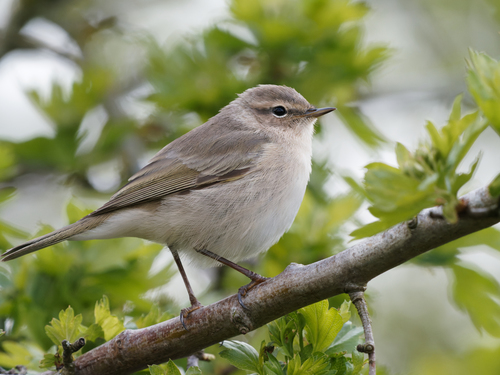
Luì piccolo (Phylloscopus collybita) Luì piccolo
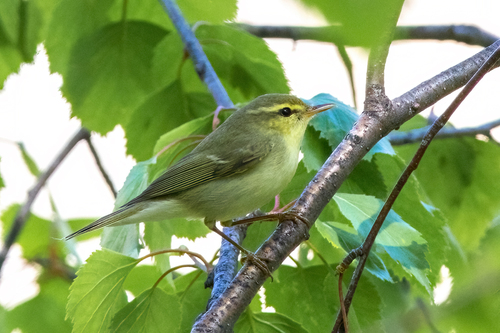
Green Warbler (Phylloscopus nitidus) Green Warbler

Media

Caricamento…

In breve

The most reliable way to separate Common Chiffchaff from Green Warbler is by the presence of wing bars: Green Warbler (especially juveniles and fresh autumn birds) shows one strong and one faint pale wing bar, while Common Chiffchaff never shows any wing bars at any age. Chiffchaffs are generally duller, with greenish-brown upperparts and off-white underparts, whereas Green Warbler is much brighter, with more yellow below and a greener overall tone. Structure also helps: Chiffchaff is dumpier with a shorter primary projection, while Green Warbler is sleeker. If you see a small leaf warbler with two wing bars and a yellowish wash below, it's not a Chiffchaff. Voice is distinctive but not always heard; habitat and range rarely overlap.

Consigli di identificazione

  1. Wing bars are diagnostic: Green Warbler (especially juveniles and fresh autumn birds) shows one strong and one faint pale wing bar; Chiffchaff never shows wing bars at any age. If you see a wingbarred Phylloscopus, it's not a Chiffchaff.
  2. Underpart color: Green Warbler is much more yellow below, while Chiffchaff is off-white with only a faint yellowish wash on the flanks (mainly in fresh plumage). Worn Chiffchaffs are even duller.
  3. Upperpart brightness: Green Warbler is brighter and greener above; Chiffchaff is greenish-brown, often appearing dull or brownish, especially in worn plumage.
  4. Supercilium: Chiffchaff has a short, whitish supercilium; Green Warbler's is not noted as distinctive, so a very short supercilium supports Chiffchaff, but is not diagnostic.
  5. Tail movement: Chiffchaff often dips and wags its tail sidewards, a behavior not noted in Green Warbler. If you see this action, it's likely a Chiffchaff.
  6. Primary projection: Chiffchaff has a short primary projection (the tips of the longest flight feathers barely extend beyond the tertials when perched), giving it a dumpy look. Green Warbler is sleeker, but this is subtle and best used as supporting evidence.
  7. Bill and legs: Chiffchaff has a fine dark bill and dark legs; Green Warbler's bill and legs are not described as distinctive, so this is not a reliable separator.
  8. Juvenile plumage: Juvenile Chiffchaff is browner above and yellow-white below, but still lacks wing bars. Juvenile Green Warbler is brighter and shows wing bars.
  9. Song and call: Chiffchaff's song is a repetitive 'chiff-chaff'; Green Warbler's song is not described here, but is not similar. If you hear the classic Chiffchaff song, it's diagnostic.
  10. Range and context: In most of Europe, Chiffchaff is common and Green Warbler is absent. Only expect Green Warbler in or near the Caucasus.
  11. Moult timing: After moulting, Chiffchaffs become brighter and greener, but still never show wing bars. Green Warbler's wing bars remain a key mark.
  12. Seasonal wear: Chiffchaffs become duller and browner as plumage wears, but do not gain wing bars. Green Warbler's brightness and wing bars are most obvious in fresh plumage.
  13. Habitat: Chiffchaffs breed in open woodlands; Green Warbler is found in the Caucasus. Habitat can help, but is not always reliable for vagrants.
  14. Confusion risk: In silent birds, especially in autumn, always check for wing bars first, then overall brightness and underpart color. Structure and behavior are supporting marks.
  15. When marks fail: If you cannot see the wings clearly, or the bird is silent and in atypical habitat, be cautious—Chiffchaff is far more likely except in the Caucasus, but rare vagrants can occur.

Taglia

Both species are small leaf warblers, but Common Chiffchaff is well-documented as being 10–12 cm long and weighing 6–8 grams [wikipedia]. No direct measurements are given for Green Warbler, but there is no suggestion it is notably larger or smaller. In the field, size is not a reliable separator between these two.

Piumaggio

The key plumage difference is the presence of wing bars: Green Warbler, especially juveniles and fresh autumn birds, shows one strong and one faint pale wing bar on the wing. This is absent in all ages and plumages of Common Chiffchaff, which always lacks wing bars. Chiffchaff is greenish-brown above and off-white below, with only a faint yellowish wash on the flanks in fresh plumage, becoming duller and browner with wear. Juvenile Chiffchaffs are browner above and yellow-white below, but still lack wing bars. Green Warbler is overall brighter, with a much more yellow underside and a greener upperpart tone. The supercilium is short and whitish in Chiffchaff, while Green Warbler's is not described as particularly distinctive. In summary: wing bars and brighter yellow underparts point to Green Warbler; dull, wingbar-less birds are Chiffchaff.

Comportamento

Chiffchaffs are known for their distinctive tail movement: a dip followed by a sidewards wag, sometimes called 'tailwagger' behavior. This is not noted for Green Warbler. Both are active, restless leaf warblers, but if you see the characteristic Chiffchaff tail action, it's a strong clue. Flight jizz is not described as diagnostic between these two.

Habitat

Common Chiffchaff is widespread across northern and temperate Europe and the Palearctic, breeding in open woodlands and wintering further south. Green Warbler is much more restricted, found mainly in the Caucasus Mountains in southeastern Europe. In most of Europe, any small leaf warbler is far more likely to be a Chiffchaff. Only in or near the Caucasus is Green Warbler likely. Habitat overlap is minimal.

Voce

Chiffchaff has a distinctive, repetitive 'chiff-chaff' song and a 'hweet' call, less disyllabic than Willow Warbler. Green Warbler's vocalizations are not described in detail here, but are not similar to Chiffchaff's. In mixed-species zones, song is a reliable separator, but silent birds are a challenge.

Invia una descrizione migliore

Usa le stesse sezioni del confronto. Il testo viene pubblicato subito.

The most reliable way to separate Common Chiffchaff from Green Warbler is by the presence of wing bars: Green Warbler (especially juveniles and fresh autumn birds) shows one strong and one faint pale wing bar, while Common Chiffchaff never shows any wing bars at any age. Chiffchaffs are generally duller, with greenish-brown upperparts and off-white underparts, whereas Green Warbler is much brighter, with more yellow below and a greener overall tone. Structure also helps: Chiffchaff is dumpier with a shorter primary projection, while Green Warbler is sleeker. If you see a small leaf warbler with two wing bars and a yellowish wash below, it's not a Chiffchaff. Voice is distinctive but not always heard; habitat and range rarely overlap.

  1. Wing bars are diagnostic: Green Warbler (especially juveniles and fresh autumn birds) shows one strong and one faint pale wing bar; Chiffchaff never shows wing bars at any age. If you see a wingbarred Phylloscopus, it's not a Chiffchaff.
  2. Underpart color: Green Warbler is much more yellow below, while Chiffchaff is off-white with only a faint yellowish wash on the flanks (mainly in fresh plumage). Worn Chiffchaffs are even duller.
  3. Upperpart brightness: Green Warbler is brighter and greener above; Chiffchaff is greenish-brown, often appearing dull or brownish, especially in worn plumage.
  4. Supercilium: Chiffchaff has a short, whitish supercilium; Green Warbler's is not noted as distinctive, so a very short supercilium supports Chiffchaff, but is not diagnostic.
  5. Tail movement: Chiffchaff often dips and wags its tail sidewards, a behavior not noted in Green Warbler. If you see this action, it's likely a Chiffchaff.
  6. Primary projection: Chiffchaff has a short primary projection (the tips of the longest flight feathers barely extend beyond the tertials when perched), giving it a dumpy look. Green Warbler is sleeker, but this is subtle and best used as supporting evidence.
  7. Bill and legs: Chiffchaff has a fine dark bill and dark legs; Green Warbler's bill and legs are not described as distinctive, so this is not a reliable separator.
  8. Juvenile plumage: Juvenile Chiffchaff is browner above and yellow-white below, but still lacks wing bars. Juvenile Green Warbler is brighter and shows wing bars.
  9. Song and call: Chiffchaff's song is a repetitive 'chiff-chaff'; Green Warbler's song is not described here, but is not similar. If you hear the classic Chiffchaff song, it's diagnostic.
  10. Range and context: In most of Europe, Chiffchaff is common and Green Warbler is absent. Only expect Green Warbler in or near the Caucasus.
  11. Moult timing: After moulting, Chiffchaffs become brighter and greener, but still never show wing bars. Green Warbler's wing bars remain a key mark.
  12. Seasonal wear: Chiffchaffs become duller and browner as plumage wears, but do not gain wing bars. Green Warbler's brightness and wing bars are most obvious in fresh plumage.
  13. Habitat: Chiffchaffs breed in open woodlands; Green Warbler is found in the Caucasus. Habitat can help, but is not always reliable for vagrants.
  14. Confusion risk: In silent birds, especially in autumn, always check for wing bars first, then overall brightness and underpart color. Structure and behavior are supporting marks.
  15. When marks fail: If you cannot see the wings clearly, or the bird is silent and in atypical habitat, be cautious—Chiffchaff is far more likely except in the Caucasus, but rare vagrants can occur.

Both species are small leaf warblers, but Common Chiffchaff is well-documented as being 10–12 cm long and weighing 6–8 grams [wikipedia]. No direct measurements are given for Green Warbler, but there is no suggestion it is notably larger or smaller. In the field, size is not a reliable separator between these two.

The key plumage difference is the presence of wing bars: Green Warbler, especially juveniles and fresh autumn birds, shows one strong and one faint pale wing bar on the wing. This is absent in all ages and plumages of Common Chiffchaff, which always lacks wing bars. Chiffchaff is greenish-brown above and off-white below, with only a faint yellowish wash on the flanks in fresh plumage, becoming duller and browner with wear. Juvenile Chiffchaffs are browner above and yellow-white below, but still lack wing bars. Green Warbler is overall brighter, with a much more yellow underside and a greener upperpart tone. The supercilium is short and whitish in Chiffchaff, while Green Warbler's is not described as particularly distinctive. In summary: wing bars and brighter yellow underparts point to Green Warbler; dull, wingbar-less birds are Chiffchaff.

Chiffchaffs are known for their distinctive tail movement: a dip followed by a sidewards wag, sometimes called 'tailwagger' behavior. This is not noted for Green Warbler. Both are active, restless leaf warblers, but if you see the characteristic Chiffchaff tail action, it's a strong clue. Flight jizz is not described as diagnostic between these two.

Common Chiffchaff is widespread across northern and temperate Europe and the Palearctic, breeding in open woodlands and wintering further south. Green Warbler is much more restricted, found mainly in the Caucasus Mountains in southeastern Europe. In most of Europe, any small leaf warbler is far more likely to be a Chiffchaff. Only in or near the Caucasus is Green Warbler likely. Habitat overlap is minimal.

Chiffchaff has a distinctive, repetitive 'chiff-chaff' song and a 'hweet' call, less disyllabic than Willow Warbler. Green Warbler's vocalizations are not described in detail here, but are not similar to Chiffchaff's. In mixed-species zones, song is a reliable separator, but silent birds are a challenge.

Scartare le modifiche?

Hai modifiche non salvate. Se esci ora, andranno perse.

Luì piccolo · Green Warbler · I miei uccelli difficili