
Usignolo di fiume vs Capinera
Cettia cetti contro Sylvia atricapilla
Fai un quiz con Usignolo di fiume e Capinera
 Usignolo di fiume
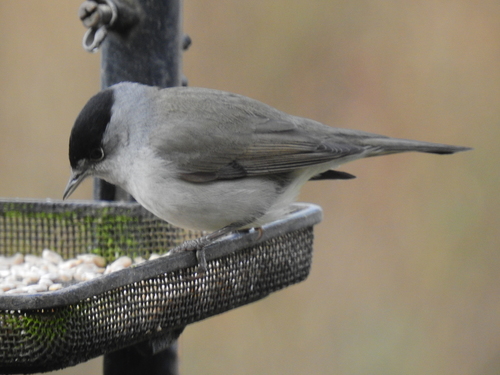 Capinera
In breve
The most reliable way to separate Cetti's Warbler from Eurasian Blackcap is by head pattern: blackcap males have a distinctive black crown, females and juveniles a chestnut-brown cap, while Cetti's Warbler lacks any cap and instead shows a pale supercilium above a dark eye. Cetti's is a rich chestnut-brown overall with a longer, broader tail and rounded wings, while Blackcap is mainly olive-grey with pale underparts and a shorter, more squared tail. In flight or perched, Cetti's appears more compact and often skulks in dense, damp vegetation, whereas Blackcap is more likely to be seen in open scrub or woodland. Both species are similar in length, but Blackcap is heavier and bulkier. Vocalizations are very different: Cetti's delivers explosive, abrupt bursts, while Blackcap sings a rich, melodic warble.
Consigli di identificazione
- Cap color and presence: Blackcap males have a jet-black cap, females and juveniles a chestnut-brown cap; Cetti's Warbler never shows a cap, instead has a pale supercilium and plain crown. This is the single most reliable field mark for all ages and sexes.
- Supercilium: Cetti's Warbler has a narrow, pale grey supercilium arching over a dark eye, giving a striking face pattern. Blackcap lacks any supercilium, the face is plain grey.
- Overall coloration: Cetti's is rich chestnut or reddish-brown above and pale grey-brown below; Blackcap is olive-grey above and pale grey to silvery white below. The difference is especially obvious in good light.
- Tail structure: Cetti's has a noticeably longer and broader tail, often flicked or cocked, and only 10 tail feathers (not visible in the field, but the tail looks broad and rounded). Blackcap's tail is shorter and more squared.
- Wing shape: Cetti's Warbler has short, rounded wings, giving a compact, stubby appearance; Blackcap's wings are longer and more pointed, contributing to a sleeker look.
- Size and bulk: Blackcap is heavier and bulkier, especially in hand, but this is subtle in the field. Both are similar in length.
- Habitat: If seen in dense, wet, shrubby vegetation near water, suspect Cetti's; if in dry woodland, open scrub, or gardens, suspect Blackcap.
- Behavior: Cetti's is extremely skulking, rarely seen in the open, and moves quickly through cover. Blackcap is more likely to perch in the open and forage at mid-levels.
- Juvenile confusion: Young Blackcaps may show a rufous tinge above and a brownish cap, but always have some cap; Cetti's juveniles look like adults and never show a cap.
- Song: Cetti's delivers explosive, abrupt bursts, usually from deep cover. Blackcap sings a rich, melodic warble, often from an exposed perch.
- Tail flicking: Cetti's often flicks or cocks its long tail; Blackcap does not show this behavior as prominently.
- Eye color: Blackcap has a reddish-brown iris; Cetti's has a dark eye, but this is rarely diagnostic in the field.
- Leg color: Both have greyish legs, not a strong separator.
- Seasonal context: Both species can be present in overlapping areas, but Cetti's is more resident, while Blackcap is more migratory in much of its range.
- Sexing in the field: Only Blackcap can be reliably sexed by plumage (cap color); Cetti's sexes are alike.
Taglia
Both species are similar in length (about 13–14 cm), but Blackcap is noticeably heavier (average adult mass 18.1 g) compared to Cetti's Warbler (males around 15 g, females 12 g). Blackcap also appears bulkier, with a slightly longer wing (7–8 cm) versus Cetti's shorter, rounded wings. Cetti's has a longer and broader tail, which is distinctive when seen well.
Piumaggio
- Juveniles: Cetti's Warbler juveniles look like adults but have fresh plumage and two dark spots on the tongue (not visible in the field). Blackcap juveniles resemble adult females, with a brownish cap and a rufous tinge to the upperparts, and more olive on the breast and flanks. Young male Blackcaps may show a darker brown cap than females.
- Adults: Cetti's Warbler is uniform rich chestnut or dark reddish-brown above, pale grey-brown below, with a narrow pale supercilium and no cap. Blackcap adult males are olive-grey above, with a neat black cap, pale grey underparts, and a dark grey tail with olive edges. Females have a chestnut-brown cap and slightly browner upperparts. The Blackcap's cap is always sharply defined and diagnostic.
- Tail and wings: Cetti's has a longer, broader tail (with only 10 rectrices, unusual for a warbler) and short, rounded wings. Blackcap's tail is shorter, more squared, and the wings are longer and more pointed. No distinctive upperwing pattern is described for either species in flight.
Comportamento
Cetti's Warbler is highly skulking, rarely seen in the open, and prefers to move through dense, low vegetation near water. It often flicks its long tail and may be glimpsed as it darts between cover. Blackcap is more confiding, frequently seen in open scrub, woodland edges, and gardens, often perching in the open or foraging at mid-levels. Blackcap's movements are less furtive, and it may be seen feeding on berries or insects in more exposed situations.
Habitat
Cetti's Warbler is closely tied to dense, damp habitats—thick shrubby vegetation near ponds, lakes, marshes, and rivers. It is rarely found far from water or in open woodland. Blackcap is much more versatile, occurring in a wide range of habitats including woodland, scrub, gardens, and parks, and is not restricted to wet areas. If you see a warbler in dry woodland or garden, it is far more likely to be a Blackcap.
Voce
Cetti's Warbler has a loud, explosive, and abrupt song delivered in short bursts—often the first clue to its presence. The song is unique in structure and volume, usually heard from deep cover. Blackcap's song is a rich, melodic warble, often compared to a less fluent Nightingale, and is more sustained and musical. Their calls and songs are very different and are among the best ways to separate them if heard.