

Brown Skua vs South Polar Skua
Stercorarius antarcticus contro Stercorarius maccormicki
Fai un quiz con Brown Skua e South Polar Skua
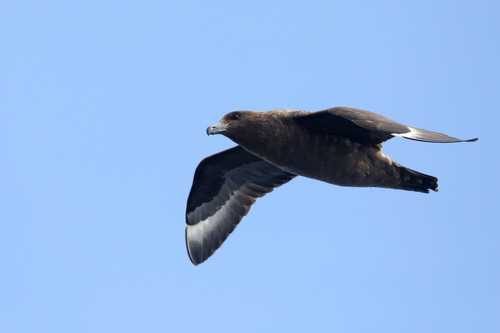 Brown Skua
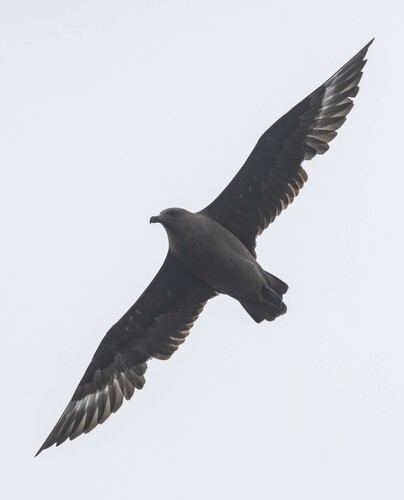 South Polar Skua
In breve
Il segno di campo più affidabile tra Brown Skua e South Polar Skua è il contrasto tra testa e corpo negli adulti: South Polar Skua mostra tipicamente una testa e parti inferiori nettamente più chiare (biancastre o marrone paglia) rispetto al suo dorso più scuro, mentre Brown Skua è complessivamente di un marrone scuro più uniforme. Questo contrasto è particolarmente utile in buona luce e a distanza moderata. I giovani e le morph scure di South Polar Skua sono molto più difficili da separare da Brown Skua, richiedendo attenzione ai toni sottili del piumaggio e al colore del becco. Entrambe le specie sono grandi uccelli marini con un corpo massiccio e un volo potente e diretto, ma Brown Skua è generalmente più pesante e massiccio. Sul campo, cerca prima la testa chiara negli adulti di South Polar Skua, ma fai attenzione con gli immaturi e le morph scure.
Consigli di identificazione
- Adult head contrast: In buone osservazioni, gli adulti di South Polar Skua (soprattutto le morph chiare/intermedie) mostrano una testa e parti inferiori chiare (biancastre o marrone paglia) che contrastano con un dorso e ali marroni più scuri. Brown Skua è uniformemente marrone scuro, privo di questo contrasto. Questo è il miglior segno di campo per gli adulti.
- Juvenile/dark morph challenge: I giovani e le morph scure di South Polar Skua sono molto simili a Brown Skua—entrambi sono complessivamente marrone scuro. In questi casi, la separazione è estremamente difficile e spesso non possibile senza osservazioni ravvicinate e prolungate.
- Bill color (close views): South Polar Skua può mostrare una base blu sul becco, specialmente nel piumaggio fresco e su morph chiare/intermedie, mentre il becco di Brown Skua è tipicamente tutto scuro. Questo è sottile e utile solo a distanza ravvicinata.
- Overall tone: South Polar Skua (soprattutto le morph scure e i giovani) tende ad avere un marrone più freddo e grigiastro, mentre Brown Skua è un marrone più caldo e ricco. Questo è soggettivo e inaffidabile in scarsa luce.
- Size and bulk: Brown Skua è più pesante e massiccio, con una costruzione più robusta, specialmente quando è posato. South Polar Skua è ancora grande ma più snello e meno imponente. Usa questo solo in confronto diretto o con esperienza.
- White wing flashes: Entrambe le specie mostrano lampi bianchi nelle ali, quindi questo non è un separatore.
- Flight style: Entrambi hanno un volo forte e diretto con ali larghe e un aspetto massiccio. Brown Skua può apparire ancora più potente, ma questo è sottile.
- Habitat context: Durante la stagione di riproduzione, Brown Skua è più probabile che si trovi su isole subantartiche, mentre South Polar Skua nidifica sul continente antartico. Fuori dalla stagione di riproduzione, entrambi possono trovarsi in mare, quindi il contesto è solo un debole indizio.
- No reliable vocal differences: Le fonti non forniscono vocalizzazioni diagnostiche per la separazione sul campo.
- Beware of overlap: In aree dove si trovano entrambe le specie, specialmente in mare, aspettati confusione con immaturi e morph scure—talvolta la separazione non è possibile.
- Do not rely on range alone: Entrambe le specie possono vagare ampiamente fuori dalla stagione di riproduzione, quindi non usare l'areale come separatore principale a meno che non ti trovi in un sito di nidificazione noto.
- No age-specific upperwing pattern difference: Le fonti non descrivono schemi distintivi delle ali superiori per giovani o immaturi per nessuna delle due specie, quindi non fare affidamento su questa caratteristica.
- Plumage uniformity: Brown Skua è sempre uniformemente marrone scuro; qualsiasi uccello con una testa e parti inferiori nettamente più chiare è un South Polar Skua.
- Sexual dimorphism: Entrambe le specie mostrano solo lievi differenze di dimensione tra i sessi; questo non è utile per l'identificazione sul campo.
- Summary tip: Se vedi un grande skua con una testa chiara e un dorso scuro, è un South Polar Skua (adulto morph chiara/intermedia). Se è uniformemente marrone scuro, è probabilmente un Brown Skua o un South Polar Skua scuro/giovanile—fai attenzione e cerca altri indizi.
Taglia
Brown Skua è il più pesante e robusto dei due, con una massa corporea adulta che varia da 1.2 a 2.18 kg (le medie notate per maschi e femmine superano spesso 1.5 kg), rendendolo il più pesante skua e in competizione con i gabbiani più grandi. South Polar Skua è ancora un grande uccello ma in media più leggero, con una massa corporea adulta di circa 1349 g (1.35 kg) [wikidata]. Entrambi sono simili in lunghezza (Brown Skua 52–64 cm, South Polar Skua circa 53 cm) e apertura alare, ma la maggiore massa e costruzione più pesante di Brown Skua sono spesso evidenti in confronto diretto, specialmente quando è posato.
Piumaggio
Gli adulti di South Polar Skua (soprattutto le morph chiare e intermedie) mostrano un forte contrasto tra la loro testa e parti inferiori chiare (biancastre o marrone paglia) e il loro dorso e ali marroni più scuri. Questo contrasto è diagnostico quando visibile. Brown Skua, al contrario, è uniformemente marrone scuro, privo del contrasto tra testa e parti inferiori chiare. I giovani e le morph scure di South Polar Skua sono molto più simili a Brown Skua, entrambi apparendo complessivamente marrone scuro; in questi casi, South Polar tende ad avere un tono marrone più freddo e una base blu sul becco, ma questi sono sottili e inaffidabili a distanza o in scarsa luce. Entrambe le specie mostrano lampi bianchi nelle ali in volo, e entrambe hanno ali potenti e larghe, ma non ci sono differenze dettagliate nei modelli delle ali superiori specifiche per età notate nelle fonti per separare giovani o immaturi. Pertanto, il contrasto della testa negli adulti è il segno chiave del piumaggio, ma fai attenzione alla sovrapposizione in giovani o uccelli scuri.
Comportamento
Entrambe le specie sono uccelli marini aggressivi e potenti noti per il kleptoparassitismo (rubare cibo ad altri uccelli) e la predazione. Il loro volo è diretto e forte, con un aspetto massiccio e un'ampia apertura alare. Brown Skua può apparire ancora più robusto e imponente, riflettendo la sua maggiore massa corporea. Entrambi possono essere visti infastidire gabbiani, sterne o altri uccelli marini, e entrambi sono audaci intorno agli esseri umani nelle loro aree di nidificazione. Non sono notate differenze comportamentali significative nelle fonti per la separazione sul campo.
Habitat
Brown Skua nidifica in zone subantartiche e antartiche, spesso su isole o aree costiere, e si disperde verso nord fuori dalla stagione di nidificazione. South Polar Skua nidifica in Antartide propriamente detta ed è altamente pelagico fuori dalla stagione di nidificazione, migrando verso gli oceani di tutto il mondo. Nelle zone di sovrapposizione (come le acque antartiche), entrambe possono trovarsi insieme, ma Brown Skua è più probabile che si trovi su isole subantartiche, mentre South Polar Skua è più rigorosamente antartico nella nidificazione. L'habitat non è un separatore affidabile fuori dalla stagione di nidificazione, ma il contesto può aiutare in alcune località.