
Brown Noddy vs Murphy's Petrel
Anous stolidus contro Pterodroma ultima
Fai un quiz con Brown Noddy e Murphy's Petrel
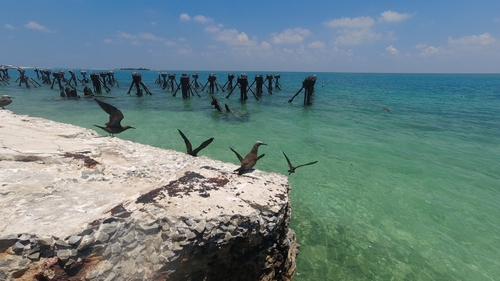 Brown Noddy
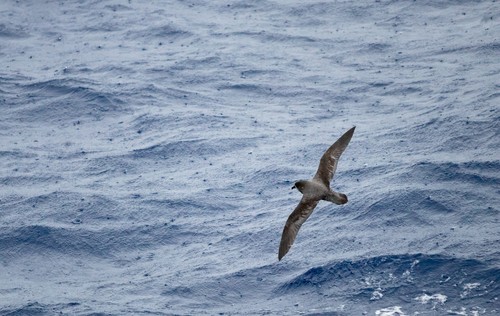 Murphy's Petrel
In breve
Il modo più affidabile per separare il Brown Noddy dal Murphy's Petrel è attraverso la struttura generale e il tono del piumaggio: il Brown Noddy è una sterna di un marrone cioccolato scuro con una corona chiara e un anello oculare bianco incompleto, mentre il Murphy's Petrel è un petrello più massiccio, completamente scuro e grigio fuligginoso con un mento chiaro e zampe rossastre. In volo, il Brown Noddy mostra una lunga coda a forma di cuneo e un volo più simile a quello delle sterne, galleggiante, mentre il Murphy's Petrel appare più pesante, con ali più lunghe e larghe e uno stile di volo più rigido e planante. Se vedi la corona chiara e l'anello oculare bianco, è un Brown Noddy; se l'uccello è uniformemente scuro con un mento chiaro e zampe rossastre, è un Murphy's Petrel. Entrambi possono apparire scuri da lontano, ma la loro struttura e i dettagli sottili del piumaggio sono fondamentali.
Consigli di identificazione
- Head pattern: Il Brown Noddy mostra sempre una corona e una fronte grigio chiaro o bianche con un anello oculare bianco stretto e incompleto; il Murphy's Petrel ha una testa uniformemente scura con solo un mento chiaro, mai una corona o un anello oculare chiaro. Questo è il segno di campo più affidabile a qualsiasi età.
- Plumage tone: Il Brown Noddy è complessivamente di un marrone cioccolato scuro, mentre il Murphy's Petrel è grigio fuligginoso. Da lontano, entrambi possono sembrare scuri, ma il marrone del noddy è più caldo e il grigio del petrello è più freddo.
- Tail shape: Il Brown Noddy ha una lunga coda a forma di cuneo, visibile in volo e quando è posato. Il Murphy's Petrel ha una coda più corta e più squadrata, tipica dei petrelli.
- Leg color: Il Murphy's Petrel ha zampe rossastre, che possono essere viste quando l'uccello è posato o in atterraggio; le zampe e i piedi del Brown Noddy sono scuri.
- Size and structure: Il Brown Noddy è snello e simile a una sterna, con una testa relativamente piccola e una lunga coda. Il Murphy's Petrel è più massiccio, con una grande testa, un collo spesso e ali lunghe e larghe.
- Flight style: Il Brown Noddy vola con battiti d'ali galleggianti e simili a quelli delle sterne e spesso si libra o si abbassa vicino all'acqua. Il Murphy's Petrel utilizza planate con ali rigide e volo dinamico, raramente battendo le ali per lunghi periodi.
- Bill shape: Il Brown Noddy ha un becco fine, dritto e di lunghezza media, tipico delle sterne. Il Murphy's Petrel ha un becco più spesso e ricurvo, ma questo può essere difficile da vedere da lontano.
- Underwing and upperwing: Non sono descritti schemi distintivi specifici per l'età per nessuna delle due specie, quindi concentrati sul colore e sulla struttura complessiva.
- Eye-ring: L'anello oculare bianco incompleto del Brown Noddy è assente nel Murphy's Petrel.
- Chin color: Il Murphy's Petrel ha un mento chiaro che contrasta con il resto del viso; il mento del Brown Noddy non è più chiaro del resto della testa.
- Habitat context: Se visto vicino alla terra, specialmente in una colonia o posato su vegetazione, è molto più probabile che sia un Brown Noddy. Il Murphy's Petrel è quasi sempre visto lontano dalla terra.
- Group behavior: I Brown Noddies sono spesso in gruppi o colonie; i Murphy's Petrels sono di solito solitari in mare.
- Sex and age: Nessuna delle due specie mostra dimorfismo sessuale; le differenze legate all'età sono minime per l'identificazione sul campo, ma la corona chiara del Brown Noddy è presente in tutti i piumaggi.
- Pitfalls: Da lontano o in scarsa luce, entrambi possono sembrare uniformemente scuri. Cerca sempre la corona chiara e l'anello oculare per il noddy, e il mento chiaro e le zampe rossastre per il petrello.
- When in doubt: La struttura e il pattern della testa sono i migliori indizi: simile a una sterna con una corona chiara è il Brown Noddy; massiccio, completamente scuro con un mento chiaro è il Murphy's Petrel.
Taglia
Il Brown Noddy è lungo 38–45 cm con un'apertura alare di 75–86 cm, mentre il Murphy's Petrel è leggermente più corto a 38–41 cm ma ha un'apertura alare molto più lunga di circa 97 cm ed è significativamente più pesante (circa 360 g). Il Brown Noddy è il più grande dei noddy, ma il Murphy's Petrel è complessivamente più massiccio, con un corpo più robusto e ali più lunghe. Il noddy appare più snello e simile a una sterna, mentre il petrello è più tozzo e potente nella struttura.
Piumaggio
I Brown Noddies giovanili e adulti hanno un piumaggio di un marrone cioccolato scuro con una distintiva corona e fronte grigio chiaro o bianche, e un anello oculare bianco stretto e incompleto. La loro coda è lunga e a forma di cuneo. Al contrario, il Murphy's Petrel (di tutte le età) è uniformemente grigio fuligginoso, tranne per un mento chiaro, e non ha alcuna corona o anello oculare chiaro. Le zampe del petrello sono rossastre, un segno sottile ma a volte visibile quando è posato o in atterraggio. Non sono descritti schemi distintivi specifici per l'età per nessuna delle due specie, quindi concentrati sui contrasti tra testa e parti inferiori. I toni marroni del Brown Noddy e la testa chiara sono diagnostici, mentre l'uniformità grigio fuligginoso del Murphy's Petrel e il mento chiaro lo distinguono.
Comportamento
Il Brown Noddy vola tipicamente con battiti d'ali galleggianti e simili a quelli delle sterne e spesso si posa su scogliere, alberi o arbusti, talvolta in grandi colonie. Il Murphy's Petrel è un classico petrello gadfly, utilizzando lunghe planate con ali rigide e volo dinamico sopra l'oceano aperto, raramente posandosi dove è facilmente osservabile. In volo, il noddy appare più leggero e agile, mentre il petrello appare più pesante e più determinato. Il Brown Noddy è spesso visto in gruppi vicino ai siti di nidificazione, mentre il Murphy's Petrel è di solito solitario o in associazioni sparse lontano dalla terra.
Habitat
Il Brown Noddy nidifica colonialmente su isole tropicali in tutto il mondo, spesso nidificando su scogliere, alberi o arbusti, ed è solitamente visto vicino alla terra o alle acque costiere. Il Murphy's Petrel è una specie oceanica, raramente vista vicino alla costa se non su isole di nidificazione remote nel Pacifico meridionale. Se sei vicino alla terra o in una colonia, è molto più probabile che sia un Brown Noddy; un uccello marino scuro e solitario lontano dalla costa è più probabile che sia un Murphy's Petrel.