

Aquila minore vs Ayres's Hawk-Eagle
Hieraaetus pennatus contro Hieraaetus ayresii
Fai un quiz con Aquila minore e Ayres's Hawk-Eagle
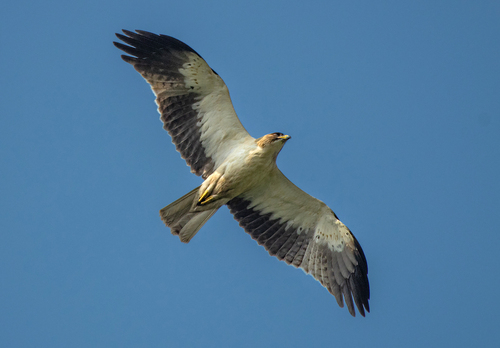 Aquila minore
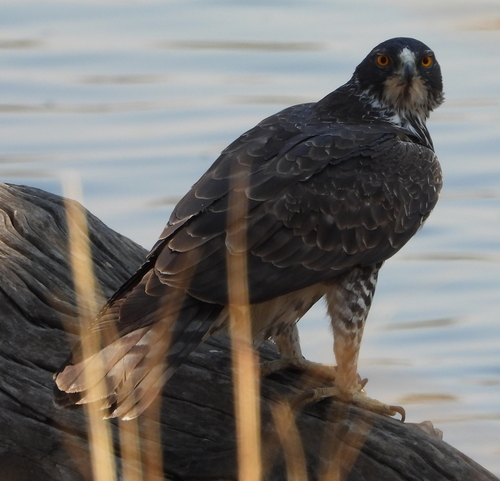 Ayres's Hawk-Eagle
In breve
Il segno distintivo più affidabile per separare l'Aquila minore dall'Ayres's Hawk-Eagle è il motivo dell'ala inferiore in volo: l'Aquila minore (tutte le età) mostra luci di atterraggio chiare e contrastanti alla base delle primarie, mentre l'Ayres's Hawk-Eagle ha un'ala inferiore più uniformemente scura e pesantemente barrata senza un pannello chiaro. Il giovane Ayres's Hawk-Eagle è scuro sopra e bianco sotto con marcature sparse, mentre i giovani Aquila minore somigliano agli adulti delle loro rispettive forme. Entrambi sono piccoli aquilotti con dimensioni e proporzioni simili, ma l'Ayres's Hawk-Eagle mostra spesso una piccola cresta e macchie più pesanti nella parte inferiore. La struttura e il jizz sono sottili, quindi concentrati sul motivo dell'ala e sulle marcature della parte inferiore per la separazione più affidabile.
Consigli di identificazione
- Motivo dell'ala inferiore in volo (tutte le età): L'Aquila minore mostra luci di atterraggio chiare alla base delle primarie; l'Ayres's Hawk-Eagle non ha questo, mostrando un'ala inferiore uniformemente scura e pesantemente barrata. Questo è il segno distintivo più affidabile.
- Giovane Ayres's Hawk-Eagle: Marrone scuro sopra, bianco sotto con marcature scure sparse e una corona scura. Con l'età, la parte inferiore diventa più scura e marrone con una tonalità rufosa prima di mutare in piumaggio adulto. I giovani Aquila minore somigliano agli adulti della loro forma (chiara o scura), quindi cerca invece il pannello dell'ala inferiore.
- Parte superiore degli adulti: La forma chiara dell'Aquila minore è grigia chiara con testa e piume di volo più scure; la forma scura è marrone medio. Gli adulti dell'Ayres's Hawk-Eagle sono nerastro sopra, spesso con una fronte e un sopracciglio bianchi.
- Marcature della parte inferiore (adulti): L'Ayres's Hawk-Eagle ha macchie scure pesanti sulla parte inferiore bianca, specialmente sul petto e sull'addome; l'Aquila minore è meno pesantemente marcata sotto, specialmente nelle forme chiare.
- Motivo della coda: L'Ayres's Hawk-Eagle ha una coda grigia cenere con una punta nera larga e diverse barre strette; la coda dell'Aquila minore è meno distintamente barrata.
- Cresta: L'Ayres's Hawk-Eagle spesso mostra una piccola ma talvolta pronunciata cresta, specialmente quando è in pericolo o allerta. L'Aquila minore non ha una cresta.
- Piumaggio delle gambe: Entrambi hanno gambe piumate, ma quelle dell'Ayres's Hawk-Eagle sono bianche e ben visibili.
- Marcature facciali: L'Ayres's Hawk-Eagle mostra una fronte e un sopracciglio bianchi, specialmente negli adulti; l'Aquila minore non ha questa caratteristica.
- Confusione con la forma scura: Entrambe le specie possono essere scure, ma la forma scura dell'Ayres's Hawk-Eagle è per lo più nera con marcature bianche, mentre la forma scura dell'Aquila minore è marrone medio. Usa il motivo dell'ala inferiore per separare.
- Struttura e jizz: Entrambi sono aquilotti compatti e piccoli. L'Ayres's Hawk-Eagle può sembrare leggermente più lungo di coda e più cresta, ma questo è sottile e inaffidabile a distanza.
- Habitat: L'Aquila minore preferisce terreni aperti o semi-aperti, specialmente al di fuori dell'Africa; l'Ayres's Hawk-Eagle è uno specialista delle foreste. Il contesto può aiutare ma non è diagnostico.
- Comportamento: L'Aquila minore spesso vola a basse altezze e caccia in picchiata; l'Ayres's Hawk-Eagle è agile negli habitat boschivi e può apparire più cresta quando è allerta.
- Voce: Il richiamo dell'Aquila minore è un acuto 'kli-kli-kli'; la voce dell'Ayres's Hawk-Eagle non è descritta qui, quindi non fare affidamento sulla vocalizzazione per la separazione.
- Dimorfismo sessuale: Entrambe le specie mostrano femmine più grandi dei maschi, ma questo non aiuta a separare le due specie.
- Trappole: L'Ayres's Hawk-Eagle immaturo può essere scambiato per un'Aquila minore chiara, ma controlla l'assenza del pannello dell'ala inferiore chiara e la presenza di una cresta o di macchie pesanti nella parte inferiore.
Taglia
Entrambe le specie sono quasi identiche in massa (Aquila minore: ~842 g, Ayres's Hawk-Eagle: ~840 g [wikidata]), e le loro aperture alari si sovrappongono (Aquila minore: 110–132 cm, Ayres's Hawk-Eagle: 106–137 cm [wikipedia]). L'Ayres's Hawk-Eagle può essere leggermente più lungo (44–57 cm contro i 40 cm dell'Aquila minore), ma questo è raramente utile sul campo. Entrambi mostrano un forte dimorfismo sessuale, con femmine notevolmente più grandi dei maschi, ma non abbastanza da separare in modo affidabile le due specie solo in base alle dimensioni.
Piumaggio
-
Giovani/immaturi in volo: L'Aquila minore (tutte le età) mostra luci di atterraggio chiare alla base delle primarie (mano interna) sull'ala inferiore, un segno distintivo chiave. L'Ayres's Hawk-Eagle non ha questo pannello, mostrando invece un'ala inferiore scura e pesantemente barrata, con copritrici dell'ala inferiore marroni e senza una chiara macchia chiara. Il giovane Ayres's Hawk-Eagle è marrone scuro sopra, bianco sotto con marcature scure sparse e una corona scura; man mano che matura, diventa più scuro e marrone sotto prima di mutare in piumaggio adulto.
-
Adulti: L'Aquila minore si presenta in due forme: chiara (grigia chiara con testa e piume di volo più scure) e scura (marrone medio con piume di volo grigie scure). Gli adulti dell'Ayres's Hawk-Eagle sono nerastro sopra, di solito con una fronte e un sopracciglio bianchi, e parte inferiore bianca con pesanti macchie scure. La coda dell'Ayres's Hawk-Eagle è grigia cenere con una punta nera larga e diverse barre strette, mentre la coda dell'Aquila minore è meno distintamente marcata. Entrambe le specie hanno gambe ben piumate, ma quelle dell'Ayres's Hawk-Eagle sono bianche.
-
Forme melanistiche/scure: Entrambe le specie possono mostrare forme scure, ma gli uccelli melanistici dell'Ayres's Hawk-Eagle sono per lo più neri con marcature bianche, mentre la forma scura dell'Aquila minore è complessivamente marrone medio.
Comportamento
L'Aquila minore è tipicamente vista volare a basse altezze, spesso solitaria o in coppie, e caccia in picchiata dall'ala. L'Ayres's Hawk-Eagle è anche un cacciatore di foreste ma può apparire più cresta ed è noto per il suo volo agile negli habitat boschivi. Entrambe le specie sono cacciatori attivi di uccelli, rettili e piccoli mammiferi, ma l'Ayres's Hawk-Eagle è più strettamente associato al comportamento di caccia nelle foreste.
Habitat
L'Aquila minore è per lo più migratoria, nidificando nel Paleartico e nel sud dell'Asia, con una piccola popolazione di nidificazione disgiunta nel sud-ovest dell'Africa. Sverna nei tropici dell'Africa e dell'Asia ed è spesso trovata in terreni aperti o semi-aperti. L'Ayres's Hawk-Eagle è nativo delle foreste africane ed è più strettamente associato agli habitat boschivi. Se vista in una foresta densa, è più probabile che sia l'Ayres's; l'Aquila minore preferisce terreni più aperti, specialmente al di fuori della sua area di nidificazione africana.
Voce
L'Aquila minore emette un richiamo acuto 'kli-kli-kli'. Nessuna vocalizzazione distintiva è descritta per l'Ayres's Hawk-Eagle nelle note fornite, quindi la voce non è un separatore affidabile in questo contesto.
Aquila minore · Ayres's Hawk-Eagle · I miei uccelli difficili