

Black Drongo vs Crow-billed Drongo
Dicrurus macrocercus contro Dicrurus annectens
Fai un quiz con Black Drongo e Crow-billed Drongo
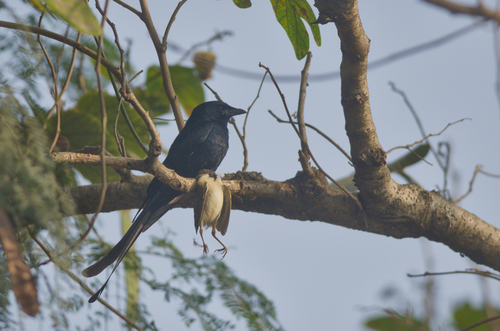 Black Drongo
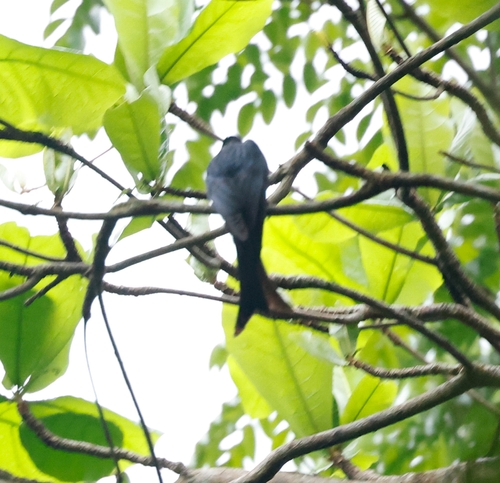 Crow-billed Drongo
In breve
Il segno di campo più affidabile tra Black Drongo e Crow-billed Drongo è la forma della coda: il Black Drongo mostra una coda forked profondamente e largamente distinta, mentre il Crow-billed Drongo ha una forked più superficiale. Anche la struttura del becco è fondamentale: il Crow-billed Drongo ha un becco visibilmente più robusto e pesante. I giovani Black Drongo possono mostrare tonalità brunastre e barrature o macchie bianche sulle parti inferiori, che il Crow-billed Drongo non ha. Entrambe le specie sono completamente nere e superficialmente simili, ma un'attenta attenzione alla forma della coda, alla dimensione del becco e ai dettagli sottili del piumaggio (specialmente nei giovani uccelli) le separerà sul campo.
Consigli di identificazione
- La forma della coda è il separatore più consistente: il Black Drongo ha una coda forked profonda e larga, mentre la forked del Crow-billed Drongo è superficiale. Questo è meglio visibile quando è posato o in volo, ma fai attenzione all'usura della coda o alla muta.
- Struttura del becco: il becco del Crow-billed Drongo è visibilmente più robusto e pesante, dando alla testa un aspetto più robusto. Il becco del Black Drongo è più snello e delicato.
- Piumaggio giovanile: i giovani Black Drongo sono brunasti con barrature o macchie bianche sul ventre/ventre (giovani) o piume del ventre con punte bianche (primo anno). Il Crow-billed Drongo è nero corvino a tutte le età, quindi qualsiasi parte inferiore brunasta o barrata indica Black Drongo.
- Macchia del becco: il Black Drongo adulto mostra spesso una piccola macchia bianca alla base del becco. Questo è assente nel Crow-billed Drongo.
- Lucentezza: il Black Drongo è descritto come nero lucido, a volte con una lucentezza verdastra in alcune sottospecie. Il Crow-billed Drongo è nero corvino, ma le differenze di lucentezza sono sottili e inaffidabili sul campo.
- Comportamento di posizionamento: il Black Drongo spesso si posiziona eretto su fili, rami esposti o anche animali da pascolo. Il Crow-billed Drongo è meno probabile che venga visto in tali ambienti esposti e antropogenici.
- Aggressività: il Black Drongo è famosamente audace, spesso attaccando uccelli più grandi e unendosi a stormi misti in incendi o campi arati. Il Crow-billed Drongo non è noto per tale comportamento.
- Habitat: il Black Drongo è comune in campagna aperta, terreni agricoli e margini urbani. Il Crow-billed Drongo preferisce foreste tropicali umide ed è raramente presente in habitat aperti o urbani. Il contesto può essere un forte indizio.
- Voce: se senti un richiamo a due note 'tee-hee', è probabile che sia un Black Drongo. La voce del Crow-billed Drongo non è descritta qui, quindi l'assenza di questo richiamo non è diagnostica.
- Dimorfismo sessuale: entrambe le specie non mostrano differenze sessuali evidenti nel piumaggio.
- Dimensione: il Crow-billed Drongo è più pesante e più robusto, ma la sovrapposizione delle dimensioni è significativa. Usa la struttura e la forma della coda piuttosto che la dimensione.
- Stile di volo: il Black Drongo è descritto come agile, con forti battiti d'ali e manovre acrobatiche. Lo stile di volo del Crow-billed Drongo non è dettagliato, quindi questo è solo un indizio di supporto.
- Tempistica della muta: il Black Drongo muta da giugno a ottobre nel sud dell'India, ma la sequenza della muta non è un segno di campo per la separazione dal Crow-billed Drongo.
- Confusione potenziale: il giovane Black Drongo può essere confuso con altri drongos (ad es., White-bellied Drongo) a causa delle parti inferiori chiare, ma il Crow-billed Drongo è sempre uniformemente nero.
- Sovrapposizione dell'areale: entrambe le specie possono verificarsi in parti dell'India e del sud-est asiatico, ma il Crow-billed Drongo è più ristretto a regioni forestali.
Taglia
I dati diretti sulle dimensioni sono limitati, ma il Crow-billed Drongo è più pesante (massa corporea circa 56 g [wikidata]), mentre il Black Drongo è descritto come più piccolo e snello (lunghezza 28 cm [wikipedia]). Sul campo, il Crow-billed Drongo può apparire più robusto, specialmente nella testa e nel becco, ma la lunghezza complessiva è simile. La dimensione da sola non è un forte separatore a meno che gli uccelli non siano affiancati.
Piumaggio
I giovani Black Drongo sono brunasti con alcune barrature o macchie bianche sul ventre e sul ventre, e gli uccelli di primo anno hanno piume del ventre con punte bianche, che possono essere confusi con altri drongos ma non con il Crow-billed Drongo, che è descritto come nero corvino a tutte le età. Il Black Drongo adulto è nero lucido con una coda forked larga e profonda e può mostrare una piccola macchia bianca alla base del becco. Il Crow-billed Drongo è anch'esso completamente nero ma con una coda forked più superficiale e un becco più robusto; non sono notate macchie chiare o segni delle parti inferiori per nessuna età. Entrambe le specie non mostrano dimorfismo sessuale nel piumaggio.
Comportamento
Il Black Drongo è notevolmente aggressivo e senza paura, spesso attaccando uccelli più grandi e persino molestando i rapaci. Si posiziona eretto su posatoi esposti, inclusi fili e animali da pascolo, ed è molto attivo all'alba e al tramonto. Il comportamento del Crow-billed Drongo è meno descritto ma non è noto per lo stesso livello di aggressività o molestia evidente. Entrambe le specie sono insettivori aerei, ma l'audacia del Black Drongo e la sua tendenza a unirsi a stormi misti in incendi o campi arati possono essere più evidenti.
Habitat
Il Black Drongo è comune in campagna aperta, campi agricoli e margini urbani in gran parte dell'Asia meridionale. Il Crow-billed Drongo preferisce foreste tropicali umide ed è meno probabile che si trovi in campagna aperta. Pertanto, l'habitat può essere un forte indizio: Black Drongo in paesaggi aperti e modificati dall'uomo; Crow-billed Drongo in habitat forestali o più naturali e umidi.
Voce
Il Black Drongo produce una vasta gamma di richiami, con un tipico richiamo a due note 'tee-hee' che ricorda uno shikra. Nessuna vocalizzazione specifica è descritta per il Crow-billed Drongo nelle note, quindi la voce non è un separatore affidabile a meno che non venga udito il richiamo distintivo del Black Drongo.
Black Drongo · Crow-billed Drongo · I miei uccelli difficili