
Barred Hawk vs White Hawk
Morphnarchus princeps contro Pseudastur albicollis
Fai un quiz con Barred Hawk e White Hawk
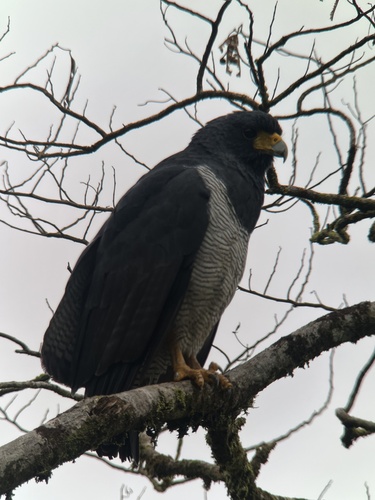 Barred Hawk
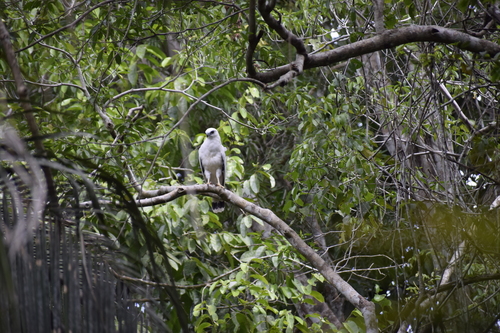 White Hawk
In breve
Il segno di campo più affidabile per separare il Barred Hawk dal White Hawk è il motivo delle parti inferiori: il Barred Hawk mostra barre nere audaci sul ventre bianco e sulle copritrici delle ali inferiori, mentre il White Hawk è quasi interamente bianco sotto (adulti), con solo alcune macchie nere sulle primarie esterne e una singola banda larga sulla coda. Tuttavia, i White Hawk immaturi possono mostrare striature scure e macchie sotto, quindi l'età deve essere considerata. Strutturalmente, il Barred Hawk appare più robusto con un becco pesante e simile a un muso e una coda più corta, mentre il White Hawk è leggermente più piccolo, con un aspetto più compatto e completamente bianco sotto e ali superiori nere. Entrambe le specie hanno ali larghe e code corte, ma l'aspetto più scuro e barrato del Barred Hawk e il suo aspetto pesante sono distintivi nella maggior parte delle condizioni. Fai attenzione soprattutto agli immaturi in volo, poiché la confusione è più probabile in quel momento.
Consigli di identificazione
- Il motivo delle parti inferiori è fondamentale: Il Barred Hawk di tutte le età mostra barre nere audaci e uniformi sul ventre bianco e sulle copritrici delle ali inferiori; gli adulti del White Hawk sono completamente bianchi sotto, con solo alcune macchie nere sulle primarie esterne e una banda larga sulla coda. I White Hawk immaturi possono mostrare striature scure o macchie sotto, ma mai le barre uniformi del Barred Hawk.
- Ali superiori e coda in volo: Il Barred Hawk visto dall'alto è nero con una singola barra bianca sulla coda; gli adulti del White Hawk hanno ali superiori nere e una coda corta con una banda bianca larga. Alcune sottospecie di White Hawk hanno più nero sulle ali e sulla coda, ma appaiono sempre principalmente bianche da sotto.
- Forma della testa e del becco: Il Barred Hawk ha un becco pesante e simile a un muso e un aspetto robusto e pesante, particolarmente evidente quando è in pericolo. Il White Hawk ha una testa e un becco di rapace più tipici, meno sporgenti.
- Dimensioni e struttura: Il Barred Hawk è più grande e pesante, con un'apertura alare 2,2 volte la lunghezza del corpo, ali molto larghe e una coda corta. Il White Hawk è leggermente più piccolo, con ali molto larghe e una coda corta, ma appare più compatto e meno massiccio nel complesso.
- Trappole del piumaggio (immaturi): I White Hawk immaturi possono mostrare striature scure e macchie sotto, ma il motivo è macchiettato o striato, non uniformemente barrato come nel Barred Hawk. Controlla sempre l'uniformità e l'estensione delle barre.
- Petto e gola: Il Barred Hawk ha una gola e un petto neri che contrastano con il ventre barrato; il White Hawk è bianco sulla gola e sul petto (adulti), con solo alcune sottospecie che mostrano deboli striature nere sulla corona o sul collare.
- Motivo della coda: Entrambe le specie hanno una singola banda larga sulla coda, ma nel Barred Hawk, la coda è altrimenti nera; nel White Hawk, la coda è bianca con una larga banda nera subterminale (o, in alcune sottospecie, il nero si estende fino alla base).
- Voce: Ascolta gli strilli e i fischi rumorosi e acuti del Barred Hawk mentre vola; il White Hawk è solitamente più silenzioso, con un richiamo lamentoso 'kerwee'.
- Contesto dell'habitat: Il Barred Hawk è più strettamente legato agli interni delle foreste dense e umide, mentre il White Hawk può essere trovato in una gamma più ampia di foreste di pianura e talvolta ai margini.
- Indizi comportamentali: Il Barred Hawk può apparire più affaticato e pesante in volo a causa della sua struttura; il White Hawk è più leggero e agile, spesso visto volare in alto o eseguire voli di corteggiamento.
- Dimorfismo sessuale: Entrambe le specie mostrano femmine più grandi dei maschi, ma questo è sottile sul campo.
- Variazione delle sottospecie (White Hawk): Alcune sottospecie di White Hawk hanno più nero sulle ali e sulla coda, ma tutte rimangono principalmente bianche sotto; controlla sempre prima il motivo delle parti inferiori.
- Associazione con i mammiferi: Il White Hawk può seguire le scimmie e i coati per catturare prede spaventate da loro; il Barred Hawk non è noto per questo comportamento.
- Vista da un posatoio: La testa e il becco pesanti del Barred Hawk, e le parti superiori scure con le parti inferiori barrate, contrastano con il piumaggio bianco pulito del White Hawk e le ali superiori nere.
- Sovrapposizione dell'areale: Entrambi possono verificarsi in America Centrale e nel nord del Sud America; utilizza sempre più segni di campo, specialmente il motivo delle parti inferiori e le caratteristiche strutturali, per confermare l'identificazione.
Taglia
Il Barred Hawk è leggermente più grande e pesante del White Hawk. L'adulto Barred Hawk misura 51–61 cm di lunghezza con un'apertura alare di 112–124 cm e pesa circa 1 kg, con le femmine più grandi dei maschi. Il White Hawk è lungo 46–56 cm, con ali molto larghe e una coda corta, pesando 650–840 g a seconda del sesso. Entrambi appaiono come grandi rapaci dalle ali larghe, ma il Barred Hawk è il più massiccio dei due, specialmente sul campo quando è posato o in volo.
Piumaggio
I White Hawk immaturi hanno ampie macchie nere sopra e parti inferiori bianche striate di scuro, il che può causare confusione con il Barred Hawk, specialmente in volo. Tuttavia, il Barred Hawk di tutte le età mostra barre nere audaci sul ventre bianco e sulle copritrici delle ali inferiori, in contrasto con una gola, un petto e penne alari neri. Visto dall'alto, il Barred Hawk è nero con una singola barra bianca sulla coda, mentre gli adulti del White Hawk sono bianchi sotto con ali superiori nere e una coda corta con una banda bianca larga. Le sottospecie di White Hawk variano nella quantità di nero sulle ali e sulla coda, ma tutte appaiono principalmente bianche da sotto. Le parti inferiori del Barred Hawk sono sempre barrate, mai completamente bianche, e le sue parti superiori sono di un grigio scuro o nero. Il becco simile a un muso e la testa pesante del Barred Hawk sono anche distintivi. In sintesi: Barred Hawk = parti inferiori barrate, nero sopra; White Hawk adulto = parti inferiori bianche, ali superiori nere, singola banda larga sulla coda; White Hawk immaturo = bianco con striature/macchie scure sotto, ma mai le barre uniformi del Barred Hawk.
Comportamento
Entrambe le specie sono spesso viste volare sopra la chioma della foresta, ma il Barred Hawk è noto per essere rumoroso quando vola, emettendo strilli e fischi acuti. Anche il White Hawk è frequentemente visto volare ed è noto per il suo spettacolare volo di corteggiamento aereo. Entrambi si posano in aree boschive e cacciano da posatoi, ma il White Hawk è noto per associarsi a gruppi di foraggiamento di scimmie e coati per afferrare prede. La struttura più pesante e la coda più corta del Barred Hawk possono far sembrare il suo volo più affaticato e meno leggero rispetto al White Hawk, leggermente più leggero.
Habitat
Il Barred Hawk si trova in foreste umide da Costa Rica a Perù, tipicamente in foreste dense e con chioma spessa dove la sua coda corta e le ali larghe aiutano la manovrabilità. Il White Hawk ha un'area di distribuzione più ampia, dal sud del Messico attraverso l'America Centrale e Meridionale, inclusa l'intera regione amazzonica, ed è trovato in foreste di pianura e boschi, a volte in habitat più aperti o ai margini rispetto al Barred Hawk. Entrambi preferiscono ambienti forestali, ma il Barred Hawk è più strettamente associato agli interni delle foreste dense e umide.
Voce
Il Barred Hawk è solitamente rumoroso quando vola, emettendo richiami acuti o fischi, inclusi 'whees', 'yips', 'dits' e 'weeps' rauchi. Il richiamo del White Hawk è descritto come un lamentoso 'kerwee'. In pratica, il Barred Hawk è più probabile che venga sentito chiamare ripetutamente mentre vola, mentre il White Hawk è generalmente più silenzioso, tranne durante i voli di corteggiamento.