

American Pygmy Kingfisher vs Green Kingfisher
Chloroceryle aenea contro Chloroceryle americana
Fai un quiz con American Pygmy Kingfisher e Green Kingfisher
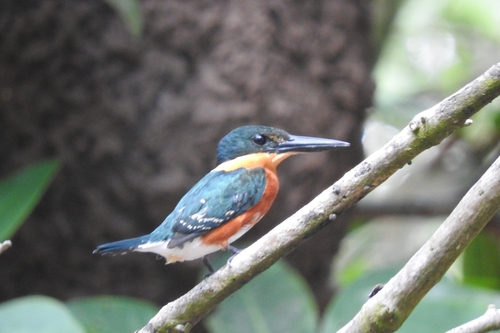 American Pygmy Kingfisher
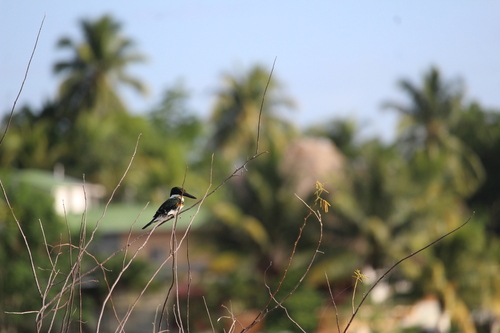 Green Kingfisher
In breve
Il modo più affidabile per separare l'American Pygmy Kingfisher dal Green Kingfisher è la dimensione: il pygmy è molto più piccolo e compatto, anche a distanza. Per gli uccelli immaturi, cerca macchie color crema o bianche sulle ali: entrambe le specie le mostrano, ma il motivo e l'estensione differiscono. Il piumaggio adulto offre anche contrasti chiari: i maschi dell'American Pygmy Kingfisher sono di un ruggine profondo sotto con una macchia bianca sul ventre, mentre i maschi del Green Kingfisher hanno un petto ruggine ma altrimenti parti inferiori bianche. Le femmine di entrambe le specie hanno una banda verde sul petto, ma quella del pygmy è più stretta e si staglia su un ruggine più ricco. Anche la struttura è utile: il pygmy ha una testa e un becco proporzionalmente più grandi per la sua dimensione, e una cresta più disordinata, mentre il Green Kingfisher è più snello e privo di cresta. Entrambe le specie si sovrappongono ampiamente in termini di distribuzione e habitat, quindi i segni visivi sono essenziali.
Consigli di identificazione
- Size is the quickest check: L'American Pygmy Kingfisher è molto più piccolo del Green Kingfisher—circa due terzi della lunghezza e meno della metà della massa. Se hai qualche contesto di dimensione (ad es., kingfisher vicini, posatoi noti), usalo prima.
- Juvenile wing spotting: I giovani American Pygmy Kingfishers hanno macchie color crema sulle ali, e nella sottospecie stictoptera, linee di macchie bianche sulle secondarie e alcune bianche sul dorso. I giovani Green Kingfishers hanno piccole macchie color crema sulla corona e sulle copritrici delle ali, e due o più file di macchie bianche sulle piume di volo, ma mostrano anche molto bianco sulla coda esterna in volo: usalo per separarli quando visti volare via.
- Tail pattern in flight: Il Green Kingfisher (tutte le età) mostra molto bianco sulle piume esterne della coda, particolarmente evidente in volo. La coda dell'American Pygmy Kingfisher è di un verde bluastro e manca di bianco esteso.
- Crested vs. sleek head: L'American Pygmy Kingfisher ha una cresta disordinata, che gli conferisce un aspetto con la testa a punte, mentre il Green Kingfisher è privo di cresta e appare più snello e con la testa piatta.
- Bill and head proportions: Il pygmy ha una testa e un becco sproporzionatamente grandi per il suo corpo minuscolo, facendo sembrare il becco massiccio. Il becco del Green Kingfisher è lungo ma si adatta al suo corpo più grande e aerodinamico.
- Adult male underparts: Il maschio dell'American Pygmy Kingfisher è di un ruggine profondo sotto, tranne per una macchia bianca sul ventre, mentre il maschio del Green Kingfisher ha una banda ruggine sul petto ma altrimenti parti inferiori bianche.
- Adult female breast band: La femmina dell'American Pygmy Kingfisher ha una banda verde scuro stretta su parti inferiori ruggine ricche. La femmina del Green Kingfisher ha una banda macchiata di verde su un petto bianco e color crema.
- White collar: Il Green Kingfisher (entrambi i sessi) mostra un collare bianco distintivo, particolarmente evidente di lato o di schiena. Il collare ruggine dell'American Pygmy Kingfisher è più stretto e meno contrastante.
- Leg color: L'American Pygmy Kingfisher ha gambe e piedi di un rosa chiaro a grigio chiaro; quelli del Green Kingfisher sono grigio scuro. Questo è sottile e utile solo a distanza ravvicinata.
- Perch height and behavior: Il pygmy spesso si posa molto in basso, vicino all'acqua o anche appena sopra di essa, a volte in copertura densa. Il Green Kingfisher può posarsi più in alto e in posti più aperti.
- Habitat overlap: Entrambe le specie possono verificarsi insieme nello stesso ruscello o stagno. Non fare affidamento solo sull'habitat per la separazione.
- Sex differences: Entrambe le specie mostrano dimorfismo sessuale, ma il motivo differisce: nota il colore e l'estensione della banda sul petto e delle parti inferiori.
- Subspecies variation: Alcuni American Pygmy Kingfishers (stictoptera) mostrano più macchie bianche sulle ali e sul dorso, che possono essere confuse con le macchie sulle ali e sulla coda del Green Kingfisher. Concentrati su dimensione, motivo della coda e colore delle parti inferiori per conferma.
- When in doubt, prioritize size and tail pattern: Anche se il piumaggio è confuso, la piccola dimensione del pygmy e la mancanza di bianco nella coda sono i separatori più affidabili.
- Voice is not a reliable separator: Non ci sono differenze vocali distintive descritte nelle fonti; fai affidamento sui segni visivi.
Taglia
L'American Pygmy Kingfisher è drammaticamente più piccolo, con una lunghezza di circa 13 cm e un peso di 10–16 g (maschi) o 12–16 g (femmine) [wikipedia], rispetto alla lunghezza di 20 cm e al peso di 32–40 g del Green Kingfisher [wikidata, wikipedia]. Sul campo, questo fa apparire il pygmy molto più compatto e simile a un giocattolo, con una testa e un becco sproporzionatamente grandi per il suo corpo. Il Green Kingfisher è più vicino in dimensione a un passero o a un piccolo tordo, mentre il pygmy è più vicino a un warbler o a un grande colibrì. Se vedi entrambi insieme, il divario di dimensione è inconfondibile.
Piumaggio
Gli uccelli giovani e immaturi di entrambe le specie mostrano macchie chiare sulle ali, ma il motivo differisce: i giovani dell'American Pygmy Kingfisher hanno macchie color crema sulle ali e, nella sottospecie stictoptera, linee evidenti di macchie bianche sulle secondarie e alcune bianche sul dorso. I giovani Green Kingfishers sono complessivamente più opachi, con piccole macchie color crema sulla corona e sulle copritrici delle ali, e due o più file di macchie bianche sulle piume di volo. In volo, il Green Kingfisher mostra molto bianco sulle piume esterne della coda, che è visibile e diagnostica; la coda dell'American Pygmy Kingfisher è di un verde bluastro con meno bianco evidente.
Maschi adulti: i maschi dell'American Pygmy Kingfisher sono di un verde scuro lucido sopra con un lavaggio dorato, un collare ruggine stretto e parti inferiori ruggine ricche tranne per un ventre centrale bianco e una parte inferiore della coda. I maschi del Green Kingfisher sono verdi sopra, con un collare bianco e parti inferiori per lo più bianche, ma con una banda ruggine sul petto.
Femmine adulte: entrambe hanno una banda verde sul petto, ma le femmine dell'American Pygmy Kingfisher hanno una banda verde scuro su parti inferiori ruggine ricche, mentre le femmine del Green Kingfisher hanno una banda macchiata di verde su parti inferiori bianche e una gola e un petto color crema.
Entrambe le specie hanno un becco lungo e pesante, ma solo il pygmy ha una cresta disordinata.
Comportamento
Entrambe le specie cacciano da posatoi bassi e si tuffano per prede acquatiche, ma l'American Pygmy Kingfisher appare spesso più furtivo e viene tipicamente visto più vicino al bordo dell'acqua, a volte in copertura più densa. Il Green Kingfisher è più probabile che venga visto posato in aperto o volare basso sopra i ruscelli. Il volo del pygmy è rapido e diretto, spesso abbracciando l'acqua, con un profilo visibilmente più piccolo e rotondo. Il volo del Green Kingfisher è più potente e l'uccello appare più lungo e snello.
Habitat
Entrambe le specie si sovrappongono ampiamente in termini di distribuzione, dal sud del Messico attraverso l'America Centrale e gran parte del Sud America (escludendo Cile e Uruguay). Entrambe preferiscono ruscelli a flusso lento, stagni e corsi d'acqua forestali. L'American Pygmy Kingfisher è più probabile che venga trovato in habitat ripariali densi e ombreggiati, spesso posandosi in basso e vicino all'acqua. Il Green Kingfisher utilizza habitat simili ma viene visto più spesso in ambienti leggermente più aperti e può verificarsi più lontano dalla copertura densa. L'habitat da solo non è diagnostico dove entrambe le specie si verificano.
American Pygmy Kingfisher · Green Kingfisher · I miei uccelli difficili