

Acadian Flycatcher vs Eastern Kingbird
Empidonax virescens contro Tyrannus tyrannus
Fai un quiz con Acadian Flycatcher e Eastern Kingbird
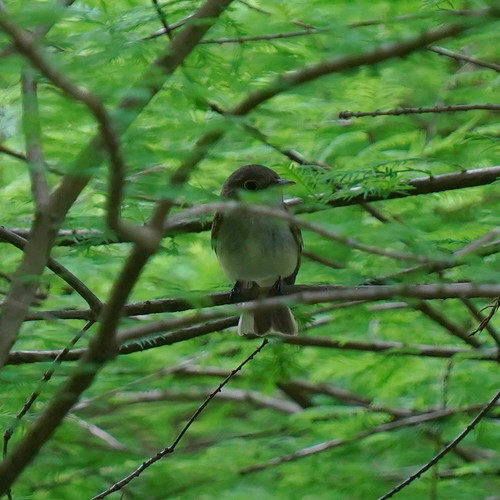 Acadian Flycatcher
 Eastern Kingbird
In breve
Il segno di campo più affidabile per separare l'Acadian Flycatcher dall'Eastern Kingbird è la dimensione e la struttura complessiva: l'Eastern Kingbird è molto più grande, con una coda spessa e lunga che termina in una punta bianca netta, mentre l'Acadian Flycatcher è un piccolo e delicato Empidonax con una coda corta e quadrata e due barre alari chiare. In volo o posato, le parti superiori scure del Kingbird e la sua audace punta di coda bianca si distinguono, rispetto ai toni verde oliva e all'anello oculare debole dell'Acadian. Se vedi un flycatcher con un becco largo e un sottile lavaggio oliva sul petto, è probabile che sia un Acadian; se è grande, audace e nerastro sopra con una pancia e una punta di coda bianche, è un Kingbird. Entrambi possono essere trovati posati in aree aperte, ma la loro dimensione e i modelli di coda sono inconfondibili quando visti bene.
Consigli di identificazione
- Dimensione e Struttura: L'Eastern Kingbird è molto più grande e robusto rispetto all'Acadian Flycatcher. Se l'uccello sembra delle dimensioni di un pettirosso o più grande di un passero, è un Kingbird.
- Modello di Coda: La lunga coda nera del Kingbird con una punta bianca audace è unica e visibile sia negli uccelli posati che in volo di tutte le età. L'Acadian Flycatcher ha una coda corta, quadrata e scura senza punta bianca.
- Barre Alari e Anello Oculare: L'Acadian Flycatcher mostra sempre due barre alari chiare e un distintivo anello oculare bianco; il Kingbird non ha né l'uno né l'altro, presentando ali e faccia scure e semplici.
- Forma e Colore del Becco: L'Acadian Flycatcher ha un becco largo e piatto con una mandibola inferiore giallastra; il becco del Kingbird è robusto, tutto scuro e proporzionalmente più grande rispetto alla testa.
- Colore delle Parti Superiori: L'Acadian Flycatcher è verde oliva sopra, fondendosi con la foresta; il Kingbird è grigio scuro-nero, spesso apparendo quasi nero in forte luce.
- Parti Inferiori: Le parti inferiori dell'Acadian Flycatcher sono bianche con un lavaggio oliva sul petto; le parti inferiori del Kingbird sono bianche nette, con un forte contrasto rispetto alle parti superiori scure.
- Macchia sulla Corona: Il Kingbird ha una macchia rossa sulla corona nascosta, ma questa è raramente visibile e non è un segno di campo affidabile.
- Postura e Comportamento: Il Kingbird si siede dritto e audacemente su posatoi esposti, spesso lanciandosi dopo gli insetti; l'Acadian Flycatcher è più propenso a posarsi più in basso, muovendo la coda e le ali, e compie lanci più brevi e delicati.
- Habitat: L'Acadian Flycatcher si trova di solito in foreste mature e ombreggiate; il Kingbird preferisce campi aperti, bordi di campo e margini d'acqua.
- Voce: L'esplosivo 'ka-zeep' o 'peet-sa' dell'Acadian è distintivo; il richiamo del Kingbird è un cinguettio aspro e ronzante. Se senti una canzone acuta a due note, sospetta l'Acadian.
- Forma delle Ali: Le ali del Kingbird sono lunghe e appuntite, adatte per un volo forte e diretto; le ali dell'Acadian sono più corte e più arrotondate.
- Contesto Stagionale: Entrambe le specie sono migratorie, ma il Kingbird è più probabile che si trovi in habitat aperti durante la migrazione; l'Acadian è raramente visto al di fuori delle aree boschive.
- Dimensione dei Branchi: I Kingbird possono essere visti in piccoli gruppi, specialmente durante la migrazione; gli Acadian Flycatchers sono tipicamente solitari o in coppie sparse.
- Trappole: I Kingbird posati a distanza possono apparire più piccoli, e gli Acadian Flycatchers possono sembrare più scuri in scarsa luce, ma il modello di coda e le barre alari rimangono affidabili. Controlla sempre la punta di coda bianca e l'assenza di barre alari per escludere il Kingbird.
- Confusione Giovanile: Nessun segno di piumaggio giovanile sovrasta le differenze adulte; la punta di coda e la dimensione del Kingbird sono sempre diagnostiche.
Taglia
L'Eastern Kingbird è drammaticamente più grande: 19–23 cm di lunghezza, 33–38 cm di apertura alare e un peso di 33–55 g [wikipedia][avonet]. L'Acadian Flycatcher è molto più piccolo e leggero: 14–15 cm di lunghezza, 22–23 cm di apertura alare e 11–14 g. Anche a distanza, la massa e la lunga coda del Kingbird sono evidenti rispetto all'Acadian Flycatcher, che è delicato e compatto.
Piumaggio
-
Adulti: L'Acadian Flycatcher mostra parti superiori olive, ali e coda più scure, due barre alari chiare, un anello oculare bianco e parti inferiori bianche con un lavaggio oliva sul petto. Il becco è largo, con una mandibola superiore scura e una inferiore giallastra. L'Eastern Kingbird è grigio scuro-nero sopra, con un ventre bianco netto, una lunga coda nera con una banda terminale bianca brillante e ali lunghe e appuntite. Non ha barre alari né anello oculare. La macchia rossa sulla corona del Kingbird è raramente visibile.
-
Giovanili/Immaturi: Non è descritto alcun specifico modello di ali giovanile per entrambe le specie nelle note, ma la punta di coda del Kingbird rimane diagnostica a tutte le età. Le barre alari e l'anello oculare dell'Acadian Flycatcher sono presenti in tutti i piumaggi, mentre il Kingbird non mostra mai questi segni di Empidonax.
Comportamento
L'Eastern Kingbird è evidente, spesso lanciandosi da posatoi esposti per catturare insetti ed è aggressivo nella difesa del territorio, a volte attaccando uccelli molto più grandi. L'Acadian Flycatcher è più ritirato, tipicamente trovato in boschi ombreggiati, spesso compiendo brevi lanci da posatoi più bassi. La postura eretta e audace del Kingbird e la sua disponibilità a posarsi in aperto contrastano con i movimenti più sottili e agili dell'Acadian Flycatcher.
Habitat
L'Eastern Kingbird favorisce habitat aperti con alberi e cespugli sparsi, come campi, bordi e margini d'acqua, ed è spesso visto in aperto. L'Acadian Flycatcher preferisce foreste mature e ombreggiate e ravine boschive, di solito lontano dai campi aperti. Se vedi un flycatcher in boschi fitti, è più probabile che sia un Acadian; in campagna aperta, ci si aspetta un Kingbird.
Voce
L'Acadian Flycatcher emette una canzone acuta e esplosiva a due note ('ka-zeep' o 'peet-sa') e richiami 'peet' morbidi. Il richiamo dell'Eastern Kingbird è un cinguettio acuto, ronzante e non musicale, spesso paragonato al suono di una recinzione elettrica. La differenza è chiara se senti la canzone completa, ma i richiami singoli possono essere confusi a distanza.
Acadian Flycatcher · Eastern Kingbird · I miei uccelli difficili