

Macreuse à front blanc vs Paruline flamboyante
Melanitta perspicillata contre Setophaga ruticilla
Faire un quiz avec Macreuse à front blanc et Paruline flamboyante
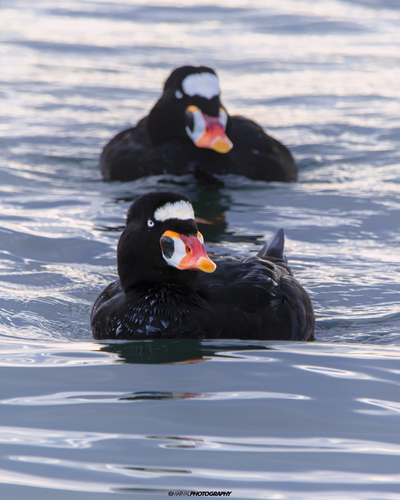 Macreuse à front blanc
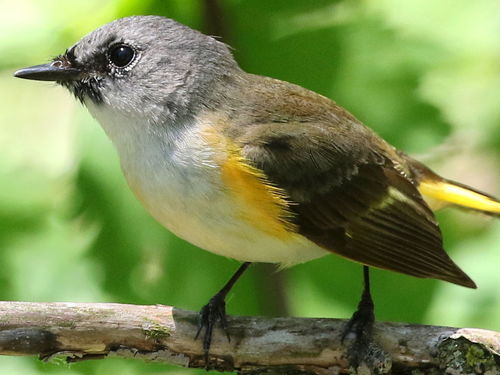 Paruline flamboyante
En bref
The most reliable field mark between Surf Scoter and American Redstart is overall structure and size: Surf Scoter is a large, heavy-bodied sea duck with a thick, swollen bill, while American Redstart is a tiny, slim warbler with a thin bill and long tail. In flight, Surf Scoter (all ages) shows entirely dark wings, whereas American Redstart (especially adult males) flashes bright orange or yellow patches in the wings and tail. Female and immature Surf Scoters can be confused with other scoters but never with a warbler due to their bulk and bill shape. If you see a small, restless bird with flashing wing and tail patches, it's a redstart; a bulky, dark waterbird with a massive bill is a Surf Scoter.
Conseils d’identification
- Size and structure: Surf Scoter is a large, heavy-bodied duck; American Redstart is a tiny, slim warbler. If you can judge size, this is decisive.
- Bill shape: Surf Scoter has a thick, swollen, multicolored bill (adult males) or blackish, squarish bill (females/immatures); American Redstart has a thin, pointed bill typical of insectivorous songbirds.
- Wing pattern in flight: Surf Scoter (all ages) shows entirely dark wings; American Redstart (all ages) flashes bright orange (adult male) or yellow (female/immature) patches in wings and tail.
- Tail: Redstart has a long, slim tail often fanned or flicked, with colored patches; Surf Scoter has a short, broad tail, never fanned or flicked.
- Adult male plumage: Surf Scoter males are all black with white forehead and nape patches and a multicolored bill; American Redstart males are black with orange-red patches on wings, tail, and breast sides.
- Female/immature plumage: Female/immature Surf Scoters are brownish with pale cheek patches and sometimes whitish nape, but always have a thick bill and dark wings. Female/immature redstarts are olive-green above, yellow below, and have yellow patches in wings and tail.
- Head profile: Surf Scoter has a flattened head profile with a bulky bill; American Redstart has a rounded head and fine bill.
- Behavior: Surf Scoter floats or dives on water; American Redstart is restless, flitting through branches, often flycatching.
- Habitat: Surf Scoter is on open water; American Redstart is in trees, shrubs, or woodland edges.
- Voice: Only American Redstart sings or calls audibly to birders; Surf Scoter is silent in the field.
- Seasonal confusion: First-year male redstarts look like females (yellow patches, no orange), but still have warbler structure and behavior; second-year male Surf Scoters may lack full white forehead patch, but remain large and dark with a thick bill.
- Plumage pitfalls: Female/immature Surf Scoters can look plain and brown, but never show colored wing or tail patches; female/immature redstarts always have yellow patches in wings/tail.
- Flight style: Surf Scoter is strong, direct, and steady in flight over water; American Redstart is fluttery, often making short, sallying flights among branches.
- Context: If you see a bird in a flock of ducks or on open water, it's a Surf Scoter; if it's alone or in a mixed flock of small songbirds, it's a redstart.
- Geographic overlap: Both species can occur near water during migration, but only Surf Scoter is seen on open water, and only redstart in woodland or scrub.
Taille
Surf Scoter is vastly larger: adult mass averages 950 g, compared to the American Redstart's 7–9 g. Surf Scoter is about 44–48 cm (17–19 in) long with a wingspan of 76–77 cm (30 in), while American Redstart is only 11–14 cm (4.3–5.5 in) long with a wingspan of 16–23 cm (6.3–9.1 in). Even at a distance, the scoter's body is many times the size of the redstart, with a thick neck and heavy, swollen bill. Redstart is a delicate, lightweight songbird with a long, slim tail and tiny bill.
Plumage
- Juvenile/immature/first-year birds:
- Surf Scoter juveniles and females are brownish, with paler cheeks and sometimes a whitish nape patch, but always have a thick, squarish bill and a flattened head profile. In flight, all Surf Scoters (regardless of age) show completely dark wings with no white or colored patches.
- American Redstart immatures and females have olive-green upperparts, yellow patches in the wings and tail, and a thin bill. First-year males look like females (yellow patches, no orange) and are much smaller and more active.
- Adult males:
- Surf Scoter males are velvety black with bold white patches on the forehead and nape, and a multicolored, swollen bill. No colored patches on wings or tail.
- American Redstart adult males are jet black above with large, bright orange-red patches on wings, tail, and breast sides, contrasting with white underparts. The orange is replaced by yellow in females and immatures.
- Flight marks:
- Surf Scoter: all ages, sexes—entirely dark wings in flight, no white or colored patches.
- American Redstart: all ages—bright orange or yellow patches in wings and tail, highly visible in flight and when fanned.
Comportement
Surf Scoter is a heavy, slow-moving diver, usually seen floating on open water or diving for food. It rarely perches and is never seen flitting through trees or bushes. American Redstart is highly active, constantly flicking and fanning its tail and wings to flush insects, and is usually seen in quick, darting movements among branches. Redstarts often sally out to catch insects mid-air (flycatching), while Surf Scoters are strictly aquatic in behavior.
Habitat
Surf Scoter is found on large bodies of water—coastal bays, open sea, or large lakes—almost never away from water. American Redstart inhabits open woodlands, scrub, and forest edges, often near water but always in terrestrial, vegetated habitats. If the bird is in a tree or bush, it's a redstart; if it's on open water, it's a scoter.
Voix
American Redstart has a musical song of 'see' notes and a soft 'chip' call, typical of warblers. Surf Scoter is generally silent in the field; any vocalizations are not likely to be heard by birders and are not a useful field mark for separation.
Macreuse à front blanc · Paruline flamboyante · Mes oiseaux difficiles