

Motmot

Paruline à collier vs Paruline à calotte noire

Setophaga americana contre Cardellina pusilla

Faire un quiz avec Paruline à collier et Paruline à calotte noire
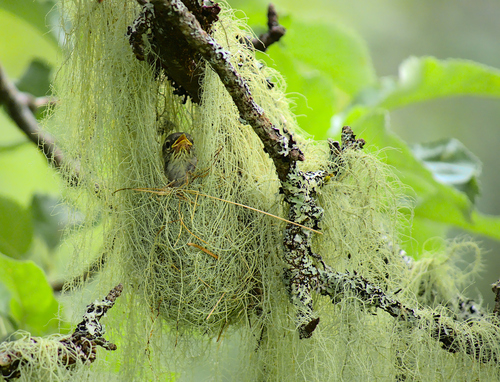
Paruline à collier (Setophaga americana) Paruline à collier
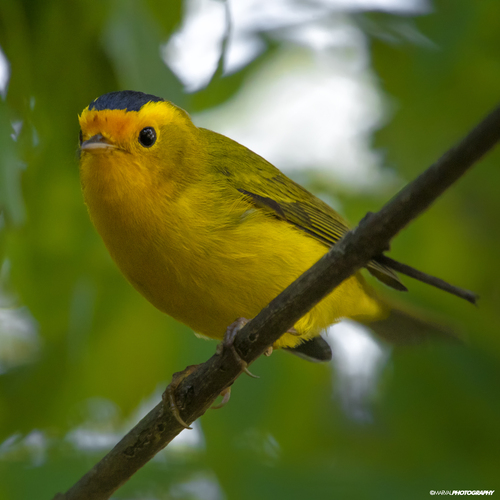
Paruline à calotte noire (Cardellina pusilla) Paruline à calotte noire

Médias

Chargement…

En bref

The most reliable field mark to separate Northern Parula from Wilson's Warbler is the presence of two bold white wing bars and a blue-gray upperpart with a greenish back patch on Northern Parula, versus the plain greenish back, lack of wing bars, and (in adult males) a distinct black cap on Wilson's Warbler. Immature and female Wilson's Warblers lack the black cap but still show a plain, unmarked upperwing and a more uniform yellow underpart. Northern Parula is smaller and more compact, with a short tail and a tendency to show white eye crescents and sometimes a rufous breast band (especially in males). Wilson's Warbler is more slender, with a longer, slimmer tail and a more active, nervous foraging style. Both species are small, yellowish warblers, but careful attention to wing pattern, head markings, and overall structure will separate them in most field situations.

Conseils d’identification

  1. Wing bars: Northern Parula always shows two bold white wing bars on blue-gray upperparts, at all ages and seasons. Wilson's Warbler never shows wing bars—its wings are plain greenish-olive. This is the single best mark, especially in flight or on perched birds with wings visible.
  2. Head markings (adult males): Male Wilson's Warbler has a solid black crown patch, absent in Parula. Female and immature Wilson's may lack this, so do not rely solely on the cap.
  3. Eye crescents: Northern Parula shows prominent white eye crescents, especially in breeding plumage. Wilson's Warbler lacks any white around the eye.
  4. Breast band: Male Northern Parula in breeding plumage has a bluish and rufous breast band. This band fades in late summer and may be absent in females and immatures, but is never present in Wilson's Warbler.
  5. Back color: Parula has blue-gray upperparts with a greenish patch on the back. Wilson's Warbler is uniformly greenish-olive above, with no blue or patch.
  6. Underparts: Both are yellow below, but Parula's yellow is brightest on the breast, fading to white on the belly; Wilson's is more uniformly yellow below.
  7. Tail shape and length: Wilson's Warbler has a longer, slimmer tail and a more elongated appearance. Parula is more compact and short-tailed, with a rounder body.
  8. Foraging behavior: Wilson's Warbler is hyperactive, often flicking its wings and tail, and forages low in shrubs or near the ground. Parula is less jittery and forages higher, often in mossy or lichen-rich trees.
  9. Habitat: In mature, humid forests with hanging moss or lichen, Parula is more likely. In brushy, shrubby, or riparian areas, especially in the West, expect Wilson's Warbler.
  10. Sex and age pitfalls: Female and immature Wilson's Warblers lack the black cap and may look very plain, but still never show wing bars or eye crescents. Female Parulas are duller but retain the wing bars and eye crescents.
  11. Seasonal changes: Parula molts into a duller plumage after breeding, but the wing bars and eye crescents persist. Wilson's Warbler does not show seasonal change in wing pattern.
  12. Direct comparison: If both species are present, Parula will appear more compact and kinglet-like, while Wilson's is longer-tailed and slimmer.
  13. Vocalization: If heard, Wilson's Warbler gives a chattering, descending song and a flat 'chuff' call. Parula's voice is not described here, so do not rely on this unless familiar with their songs from other sources.
  14. Size: Both are tiny, but Parula is slightly larger and more compact; Wilson's is slimmer and more elongated. This is subtle and best used as supporting evidence.
  15. Pitfall: Do not confuse Wilson's Warbler with Yellow Warbler, which has yellow wing markings and tail spots—neither Parula nor Wilson's Warbler shows these.

Taille

Northern Parula is slightly larger on average (10.8–12.4 cm length, 16–18 cm wingspan, 5–11 g mass [wikipedia]) compared to Wilson's Warbler (10–12 cm length, 14–17 cm wingspan, 5–10 g mass [wikipedia]). In practice, both are tiny warblers, but Parula is more compact with a shorter tail and rounder body, while Wilson's Warbler appears slimmer and longer-tailed. The difference is subtle and rarely diagnostic alone, but in direct comparison, Parula can look more stubby and kinglet-like.

Plumage

Juvenile and immature birds of both species lack strong adult head markings, but the wing pattern is a key separator at all ages: Northern Parula always shows two white wing bars on a blue-gray upperwing, while Wilson's Warbler has plain, unmarked wings with no wing bars or panels. Adult male Wilson's Warbler shows a solid black crown patch, which is reduced or absent in females and immatures, but never appears in Parula. Parula males in breeding plumage have a bluish and rufous breast band and bold white eye crescents; females are duller and may lack the breast band, but still show the wing bars and greenish back patch. Wilson's Warbler is greenish-olive above and bright yellow below, with no breast band, no eye crescents, and no wing markings. In all plumages, Parula's upperparts are blue-gray with a greenish patch, while Wilson's is a uniform greenish-olive. In fall and winter, Parula molts into a duller version of its breeding plumage, but the wing bars and eye crescents remain. Wilson's Warbler does not show seasonal change in wing pattern.

Comportement

Wilson's Warbler is notably active, often flicking its wings and tail, and forages lower in shrubs and near the ground, sometimes in dense cover. It moves quickly and nervously, often twitching its tail. Northern Parula tends to forage higher in trees, especially in clumps of lichen or Spanish moss, and moves with a more deliberate, less jittery style. Parula is often one of the smallest birds in a mixed flock, sometimes associating with kinglets and gnatcatchers. Both species are insectivorous and glean from foliage, but Wilson's is more likely to be seen foraging in low, brushy areas.

Habitat

Northern Parula breeds in humid woodlands with abundant Spanish moss or Old Man's Beard lichen, often near water and in mature forests from southern Canada to Florida [wikipedia]. Wilson's Warbler prefers open woodland with dense undergrowth, thickets, and moist areas with streams or bogs, breeding across northern Canada and the western US. In migration and winter, Wilson's uses secondary growth, riparian habitats, and brushy fields, while Parula remains tied to mature, lichen-rich forests. If you find a small yellow warbler in dense, low shrubs or brushy clearings, especially in the West, Wilson's is more likely; in humid, mature forests with hanging mosses, Parula is favored.

Voix

Wilson's Warbler has a chattering series of loud, descending notes and a flat 'chuff' call [wikipedia]. Northern Parula's song and call are not described in the provided notes, so vocal separation is not diagnostic here.

Envoyer une meilleure description

Utilise les mêmes sections que la comparaison. Ton texte est publié tout de suite.

The most reliable field mark to separate Northern Parula from Wilson's Warbler is the presence of two bold white wing bars and a blue-gray upperpart with a greenish back patch on Northern Parula, versus the plain greenish back, lack of wing bars, and (in adult males) a distinct black cap on Wilson's Warbler. Immature and female Wilson's Warblers lack the black cap but still show a plain, unmarked upperwing and a more uniform yellow underpart. Northern Parula is smaller and more compact, with a short tail and a tendency to show white eye crescents and sometimes a rufous breast band (especially in males). Wilson's Warbler is more slender, with a longer, slimmer tail and a more active, nervous foraging style. Both species are small, yellowish warblers, but careful attention to wing pattern, head markings, and overall structure will separate them in most field situations.

  1. Wing bars: Northern Parula always shows two bold white wing bars on blue-gray upperparts, at all ages and seasons. Wilson's Warbler never shows wing bars—its wings are plain greenish-olive. This is the single best mark, especially in flight or on perched birds with wings visible.
  2. Head markings (adult males): Male Wilson's Warbler has a solid black crown patch, absent in Parula. Female and immature Wilson's may lack this, so do not rely solely on the cap.
  3. Eye crescents: Northern Parula shows prominent white eye crescents, especially in breeding plumage. Wilson's Warbler lacks any white around the eye.
  4. Breast band: Male Northern Parula in breeding plumage has a bluish and rufous breast band. This band fades in late summer and may be absent in females and immatures, but is never present in Wilson's Warbler.
  5. Back color: Parula has blue-gray upperparts with a greenish patch on the back. Wilson's Warbler is uniformly greenish-olive above, with no blue or patch.
  6. Underparts: Both are yellow below, but Parula's yellow is brightest on the breast, fading to white on the belly; Wilson's is more uniformly yellow below.
  7. Tail shape and length: Wilson's Warbler has a longer, slimmer tail and a more elongated appearance. Parula is more compact and short-tailed, with a rounder body.
  8. Foraging behavior: Wilson's Warbler is hyperactive, often flicking its wings and tail, and forages low in shrubs or near the ground. Parula is less jittery and forages higher, often in mossy or lichen-rich trees.
  9. Habitat: In mature, humid forests with hanging moss or lichen, Parula is more likely. In brushy, shrubby, or riparian areas, especially in the West, expect Wilson's Warbler.
  10. Sex and age pitfalls: Female and immature Wilson's Warblers lack the black cap and may look very plain, but still never show wing bars or eye crescents. Female Parulas are duller but retain the wing bars and eye crescents.
  11. Seasonal changes: Parula molts into a duller plumage after breeding, but the wing bars and eye crescents persist. Wilson's Warbler does not show seasonal change in wing pattern.
  12. Direct comparison: If both species are present, Parula will appear more compact and kinglet-like, while Wilson's is longer-tailed and slimmer.
  13. Vocalization: If heard, Wilson's Warbler gives a chattering, descending song and a flat 'chuff' call. Parula's voice is not described here, so do not rely on this unless familiar with their songs from other sources.
  14. Size: Both are tiny, but Parula is slightly larger and more compact; Wilson's is slimmer and more elongated. This is subtle and best used as supporting evidence.
  15. Pitfall: Do not confuse Wilson's Warbler with Yellow Warbler, which has yellow wing markings and tail spots—neither Parula nor Wilson's Warbler shows these.

Northern Parula is slightly larger on average (10.8–12.4 cm length, 16–18 cm wingspan, 5–11 g mass [wikipedia]) compared to Wilson's Warbler (10–12 cm length, 14–17 cm wingspan, 5–10 g mass [wikipedia]). In practice, both are tiny warblers, but Parula is more compact with a shorter tail and rounder body, while Wilson's Warbler appears slimmer and longer-tailed. The difference is subtle and rarely diagnostic alone, but in direct comparison, Parula can look more stubby and kinglet-like.

Juvenile and immature birds of both species lack strong adult head markings, but the wing pattern is a key separator at all ages: Northern Parula always shows two white wing bars on a blue-gray upperwing, while Wilson's Warbler has plain, unmarked wings with no wing bars or panels. Adult male Wilson's Warbler shows a solid black crown patch, which is reduced or absent in females and immatures, but never appears in Parula. Parula males in breeding plumage have a bluish and rufous breast band and bold white eye crescents; females are duller and may lack the breast band, but still show the wing bars and greenish back patch. Wilson's Warbler is greenish-olive above and bright yellow below, with no breast band, no eye crescents, and no wing markings. In all plumages, Parula's upperparts are blue-gray with a greenish patch, while Wilson's is a uniform greenish-olive. In fall and winter, Parula molts into a duller version of its breeding plumage, but the wing bars and eye crescents remain. Wilson's Warbler does not show seasonal change in wing pattern.

Wilson's Warbler is notably active, often flicking its wings and tail, and forages lower in shrubs and near the ground, sometimes in dense cover. It moves quickly and nervously, often twitching its tail. Northern Parula tends to forage higher in trees, especially in clumps of lichen or Spanish moss, and moves with a more deliberate, less jittery style. Parula is often one of the smallest birds in a mixed flock, sometimes associating with kinglets and gnatcatchers. Both species are insectivorous and glean from foliage, but Wilson's is more likely to be seen foraging in low, brushy areas.

Northern Parula breeds in humid woodlands with abundant Spanish moss or Old Man's Beard lichen, often near water and in mature forests from southern Canada to Florida [wikipedia]. Wilson's Warbler prefers open woodland with dense undergrowth, thickets, and moist areas with streams or bogs, breeding across northern Canada and the western US. In migration and winter, Wilson's uses secondary growth, riparian habitats, and brushy fields, while Parula remains tied to mature, lichen-rich forests. If you find a small yellow warbler in dense, low shrubs or brushy clearings, especially in the West, Wilson's is more likely; in humid, mature forests with hanging mosses, Parula is favored.

Wilson's Warbler has a chattering series of loud, descending notes and a flat 'chuff' call [wikipedia]. Northern Parula's song and call are not described in the provided notes, so vocal separation is not diagnostic here.

Abandonner tes modifications ?

Tu as des modifications non enregistrées. Si tu pars maintenant, elles seront perdues.

Paruline à collier · Paruline à calotte noire · Mes oiseaux difficiles