

Motmot

Paruline des buissons vs Paruline triste

Geothlypis tolmiei contre Geothlypis philadelphia

Faire un quiz avec Paruline des buissons et Paruline triste
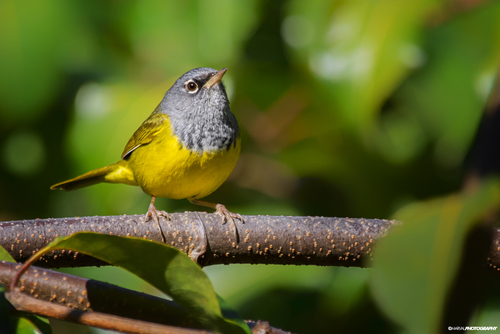
Paruline des buissons (Geothlypis tolmiei) Paruline des buissons
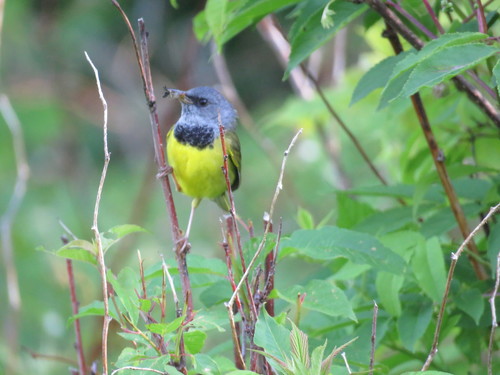
Paruline triste (Geothlypis philadelphia) Paruline triste

Médias

Chargement…

En bref

The most reliable field mark between MacGillivray's Warbler and Mourning Warbler is the presence of bold white eye crescents in MacGillivray's, which are absent in Mourning. Adult males are easier to separate by head pattern, but females and immatures are much trickier and often confused, especially in fall or away from breeding grounds. Both species share yellow underparts and olive upperparts, but the eye crescent (MacGillivray's) versus plain or incomplete eye-ring (Mourning) is key at all ages. Structural and behavioral differences are subtle, so careful attention to the face pattern is essential, especially when viewing silent, skulking birds in dense cover.

Conseils d’identification

  1. White eye crescents (MacGillivray's) vs. plain/incomplete eye-ring (Mourning): MacGillivray's of all ages and sexes show bold white crescents above and below the eye, creating a broken eye-ring effect. Mourning Warbler never shows these; instead, females and immatures may have a faint, incomplete eye-ring, but never bold white crescents. This is the single most reliable field mark.
  2. Adult male hood and throat: MacGillivray's male has a medium gray hood with white eye crescents and a gray (sometimes brownish) throat and upper breast, sometimes with black mottling. Mourning male has a darker gray hood, black lores, and a solid black patch on the throat and breast. In fall, the black patch may fade, but the absence of white eye crescents remains key.
  3. Female and immature head pattern: Female MacGillivray's has a paler, glaucous crown with subtle white crescents; Mourning female/immature has a gray-brown head with a faint, incomplete eye-ring and no white crescents. The difference is subtle but critical in the field.
  4. Flank color: MacGillivray's often shows a yellowish olive-green wash on the flanks, while Mourning's underparts are more evenly yellow or yellow-gray, sometimes with a brown or olive tint to the breast.
  5. Upperparts: Both have olive-green backs, but MacGillivray's (especially subspecies monticola) can appear grayer above, while Mourning is typically more uniformly olive.
  6. Bill and legs: Both have thin, pointed bills and pinkish or brownish legs. These features are not useful for separation.
  7. Tail and wing pattern: Neither species shows distinctive wing panels, tail spots, or flight marks. In flight, focus on the face pattern if possible.
  8. Seasonal dulling: In fall, both species become duller and harder to separate, especially as Mourning males lose the black throat. The presence or absence of white eye crescents remains the best clue.
  9. Geographic context (breeding season): In the West, MacGillivray's is expected; in the East, Mourning is the breeder. However, both can occur as migrants or winterers outside their breeding ranges.
  10. Habitat: Both prefer dense, regenerating thickets and low cover. Habitat is not diagnostic except by broad geography in summer.
  11. Behavior: Both skulk low in dense vegetation and are rarely seen in the open. Behavior is not a separator.
  12. Voice: Not covered in the sources; do not rely on song or call for separation based on this information.
  13. Size: Both are nearly identical in size and shape; do not use size for identification.
  14. Confusion with other species: Both can be confused with Connecticut Warbler (which has a complete eye-ring) and Nashville Warbler (which has a yellow throat and gray back in females). For these two, focus on the eye crescent (MacGillivray's) vs. plain/incomplete eye-ring (Mourning).
  15. When in doubt: If you cannot see the eye area clearly, especially in silent, skulking birds, it may not be possible to separate them with confidence.

Taille

Both species are very close in size and weight: MacGillivray's averages about 10.4 g and Mourning about 11.9 g [wikidata]. Both measure 10–15 cm in length with similar wingspans (MacGillivray's 19 cm, Mourning 18 cm). In the field, size is not a reliable separator, as both appear as small, chunky warblers with similar proportions.

Plumage

For all ages and sexes, the most diagnostic difference is around the eye: MacGillivray's Warbler shows distinct, wide white crescents above and below the eye, giving a broken eye-ring effect, while Mourning Warbler lacks these and instead has a plain face or, in females/immatures, a faint, incomplete eye-ring. Adult males of both species have a gray hood and black lores, but MacGillivray's has a grayer, often paler hood with more prominent white eye crescents, while Mourning's hood is darker and merges into a black throat patch. Females and immatures are more confusing: MacGillivray's females have a paler, glaucous crown with subtle crescents, while Mourning females/immatures have a gray-brown head with a faint, incomplete eye-ring and lack any bold white around the eye. Both have olive upperparts and yellow underparts, but MacGillivray's flanks are often more olive-washed. In fall, both species become duller, and the male Mourning's black throat patch can fade, making the face pattern even more crucial. No distinctive wing or tail pattern separates them in flight; focus on the head.

Comportement

Both species are secretive and prefer dense, low vegetation, often foraging close to the ground. Their movements are similar: both skulk and hop through thickets, occasionally flicking their tails. Neither species is notably more active or conspicuous than the other. Behavioral differences are not reliable for field separation.

Habitat

Habitat can help only in the breeding season: MacGillivray's breeds in the West (from Alaska and western Canada south to Panama), while Mourning Warbler breeds in eastern and central North America. Both prefer dense second-growth or regenerating clearings with thick undergrowth. Outside the breeding season, their winter ranges overlap in Central America, and both use dense cover, so habitat is not a strong separator except by geography in summer.

Envoyer une meilleure description

Utilise les mêmes sections que la comparaison. Ton texte est publié tout de suite.

The most reliable field mark between MacGillivray's Warbler and Mourning Warbler is the presence of bold white eye crescents in MacGillivray's, which are absent in Mourning. Adult males are easier to separate by head pattern, but females and immatures are much trickier and often confused, especially in fall or away from breeding grounds. Both species share yellow underparts and olive upperparts, but the eye crescent (MacGillivray's) versus plain or incomplete eye-ring (Mourning) is key at all ages. Structural and behavioral differences are subtle, so careful attention to the face pattern is essential, especially when viewing silent, skulking birds in dense cover.

  1. White eye crescents (MacGillivray's) vs. plain/incomplete eye-ring (Mourning): MacGillivray's of all ages and sexes show bold white crescents above and below the eye, creating a broken eye-ring effect. Mourning Warbler never shows these; instead, females and immatures may have a faint, incomplete eye-ring, but never bold white crescents. This is the single most reliable field mark.
  2. Adult male hood and throat: MacGillivray's male has a medium gray hood with white eye crescents and a gray (sometimes brownish) throat and upper breast, sometimes with black mottling. Mourning male has a darker gray hood, black lores, and a solid black patch on the throat and breast. In fall, the black patch may fade, but the absence of white eye crescents remains key.
  3. Female and immature head pattern: Female MacGillivray's has a paler, glaucous crown with subtle white crescents; Mourning female/immature has a gray-brown head with a faint, incomplete eye-ring and no white crescents. The difference is subtle but critical in the field.
  4. Flank color: MacGillivray's often shows a yellowish olive-green wash on the flanks, while Mourning's underparts are more evenly yellow or yellow-gray, sometimes with a brown or olive tint to the breast.
  5. Upperparts: Both have olive-green backs, but MacGillivray's (especially subspecies monticola) can appear grayer above, while Mourning is typically more uniformly olive.
  6. Bill and legs: Both have thin, pointed bills and pinkish or brownish legs. These features are not useful for separation.
  7. Tail and wing pattern: Neither species shows distinctive wing panels, tail spots, or flight marks. In flight, focus on the face pattern if possible.
  8. Seasonal dulling: In fall, both species become duller and harder to separate, especially as Mourning males lose the black throat. The presence or absence of white eye crescents remains the best clue.
  9. Geographic context (breeding season): In the West, MacGillivray's is expected; in the East, Mourning is the breeder. However, both can occur as migrants or winterers outside their breeding ranges.
  10. Habitat: Both prefer dense, regenerating thickets and low cover. Habitat is not diagnostic except by broad geography in summer.
  11. Behavior: Both skulk low in dense vegetation and are rarely seen in the open. Behavior is not a separator.
  12. Voice: Not covered in the sources; do not rely on song or call for separation based on this information.
  13. Size: Both are nearly identical in size and shape; do not use size for identification.
  14. Confusion with other species: Both can be confused with Connecticut Warbler (which has a complete eye-ring) and Nashville Warbler (which has a yellow throat and gray back in females). For these two, focus on the eye crescent (MacGillivray's) vs. plain/incomplete eye-ring (Mourning).
  15. When in doubt: If you cannot see the eye area clearly, especially in silent, skulking birds, it may not be possible to separate them with confidence.

Both species are very close in size and weight: MacGillivray's averages about 10.4 g and Mourning about 11.9 g [wikidata]. Both measure 10–15 cm in length with similar wingspans (MacGillivray's 19 cm, Mourning 18 cm). In the field, size is not a reliable separator, as both appear as small, chunky warblers with similar proportions.

For all ages and sexes, the most diagnostic difference is around the eye: MacGillivray's Warbler shows distinct, wide white crescents above and below the eye, giving a broken eye-ring effect, while Mourning Warbler lacks these and instead has a plain face or, in females/immatures, a faint, incomplete eye-ring. Adult males of both species have a gray hood and black lores, but MacGillivray's has a grayer, often paler hood with more prominent white eye crescents, while Mourning's hood is darker and merges into a black throat patch. Females and immatures are more confusing: MacGillivray's females have a paler, glaucous crown with subtle crescents, while Mourning females/immatures have a gray-brown head with a faint, incomplete eye-ring and lack any bold white around the eye. Both have olive upperparts and yellow underparts, but MacGillivray's flanks are often more olive-washed. In fall, both species become duller, and the male Mourning's black throat patch can fade, making the face pattern even more crucial. No distinctive wing or tail pattern separates them in flight; focus on the head.

Both species are secretive and prefer dense, low vegetation, often foraging close to the ground. Their movements are similar: both skulk and hop through thickets, occasionally flicking their tails. Neither species is notably more active or conspicuous than the other. Behavioral differences are not reliable for field separation.

Habitat can help only in the breeding season: MacGillivray's breeds in the West (from Alaska and western Canada south to Panama), while Mourning Warbler breeds in eastern and central North America. Both prefer dense second-growth or regenerating clearings with thick undergrowth. Outside the breeding season, their winter ranges overlap in Central America, and both use dense cover, so habitat is not a strong separator except by geography in summer.

Abandonner tes modifications ?

Tu as des modifications non enregistrées. Si tu pars maintenant, elles seront perdues.

Paruline des buissons · Paruline triste · Mes oiseaux difficiles