

Guillemot de Kittlitz vs Guillemot marbré
Brachyramphus brevirostris contre Brachyramphus marmoratus
Faire un quiz avec Guillemot de Kittlitz et Guillemot marbré
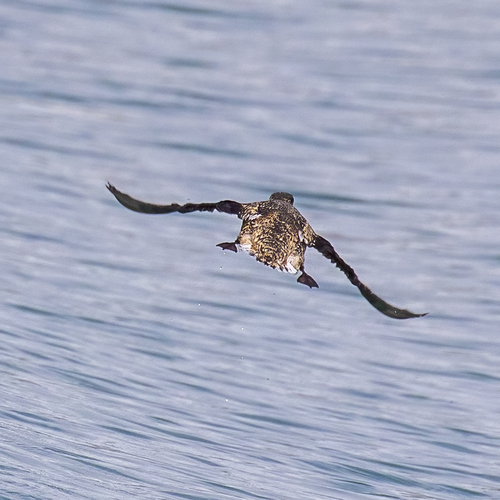 Guillemot de Kittlitz
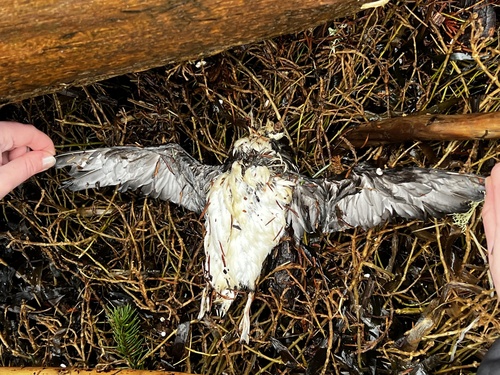 Guillemot marbré
En bref
The most reliable field mark between Kittlitz's Murrelet and Marbled Murrelet is the bill: Kittlitz's has a noticeably shorter, stubbier bill, while Marbled's is longer and slender. In breeding plumage, Kittlitz's is paler and more uniform gray-brown, matching its open, rocky breeding grounds, whereas Marbled is darker and more heavily mottled. In winter, both species are black-and-white, but Kittlitz's remains paler overall and has a smaller bill. Structure and habitat context can also help: Kittlitz's is more compact and typically found near tidewater glaciers, while Marbled Murrelet is associated with old-growth forests or forested coasts. Separation is challenging at sea, especially outside the breeding season or with immature birds.
Conseils d’identification
- Bill shape and length: Kittlitz's Murrelet has a distinctly shorter, stubbier bill than Marbled Murrelet. This is the most reliable mark at all ages and seasons, especially at close range or in good light.
- Breeding plumage color: In summer, Kittlitz's is pale gray-brown and more uniform, matching its rocky, open breeding habitat. Marbled is darker, with heavy brown and black mottling ('marbled' effect) on the body and face. Use this contrast when birds are in full breeding dress.
- Non-breeding (winter) plumage: Both are black-and-white, but Kittlitz's tends to look paler overall. Marbled Murrelet in winter often shows a white neck collar, which is not described for Kittlitz's.
- Structure/jizz: Kittlitz's is more compact, with a shorter bill and tiny legs, giving a stubby, rounded look. Marbled appears slightly more elongated due to its longer bill and neck.
- Habitat context: If seen near tidewater glaciers or in glacial fjords, especially in Alaska, Kittlitz's is more likely. Marbled favors forested coasts and is closely tied to old-growth coniferous forests for nesting.
- Nesting behavior: Kittlitz's nests on bare ground above the tree line, while Marbled nests on large branches in old-growth forests (except in the far north, where it may nest on the ground). If you see birds inland, Marbled is far more likely except in treeless, high-latitude areas.
- Flight behavior: Both species fly rapidly and low over the water, but Kittlitz's may appear even more compact and less buoyant, though this is subtle and not always reliable.
- Juvenile/immature separation: No distinctive upperwing or flight pattern differences are described for young birds; both are cryptic and similar in this respect. Use bill and habitat when possible.
- At sea, mixed flocks: Both can occur together in some Alaskan waters. In mixed groups, look for the paler, more uniform Kittlitz's among darker, more mottled Marbleds, and check bill length.
- Seasonal confusion: In winter, when both are black-and-white, focus on bill size and shape, and look for the white neck collar on Marbled. Habitat can also help, as Kittlitz's remains more localized to glacial areas.
- Voice: Not diagnostic in the field; both are generally silent at sea.
- Pitfalls: Do not rely on size alone; both are essentially the same length. Avoid using generic 'auk' features, as both are similar in overall shape and behavior.
- When in doubt: If you cannot see the bill clearly or are outside the known range/habitat for one species, be cautious with identification. Many field marks are subtle and overlap, especially in non-breeding plumage or with distant views.
- Photographic review: For ambiguous birds, photos showing the bill profile and overall plumage tone can often resolve the ID later.
- Local abundance: In forested coastal areas south of Alaska, Marbled is far more likely. In glacial fjords and near tidewater glaciers in Alaska, Kittlitz's is the expected species.
Taille
Both species are very similar in size, with both averaging about 25 cm in length [wikipedia]. Kittlitz's Murrelet is described as a small, compact auk with tiny legs, while Marbled Murrelet is also small and chunky but with a slightly more slender appearance due to its longer bill. Any size difference is negligible in the field and not a reliable mark for separation.
Plumage
-
Juvenile/immature/first-winter: No detailed upperwing or flight pattern differences are described in the sources for these ages. Both species are cryptically colored as juveniles, and no age-specific wing panel or trailing edge marks are noted.
-
Breeding plumage (adult): Kittlitz's is pale grayish-brown overall, with less mottling and a more uniform appearance, reflecting its open, rocky nesting habitat. Marbled Murrelet is darker, with heavy brown and black mottling on the body and face, giving a more 'marbled' look. Kittlitz's also has a smaller, paler bill.
-
Non-breeding (winter) plumage (adult): Both become black-and-white, with white underparts and blackish upperparts. Kittlitz's tends to look paler overall, and its bill remains distinctly shorter. Marbled Murrelet in winter has a white neck collar, which is not mentioned for Kittlitz's.
-
Bill: Kittlitz's bill is always noticeably shorter and stubbier than Marbled's, which is slender and longer.
Comportement
Both species are generally quiet and unobtrusive at sea, diving for fish and zooplankton. Kittlitz's Murrelet often feeds close to shore, particularly near tidewater glaciers, and is not colonial, nesting singly on bare mountain slopes. Marbled Murrelet is also unusual for an alcid, nesting singly or semi-colonially, but prefers old-growth forest branches or, at higher latitudes, the ground. Both species carry fish singly in the bill to feed chicks. Flight is rapid and direct in both, but Kittlitz's may appear slightly more compact and less buoyant due to its shorter bill and legs.
Habitat
Habitat is a strong contextual clue. Kittlitz's Murrelet is closely tied to glacial fjords and the immediate coast of Alaska and eastern Siberia, often near tidewater glaciers and breeding on bare, rocky mountain slopes above the tree line. Marbled Murrelet, by contrast, is most often associated with old-growth coniferous forests along the Pacific coast from Alaska to California, nesting on large, mossy branches far inland or, in the far north, on the ground. At sea, Marbled Murrelet is more likely to be found off forested coasts, while Kittlitz's is more localized to glacial or sparsely vegetated coastal areas.
Guillemot de Kittlitz · Guillemot marbré · Mes oiseaux difficiles