

Motmot

Pic épeiche vs Pic de Sharpe

Dendrocopos major contre Picus sharpei

Faire un quiz avec Pic épeiche et Pic de Sharpe
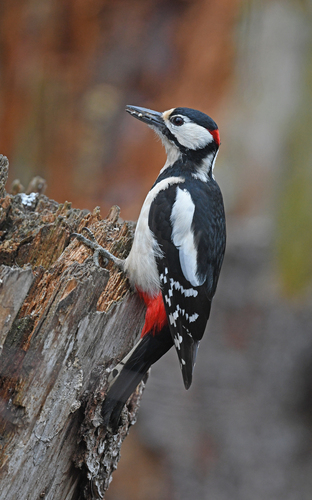
Pic épeiche (Dendrocopos major) Pic épeiche
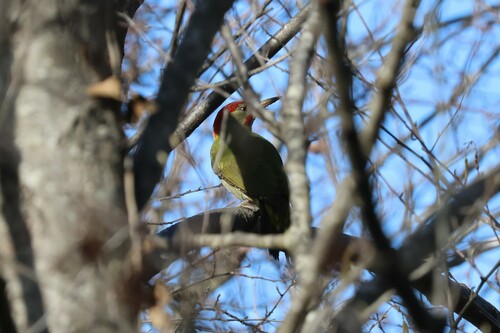
Pic de Sharpe (Picus sharpei) Pic de Sharpe

Médias

Chargement…

En bref

The most reliable way to separate Great Spotted Woodpecker from Iberian Green Woodpecker is by overall color and head pattern: Great Spotted is a striking black-and-white bird with a red vent, while Iberian Green is largely green above and pale below, with a dusky (not black) eye ring and little black on the head. Juvenile Great Spotted Woodpeckers can be confusing due to their duller, browner plumage and red crown, but they still lack the green tones and facial pattern of Iberian Green. In flight, Great Spotted shows bold white shoulder patches and black-and-white barring on the wings, unlike the plain green and yellow flight feathers of Iberian Green. Structure and size differ as well, with Great Spotted being smaller and more compact. Voice and habitat can help, but plumage and structure are the most reliable in the field.

Conseils d’identification

  1. Overall color: Great Spotted Woodpecker is black and white with a red vent; Iberian Green is green above and pale below, lacking any bold black-and-white pattern.
  2. Head pattern: Great Spotted shows a black line from the bill through the cheek, a white face, and (in males) a red nape; Iberian Green has little black on the head and a dusky (not black) eye ring.
  3. Juvenile confusion: Young Great Spotted can look dull and brownish with a red crown, but still show some black-and-white wing pattern and lack green tones. Iberian Green juveniles are greenish above and never show a red crown.
  4. Wing pattern in flight: Great Spotted (all ages) shows bold white shoulder patches and black-and-white barring on the wings; Iberian Green has plain green upperwings with yellowish flight feathers and no white patches.
  5. Underparts: Great Spotted is white below with a red (adults) or pink (juveniles) vent; Iberian Green is pale below with no red vent.
  6. Bill shape: Great Spotted has a shorter, stubbier bill; Iberian Green's bill is longer and more pointed, suited for probing.
  7. Size and structure: Great Spotted is smaller, more compact, and barrel-chested; Iberian Green is larger, longer-necked, and more elongated.
  8. Tail: Great Spotted's tail is shorter and more squared; Iberian Green's is longer and more tapered.
  9. Perching behavior: Great Spotted is more likely to be seen on trunks and branches; Iberian Green often forages on the ground.
  10. Flight style: Great Spotted has a bounding, undulating flight with obvious white wing flashes; Iberian Green's flight is steadier and less undulating.
  11. Voice: Great Spotted gives sharp 'kick' or 'chik' calls and drums; Iberian Green gives a sibilant, hiss-like call and rarely drums.
  12. Habitat: In the Iberian Peninsula, Great Spotted prefers denser woods and parks; Iberian Green favors open woodlands and grasslands.
  13. Sex differences: Only male Great Spotted has a red nape; both sexes of Iberian Green lack this mark.
  14. Subspecies variation: Great Spotted shows some regional variation in underpart color and size, but always retains the black-and-white pattern; Iberian Green is consistently green and pale.
  15. Pitfalls: Beware of juvenile Great Spotted, which can look dull and less patterned, but never shows the green upperparts or dusky eye ring of Iberian Green.

Taille

Great Spotted Woodpecker is distinctly smaller and more compact than Iberian Green Woodpecker. The Great Spotted averages about 89 g in mass and measures 20–24 cm in length, with a 34–39 cm wingspan [wikidata][wikipedia]. Iberian Green Woodpecker, though not given a precise mass here, is known to be larger and bulkier, with a longer bill and tail. In direct comparison, Great Spotted appears shorter-necked and more barrel-chested, while Iberian Green is rangier and more elongated overall.

Plumage

Juvenile Great Spotted Woodpecker can cause confusion due to its duller, brown-tinged upperparts and dirty white underparts, with a red crown (more extensive in males). However, even young birds show some black-and-white patterning on the wings and a pinkish (not red) vent. Adults of both sexes have glossy black upperparts with bold white shoulder patches, barred black-and-white wings, and a red vent; males have a red nape, females do not. Iberian Green Woodpecker of all ages is green above and pale below, with a dusky eye ring and little black on the head. It lacks the bold black-and-white patterning and the red vent of Great Spotted. In flight, Great Spotted shows strong white patches on the wings and a barred pattern, while Iberian Green shows plain green upperwings with yellowish flight feathers and no white shoulder patch.

Comportement

Great Spotted Woodpecker is often seen climbing tree trunks and branches, using its tail for support, and is agile on vertical surfaces. It frequently drums on wood. Iberian Green Woodpecker also climbs but is more often seen feeding on the ground, especially in open areas, probing for ants. In flight, Great Spotted has a bounding, undulating flight with rapid wingbeats and closed-wing dips, often flashing its white wing patches. Iberian Green's flight is more direct and less undulating, with slower, deeper wingbeats and a longer glide phase.

Habitat

Great Spotted Woodpecker is found in a wide range of wooded habitats, including deciduous and mixed forests, parks, and gardens, across much of Eurasia and North Africa [wikipedia]. Iberian Green Woodpecker is restricted to the Iberian Peninsula and prefers open woodlands, forest edges, and even more open country with scattered trees, often near ant-rich grasslands. Overlap is possible in Iberian woodlands, but Great Spotted is more likely in denser or more urbanized woodland settings.

Voix

Iberian Green Woodpecker has a distinctive sibilant, hiss-like call, quite different from the sharp 'kick' or 'chik' calls and rapid drumming of Great Spotted Woodpecker [wikipedia]. Great Spotted's calls are sharper and more percussive, while Iberian Green's are softer and more drawn out. Drumming is typical of Great Spotted but not of Iberian Green.

Envoyer une meilleure description

Utilise les mêmes sections que la comparaison. Ton texte est publié tout de suite.

The most reliable way to separate Great Spotted Woodpecker from Iberian Green Woodpecker is by overall color and head pattern: Great Spotted is a striking black-and-white bird with a red vent, while Iberian Green is largely green above and pale below, with a dusky (not black) eye ring and little black on the head. Juvenile Great Spotted Woodpeckers can be confusing due to their duller, browner plumage and red crown, but they still lack the green tones and facial pattern of Iberian Green. In flight, Great Spotted shows bold white shoulder patches and black-and-white barring on the wings, unlike the plain green and yellow flight feathers of Iberian Green. Structure and size differ as well, with Great Spotted being smaller and more compact. Voice and habitat can help, but plumage and structure are the most reliable in the field.

  1. Overall color: Great Spotted Woodpecker is black and white with a red vent; Iberian Green is green above and pale below, lacking any bold black-and-white pattern.
  2. Head pattern: Great Spotted shows a black line from the bill through the cheek, a white face, and (in males) a red nape; Iberian Green has little black on the head and a dusky (not black) eye ring.
  3. Juvenile confusion: Young Great Spotted can look dull and brownish with a red crown, but still show some black-and-white wing pattern and lack green tones. Iberian Green juveniles are greenish above and never show a red crown.
  4. Wing pattern in flight: Great Spotted (all ages) shows bold white shoulder patches and black-and-white barring on the wings; Iberian Green has plain green upperwings with yellowish flight feathers and no white patches.
  5. Underparts: Great Spotted is white below with a red (adults) or pink (juveniles) vent; Iberian Green is pale below with no red vent.
  6. Bill shape: Great Spotted has a shorter, stubbier bill; Iberian Green's bill is longer and more pointed, suited for probing.
  7. Size and structure: Great Spotted is smaller, more compact, and barrel-chested; Iberian Green is larger, longer-necked, and more elongated.
  8. Tail: Great Spotted's tail is shorter and more squared; Iberian Green's is longer and more tapered.
  9. Perching behavior: Great Spotted is more likely to be seen on trunks and branches; Iberian Green often forages on the ground.
  10. Flight style: Great Spotted has a bounding, undulating flight with obvious white wing flashes; Iberian Green's flight is steadier and less undulating.
  11. Voice: Great Spotted gives sharp 'kick' or 'chik' calls and drums; Iberian Green gives a sibilant, hiss-like call and rarely drums.
  12. Habitat: In the Iberian Peninsula, Great Spotted prefers denser woods and parks; Iberian Green favors open woodlands and grasslands.
  13. Sex differences: Only male Great Spotted has a red nape; both sexes of Iberian Green lack this mark.
  14. Subspecies variation: Great Spotted shows some regional variation in underpart color and size, but always retains the black-and-white pattern; Iberian Green is consistently green and pale.
  15. Pitfalls: Beware of juvenile Great Spotted, which can look dull and less patterned, but never shows the green upperparts or dusky eye ring of Iberian Green.

Great Spotted Woodpecker is distinctly smaller and more compact than Iberian Green Woodpecker. The Great Spotted averages about 89 g in mass and measures 20–24 cm in length, with a 34–39 cm wingspan [wikidata][wikipedia]. Iberian Green Woodpecker, though not given a precise mass here, is known to be larger and bulkier, with a longer bill and tail. In direct comparison, Great Spotted appears shorter-necked and more barrel-chested, while Iberian Green is rangier and more elongated overall.

Juvenile Great Spotted Woodpecker can cause confusion due to its duller, brown-tinged upperparts and dirty white underparts, with a red crown (more extensive in males). However, even young birds show some black-and-white patterning on the wings and a pinkish (not red) vent. Adults of both sexes have glossy black upperparts with bold white shoulder patches, barred black-and-white wings, and a red vent; males have a red nape, females do not. Iberian Green Woodpecker of all ages is green above and pale below, with a dusky eye ring and little black on the head. It lacks the bold black-and-white patterning and the red vent of Great Spotted. In flight, Great Spotted shows strong white patches on the wings and a barred pattern, while Iberian Green shows plain green upperwings with yellowish flight feathers and no white shoulder patch.

Great Spotted Woodpecker is often seen climbing tree trunks and branches, using its tail for support, and is agile on vertical surfaces. It frequently drums on wood. Iberian Green Woodpecker also climbs but is more often seen feeding on the ground, especially in open areas, probing for ants. In flight, Great Spotted has a bounding, undulating flight with rapid wingbeats and closed-wing dips, often flashing its white wing patches. Iberian Green's flight is more direct and less undulating, with slower, deeper wingbeats and a longer glide phase.

Great Spotted Woodpecker is found in a wide range of wooded habitats, including deciduous and mixed forests, parks, and gardens, across much of Eurasia and North Africa [wikipedia]. Iberian Green Woodpecker is restricted to the Iberian Peninsula and prefers open woodlands, forest edges, and even more open country with scattered trees, often near ant-rich grasslands. Overlap is possible in Iberian woodlands, but Great Spotted is more likely in denser or more urbanized woodland settings.

Iberian Green Woodpecker has a distinctive sibilant, hiss-like call, quite different from the sharp 'kick' or 'chik' calls and rapid drumming of Great Spotted Woodpecker [wikipedia]. Great Spotted's calls are sharper and more percussive, while Iberian Green's are softer and more drawn out. Drumming is typical of Great Spotted but not of Iberian Green.

Abandonner tes modifications ?

Tu as des modifications non enregistrées. Si tu pars maintenant, elles seront perdues.

Pic épeiche · Pic de Sharpe · Mes oiseaux difficiles