

Motmot

Sarcelle d'hiver vs Grand Harle

Anas crecca contre Mergus merganser

Faire un quiz avec Sarcelle d'hiver et Grand Harle
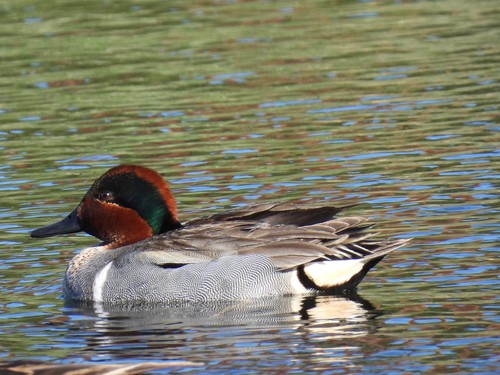
Sarcelle d'hiver (Anas crecca) Sarcelle d'hiver
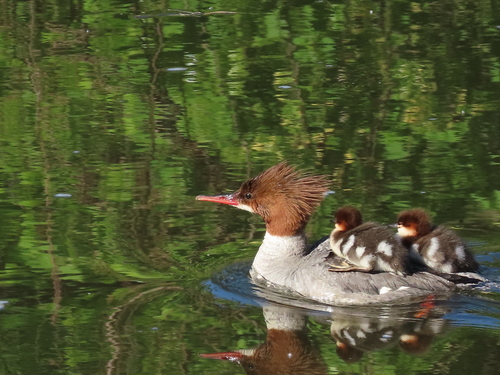
Grand Harle (Mergus merganser) Grand Harle

Médias

Chargement…

En bref

The most reliable field mark to separate Eurasian/Green-winged Teal from Goosander is size: Goosander is a much larger, heavier duck with a long, narrow, red bill, while Eurasian Teal is tiny and compact with a short, dark bill. In flight, Goosander shows a strikingly white inner wing and black outer wing, whereas Teal has a green speculum and white-edged coverts. Juvenile and female Teal are mottled brown and resemble a miniature Mallard, while female and immature Goosander are larger, grey-bodied, and have a distinct reddish-brown head with a white chin. If you see a small duck with a green wing patch and a compact shape, it's a Teal; a large, long-bodied duck with a pointed bill and white wing is a Goosander.

Conseils d’identification

  1. Size is the fastest check: Goosander is goose-sized and heavy, Teal is very small and compact. If the duck looks tiny among Mallards, it's a Teal; if it's as big or bigger, it's a Goosander.
  2. Bill shape and color: Goosander has a long, narrow, red to brownish-red bill with a hooked tip (sawbill); Teal has a short, dark bill (females/immatures may have some pinkish/yellowish at base).
  3. Flight pattern (all ages): Goosander in flight shows a white inner wing (secondaries and inner coverts) with black outer primaries; Teal shows a green speculum bordered by white and grey, with no extensive white on the wing.
  4. Female and immature plumage: Female/immature Teal are mottled brown with a dark eyestripe, small and compact; female/immature Goosander are grey-bodied with a reddish-brown head and a sharp white chin, and much larger.
  5. Male breeding plumage: Male Teal has a chestnut head with a green face patch and a white vertical side-stripe; male Goosander is white-bodied with a blackish-green head and salmon-pink tinge.
  6. Eclipse males: Both species' males resemble females in eclipse, but Goosander remains much larger and grey, while Teal is still small and brownish.
  7. Juvenile Goosander: Shows a short black-edged white stripe between eye and bill, not present in Teal.
  8. Tail and rump: Teal shows a bright yellowish-buff triangular patch at the tail sides (especially in males); Goosander has a grey rump and tail with no such patch.
  9. Leg color: Goosander's legs are red to brownish-red; Teal's are dark grey (males) or greyish-olive/brown (females/immatures).
  10. Behavior: Goosander dives for fish, often perches on rocks or ice, and may fish in groups; Teal dabbles at the surface and rarely dives.
  11. Posture: Goosander sits low in the water, often with a long neck and upright stance on land; Teal is compact and sits higher on the water relative to its size.
  12. Habitat: Teal is found in shallow marshes and ponds; Goosander prefers deeper rivers and lakes, often in forested or hilly areas.
  13. Vocalization: Listen for Teal's high-pitched whistles and quacks; Goosander is mostly silent but may give a harsh croak or soft whistle in breeding season.
  14. Group association: Teal often gather in large flocks, especially in winter; Goosander may be solitary or in small groups, sometimes seen fishing cooperatively.
  15. Pitfalls: Female and immature Teal can be mistaken for small female Mallards, but are much smaller; female Goosander may be confused with Red-breasted Merganser (not covered here), but never with Teal due to size and structure.

Taille

Goosander is dramatically larger than Eurasian/Green-winged Teal: Goosander averages about 1470 g in mass and 58–72 cm in length, with a wingspan of 78–97 cm. In contrast, Teal is one of the smallest dabbling ducks at 34–43 cm long, with a wingspan of 53–59 cm and an average mass around 340–360 g. Even at a distance, Goosander appears goose-sized, while Teal is noticeably petite and compact.

Plumage

Juvenile and female Teal are mottled yellowish-brown with a dark eyestripe and scaly spots, and show a green speculum with white-edged coverts in flight; immatures are similar but more strongly patterned. Male Teal in breeding plumage have a chestnut head with a bold green face patch and a white vertical stripe on the side. Female and eclipse male Teal lack the bold head pattern and are overall brownish. Goosander adult males in breeding plumage are white-bodied with a blackish-green head and a salmon-pink tinge, while females and eclipse males are grey with a reddish-brown head and a sharp white chin. Juvenile Goosander resemble females but have a short black-edged white stripe between eye and bill. In flight, Goosander shows a largely white inner wing with black outer primaries, while Teal shows a green speculum bordered by white and grey coverts.

Comportement

Goosander often floats low in the water, dives frequently for fish, and may be seen perching on rocks or ice in the middle of rivers, sometimes with wings half-open. They move clumsily on land, often upright and stumbling. Teal, being dabbling ducks, feed mostly at the surface and rarely dive; they are agile and quick both on water and land. Goosander may fish in groups, forming a semicircle to herd fish, a behavior not seen in Teal.

Habitat

Eurasian/Green-winged Teal prefers shallow wetlands, marshes, and ponds, especially in open country. Goosander is found on larger rivers and lakes, often in forested regions, and is more likely to be seen on fast-flowing water or even in coastal areas in winter. If you find a small duck on a marshy pond, it's likely a Teal; a large duck on a river or deep lake is more likely a Goosander.

Voix

Teal males give a high-pitched whistling "cryc" or "creelycc," and females a soft "keh" or "neeh" quack. Goosander's normal call is a low, harsh croak, but during breeding season, males and juveniles may give a plaintive, soft whistle. Teal are generally louder and more vocal, while Goosander is mostly quiet except when disturbed.

Envoyer une meilleure description

Utilise les mêmes sections que la comparaison. Ton texte est publié tout de suite.

The most reliable field mark to separate Eurasian/Green-winged Teal from Goosander is size: Goosander is a much larger, heavier duck with a long, narrow, red bill, while Eurasian Teal is tiny and compact with a short, dark bill. In flight, Goosander shows a strikingly white inner wing and black outer wing, whereas Teal has a green speculum and white-edged coverts. Juvenile and female Teal are mottled brown and resemble a miniature Mallard, while female and immature Goosander are larger, grey-bodied, and have a distinct reddish-brown head with a white chin. If you see a small duck with a green wing patch and a compact shape, it's a Teal; a large, long-bodied duck with a pointed bill and white wing is a Goosander.

  1. Size is the fastest check: Goosander is goose-sized and heavy, Teal is very small and compact. If the duck looks tiny among Mallards, it's a Teal; if it's as big or bigger, it's a Goosander.
  2. Bill shape and color: Goosander has a long, narrow, red to brownish-red bill with a hooked tip (sawbill); Teal has a short, dark bill (females/immatures may have some pinkish/yellowish at base).
  3. Flight pattern (all ages): Goosander in flight shows a white inner wing (secondaries and inner coverts) with black outer primaries; Teal shows a green speculum bordered by white and grey, with no extensive white on the wing.
  4. Female and immature plumage: Female/immature Teal are mottled brown with a dark eyestripe, small and compact; female/immature Goosander are grey-bodied with a reddish-brown head and a sharp white chin, and much larger.
  5. Male breeding plumage: Male Teal has a chestnut head with a green face patch and a white vertical side-stripe; male Goosander is white-bodied with a blackish-green head and salmon-pink tinge.
  6. Eclipse males: Both species' males resemble females in eclipse, but Goosander remains much larger and grey, while Teal is still small and brownish.
  7. Juvenile Goosander: Shows a short black-edged white stripe between eye and bill, not present in Teal.
  8. Tail and rump: Teal shows a bright yellowish-buff triangular patch at the tail sides (especially in males); Goosander has a grey rump and tail with no such patch.
  9. Leg color: Goosander's legs are red to brownish-red; Teal's are dark grey (males) or greyish-olive/brown (females/immatures).
  10. Behavior: Goosander dives for fish, often perches on rocks or ice, and may fish in groups; Teal dabbles at the surface and rarely dives.
  11. Posture: Goosander sits low in the water, often with a long neck and upright stance on land; Teal is compact and sits higher on the water relative to its size.
  12. Habitat: Teal is found in shallow marshes and ponds; Goosander prefers deeper rivers and lakes, often in forested or hilly areas.
  13. Vocalization: Listen for Teal's high-pitched whistles and quacks; Goosander is mostly silent but may give a harsh croak or soft whistle in breeding season.
  14. Group association: Teal often gather in large flocks, especially in winter; Goosander may be solitary or in small groups, sometimes seen fishing cooperatively.
  15. Pitfalls: Female and immature Teal can be mistaken for small female Mallards, but are much smaller; female Goosander may be confused with Red-breasted Merganser (not covered here), but never with Teal due to size and structure.

Goosander is dramatically larger than Eurasian/Green-winged Teal: Goosander averages about 1470 g in mass and 58–72 cm in length, with a wingspan of 78–97 cm. In contrast, Teal is one of the smallest dabbling ducks at 34–43 cm long, with a wingspan of 53–59 cm and an average mass around 340–360 g. Even at a distance, Goosander appears goose-sized, while Teal is noticeably petite and compact.

Juvenile and female Teal are mottled yellowish-brown with a dark eyestripe and scaly spots, and show a green speculum with white-edged coverts in flight; immatures are similar but more strongly patterned. Male Teal in breeding plumage have a chestnut head with a bold green face patch and a white vertical stripe on the side. Female and eclipse male Teal lack the bold head pattern and are overall brownish. Goosander adult males in breeding plumage are white-bodied with a blackish-green head and a salmon-pink tinge, while females and eclipse males are grey with a reddish-brown head and a sharp white chin. Juvenile Goosander resemble females but have a short black-edged white stripe between eye and bill. In flight, Goosander shows a largely white inner wing with black outer primaries, while Teal shows a green speculum bordered by white and grey coverts.

Goosander often floats low in the water, dives frequently for fish, and may be seen perching on rocks or ice in the middle of rivers, sometimes with wings half-open. They move clumsily on land, often upright and stumbling. Teal, being dabbling ducks, feed mostly at the surface and rarely dive; they are agile and quick both on water and land. Goosander may fish in groups, forming a semicircle to herd fish, a behavior not seen in Teal.

Eurasian/Green-winged Teal prefers shallow wetlands, marshes, and ponds, especially in open country. Goosander is found on larger rivers and lakes, often in forested regions, and is more likely to be seen on fast-flowing water or even in coastal areas in winter. If you find a small duck on a marshy pond, it's likely a Teal; a large duck on a river or deep lake is more likely a Goosander.

Teal males give a high-pitched whistling "cryc" or "creelycc," and females a soft "keh" or "neeh" quack. Goosander's normal call is a low, harsh croak, but during breeding season, males and juveniles may give a plaintive, soft whistle. Teal are generally louder and more vocal, while Goosander is mostly quiet except when disturbed.

Abandonner tes modifications ?

Tu as des modifications non enregistrées. Si tu pars maintenant, elles seront perdues.

Sarcelle d'hiver · Grand Harle · Mes oiseaux difficiles