

Cochevis huppé vs Moineau espagnol
Galerida cristata contre Passer hispaniolensis
Faire un quiz avec Cochevis huppé et Moineau espagnol
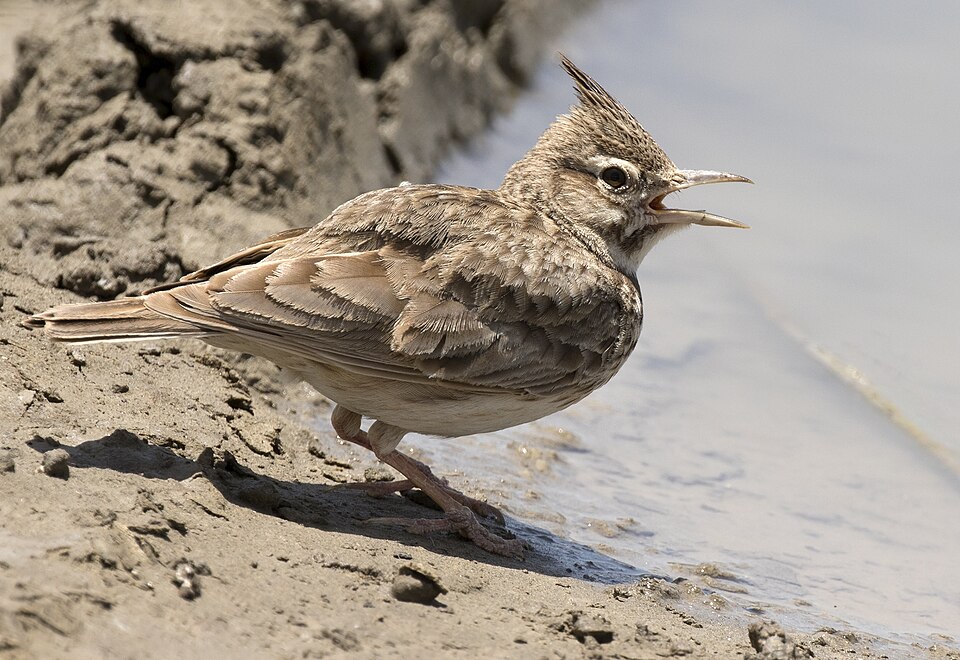 Cochevis huppé
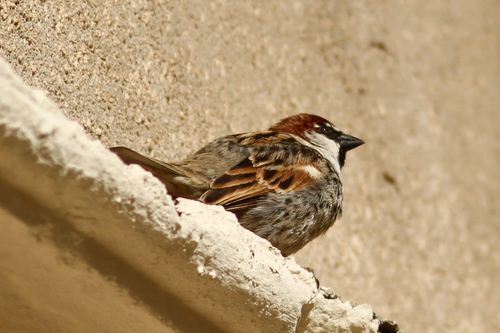 Moineau espagnol
En bref
The most reliable field mark to separate Crested Lark from Spanish Sparrow is the Crested Lark’s prominent pointed crest, which is visible both when perched and in flight, while Spanish Sparrow never shows a crest. In flight, Crested Lark also shows reddish underwings, contrasting with the plain, non-reddish underwings of Spanish Sparrow. Juvenile Crested Larks can be confusing due to their spotted backs, but the overall structure—bulkier head and body, longer bill, and short tail—remains distinctive. Spanish Sparrow, especially males, show bold black streaking below and a chestnut crown, while females are much less distinctive and can be mistaken for other sparrows, but never show a crest or reddish underwings.
Conseils d’identification
- Crested Lark always shows a pointed, prominent crest—look for this both when perched and in flight. Spanish Sparrow never shows a crest, regardless of age or sex.
- In flight, Crested Lark shows reddish underwings (all ages), while Spanish Sparrow’s underwings are plain and lack any reddish tones.
- Juvenile Crested Larks have spotted backs, which can cause confusion, but the crest and reddish underwings remain diagnostic.
- Crested Lark is bulkier with a larger head and longer, slightly downcurved bill. Spanish Sparrow is more compact, with a stout, conical bill typical of sparrows.
- Tail shape: Crested Lark has a short tail with pale outer feathers; Spanish Sparrow’s tail is more typical for a sparrow and lacks obvious pale edges.
- Male Spanish Sparrows are boldly marked with a chestnut crown, white cheeks, and heavy black streaking below—none of these features are ever shown by Crested Lark.
- Female and juvenile Spanish Sparrows are plain brown with a pale supercilium and light streaking on the sides. They can be confused with other sparrows but never show a crest or reddish underwings.
- Crested Lark’s plumage is overall plainer and earth-toned, with less contrast and streaking than Spanish Sparrow, especially on the underparts.
- Behavior: Crested Lark is often solitary or in pairs, feeding on bare ground, walking or running rather than hopping. Spanish Sparrow is more social, often in flocks, and prefers perching in vegetation or on wires.
- Habitat: If the bird is in a barren, open area with little vegetation, Crested Lark is more likely. In farmland, woodland edges, or near human habitation, Spanish Sparrow is more probable.
- Song: If you hear a musical, warbling song from a bird in display flight or singing from the ground, suspect Crested Lark. Loud, sparrow-like chirps point to Spanish Sparrow.
- Bill shape: Crested Lark’s bill is longer and more slender, while Spanish Sparrow’s is short and thick.
- Sex differences: Only male Spanish Sparrows show the bold chestnut crown and black streaking; females are much plainer, so rely on structure and crest for separation.
- Seasonal variation: Spanish Sparrow males are most distinctive in breeding plumage; in winter, plumage may be duller but still shows the chestnut crown and streaking. Crested Lark’s appearance changes little with season.
- Common pitfalls: Juvenile Crested Larks may seem streaked above, but always check for the crest and underwing color in flight. Female Spanish Sparrows can be mistaken for other sparrows but never show a crest or reddish underwings.
Taille
Crested Lark is slightly larger overall, measuring about 17 cm in length with a wingspan of 29–38 cm and weighing 37–55 g [wikipedia]. Spanish Sparrow is a bit smaller and lighter, at 15–16 cm long and 22–36 g [wikipedia]. In the field, Crested Lark appears bulkier, especially around the head and body, while Spanish Sparrow is more compact and sparrow-like. Bill size is also a clue: Crested Lark’s bill is longer and more downcurved, while Spanish Sparrow’s is stout and conical.
Plumage
Juvenile Crested Larks have more spots on their backs than adults, but even at this age, the crest is present and the underwings are reddish in flight. Adults of both sexes are plain brown above, with a pale, lightly streaked breast and a short tail with pale outer feathers. The crest is always visible, especially when alert. Spanish Sparrow males are boldly marked, with a chestnut crown, white cheeks, and heavy black streaks on the underparts—features never shown by Crested Lark. Females and juveniles of Spanish Sparrow are much plainer, with grey-brown upperparts, pale supercilium, and light streaking on the sides, but still lack a crest and reddish underwings. In flight, Spanish Sparrow shows no reddish tones on the underwing and lacks any crest. The Crested Lark’s underwing color is a key mark for all ages when seen in flight.
Comportement
Crested Lark often feeds on the ground in open, bare areas and is more likely to be seen walking or running rather than hopping. It frequently sings from the ground or in undulating flight, sometimes displaying its crest. Spanish Sparrow is more social, often seen in flocks, and is more likely to be found in vegetation or perched on wires and bushes. It hops rather than walks and is less likely to be seen in open, barren ground away from cover.
Habitat
Crested Lark prefers open, dry habitats such as wastelands, roadsides, and the outskirts of towns, often in areas with little vegetation. Spanish Sparrow is found in farmland, open woodland, and sometimes urban areas, especially where House Sparrow is absent. It prefers moister habitats than Crested Lark and is rarely found in the most barren, open ground favored by larks.
Voix
Crested Lark’s song is a liquid, warbling series of notes (whee-whee-wheeoo or twee-tee-too), often delivered in display flight or from the ground. Spanish Sparrow’s calls are loud, strident chirps (chweeng-chweeng, cheela-cheeli), similar to House Sparrow but louder and higher-pitched. Their flight and contact calls are also sparrow-like and lack the musical, lark-like quality of Crested Lark’s song.