

Motmot

Pouillot à couronne marron vs Garrulaxe à flancs gris

Phylloscopus castaniceps contre Pterorhinus caerulatus

Faire un quiz avec Pouillot à couronne marron et Garrulaxe à flancs gris
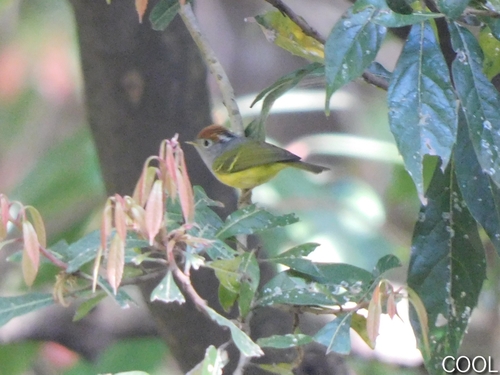
Pouillot à couronne marron (Phylloscopus castaniceps) Pouillot à couronne marron
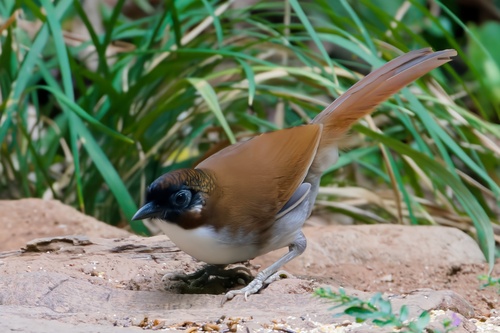
Garrulaxe à flancs gris (Pterorhinus caerulatus) Garrulaxe à flancs gris

Médias

Chargement…

En bref

The most reliable way to separate Chestnut-crowned Warbler from Grey-sided Laughingthrush is by overall structure and plumage: the warbler is a tiny, active leaf warbler with a distinct chestnut crown, while the laughingthrush is a much larger, bulkier bird with uniform grey sides and lacks any chestnut on the head. In flight or perched, the warbler’s small, delicate build and sharp movements contrast sharply with the laughingthrush’s robust, thrush-like shape and more deliberate behavior. No age-specific wing pattern is described for either species, so focus on size, structure, and head pattern. Both species can overlap in range, but their family-level differences are striking in the field.

Conseils d’identification

  1. Size is a primary separator: Chestnut-crowned Warbler is much smaller and lighter than Grey-sided Laughingthrush. If the bird is obviously larger than a typical warbler, it is not a Chestnut-crowned Warbler.
  2. Head pattern: Look for the chestnut crown on the warbler—this is absent in the laughingthrush, which has a plain grey head and sides.
  3. Body structure: The warbler is compact with a fine, pointed bill and short tail, while the laughingthrush is robust, with a heavier bill and longer tail.
  4. Plumage contrast: Warbler shows crisp, contrasting plumage with a distinct crown and paler underparts. Laughingthrush is more uniform grey with less contrast between head, sides, and body.
  5. Behavior: Warbler is highly active, constantly moving through foliage. Laughingthrush is slower, often seen in small groups, and may be on the ground.
  6. Perched posture: Warbler perches upright and alert, often flicking wings or tail. Laughingthrush sits more horizontally and appears heavier.
  7. Habitat within forest: Warbler is more likely in canopy or mid-story; laughingthrush is often in undergrowth or at forest edge.
  8. Group size: Laughingthrush is often in small, noisy groups; warbler is usually solitary or in mixed-species flocks.
  9. Bill shape: Warbler’s bill is thin and pointed for insect gleaning; laughingthrush’s bill is stouter and more suited to varied diet.
  10. Tail movement: Warbler may flick or fan its tail; laughingthrush’s tail movements are slower and less frequent.
  11. No strong age-specific flight marks: Neither species shows distinctive juvenile or immature upperwing patterns that aid separation in flight.
  12. Voice (if heard): Not described here, but in general, warbler calls are high-pitched and thin, while laughingthrushes have louder, more varied calls and songs.
  13. Seasonal confusion unlikely: Both species’ key field marks are present year-round; no strong seasonal plumage changes noted.
  14. Sexes similar: No sexual dimorphism is described, so all tips apply to both males and females.
  15. If in doubt, focus on size and head pattern: These are the most reliable and easily observed differences in the field.

Taille

Chestnut-crowned Warbler is a small leaf warbler, much smaller and lighter than the Grey-sided Laughingthrush, which is a large, heavy-bodied passerine. The warbler is compact and fits easily in the palm, while the laughingthrush is closer in size to a small thrush or large babbler, appearing much bulkier and longer-tailed. This size difference is obvious even at a distance and is a primary field mark.

Plumage

There are no detailed notes on age-specific wing or flight patterns for either species, so plumage separation relies on overall coloration and head pattern. Chestnut-crowned Warbler of all ages shows a distinct chestnut crown contrasting with a paler face and underparts, typical of Phylloscopus warblers. Grey-sided Laughingthrush, regardless of age, lacks any chestnut on the head and instead has uniform grey sides and a more blended, muted facial pattern. The laughingthrush’s plumage is generally more uniform and lacks the crisp, contrasting head markings of the warbler. In both perched and flight views, the warbler’s coloration is brighter and more sharply defined, while the laughingthrush appears more washed out and plain.

Comportement

Chestnut-crowned Warbler is highly active, flitting through foliage, often in mixed flocks, and rarely sitting still. Its movements are quick and restless, typical of small warblers. In contrast, Grey-sided Laughingthrush moves more deliberately, often in small groups, and spends more time on or near the ground or in low shrubs. The laughingthrush’s foraging is slower and more methodical, and it may be seen hopping or walking rather than flitting.

Habitat

Both species can be found in overlapping regions in the Himalayas and Southeast Asia, but their microhabitat preferences differ. Chestnut-crowned Warbler is usually found in forest canopy or mid-story, especially in dense foliage. Grey-sided Laughingthrush prefers forest edges, thickets, and sometimes secondary growth, often at lower levels or on the ground. If seen high in the trees, it is more likely to be the warbler; if in dense undergrowth or open shrubbery, consider the laughingthrush.

Envoyer une meilleure description

Utilise les mêmes sections que la comparaison. Ton texte est publié tout de suite.

The most reliable way to separate Chestnut-crowned Warbler from Grey-sided Laughingthrush is by overall structure and plumage: the warbler is a tiny, active leaf warbler with a distinct chestnut crown, while the laughingthrush is a much larger, bulkier bird with uniform grey sides and lacks any chestnut on the head. In flight or perched, the warbler’s small, delicate build and sharp movements contrast sharply with the laughingthrush’s robust, thrush-like shape and more deliberate behavior. No age-specific wing pattern is described for either species, so focus on size, structure, and head pattern. Both species can overlap in range, but their family-level differences are striking in the field.

  1. Size is a primary separator: Chestnut-crowned Warbler is much smaller and lighter than Grey-sided Laughingthrush. If the bird is obviously larger than a typical warbler, it is not a Chestnut-crowned Warbler.
  2. Head pattern: Look for the chestnut crown on the warbler—this is absent in the laughingthrush, which has a plain grey head and sides.
  3. Body structure: The warbler is compact with a fine, pointed bill and short tail, while the laughingthrush is robust, with a heavier bill and longer tail.
  4. Plumage contrast: Warbler shows crisp, contrasting plumage with a distinct crown and paler underparts. Laughingthrush is more uniform grey with less contrast between head, sides, and body.
  5. Behavior: Warbler is highly active, constantly moving through foliage. Laughingthrush is slower, often seen in small groups, and may be on the ground.
  6. Perched posture: Warbler perches upright and alert, often flicking wings or tail. Laughingthrush sits more horizontally and appears heavier.
  7. Habitat within forest: Warbler is more likely in canopy or mid-story; laughingthrush is often in undergrowth or at forest edge.
  8. Group size: Laughingthrush is often in small, noisy groups; warbler is usually solitary or in mixed-species flocks.
  9. Bill shape: Warbler’s bill is thin and pointed for insect gleaning; laughingthrush’s bill is stouter and more suited to varied diet.
  10. Tail movement: Warbler may flick or fan its tail; laughingthrush’s tail movements are slower and less frequent.
  11. No strong age-specific flight marks: Neither species shows distinctive juvenile or immature upperwing patterns that aid separation in flight.
  12. Voice (if heard): Not described here, but in general, warbler calls are high-pitched and thin, while laughingthrushes have louder, more varied calls and songs.
  13. Seasonal confusion unlikely: Both species’ key field marks are present year-round; no strong seasonal plumage changes noted.
  14. Sexes similar: No sexual dimorphism is described, so all tips apply to both males and females.
  15. If in doubt, focus on size and head pattern: These are the most reliable and easily observed differences in the field.

Chestnut-crowned Warbler is a small leaf warbler, much smaller and lighter than the Grey-sided Laughingthrush, which is a large, heavy-bodied passerine. The warbler is compact and fits easily in the palm, while the laughingthrush is closer in size to a small thrush or large babbler, appearing much bulkier and longer-tailed. This size difference is obvious even at a distance and is a primary field mark.

There are no detailed notes on age-specific wing or flight patterns for either species, so plumage separation relies on overall coloration and head pattern. Chestnut-crowned Warbler of all ages shows a distinct chestnut crown contrasting with a paler face and underparts, typical of Phylloscopus warblers. Grey-sided Laughingthrush, regardless of age, lacks any chestnut on the head and instead has uniform grey sides and a more blended, muted facial pattern. The laughingthrush’s plumage is generally more uniform and lacks the crisp, contrasting head markings of the warbler. In both perched and flight views, the warbler’s coloration is brighter and more sharply defined, while the laughingthrush appears more washed out and plain.

Chestnut-crowned Warbler is highly active, flitting through foliage, often in mixed flocks, and rarely sitting still. Its movements are quick and restless, typical of small warblers. In contrast, Grey-sided Laughingthrush moves more deliberately, often in small groups, and spends more time on or near the ground or in low shrubs. The laughingthrush’s foraging is slower and more methodical, and it may be seen hopping or walking rather than flitting.

Both species can be found in overlapping regions in the Himalayas and Southeast Asia, but their microhabitat preferences differ. Chestnut-crowned Warbler is usually found in forest canopy or mid-story, especially in dense foliage. Grey-sided Laughingthrush prefers forest edges, thickets, and sometimes secondary growth, often at lower levels or on the ground. If seen high in the trees, it is more likely to be the warbler; if in dense undergrowth or open shrubbery, consider the laughingthrush.

Abandonner tes modifications ?

Tu as des modifications non enregistrées. Si tu pars maintenant, elles seront perdues.

Pouillot à couronne marron · Garrulaxe à flancs gris · Mes oiseaux difficiles