

Mouette de Buller vs Goéland dominicain
Chroicocephalus bulleri contre Larus dominicanus
Faire un quiz avec Mouette de Buller et Goéland dominicain
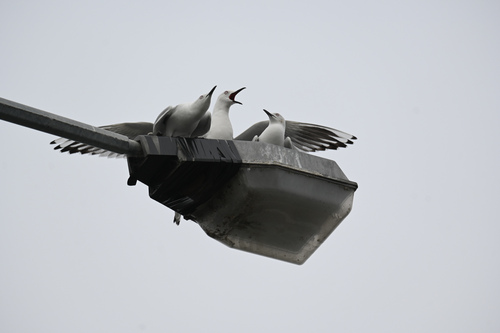 Mouette de Buller
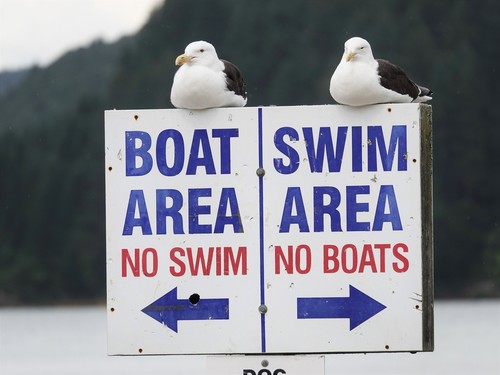 Goéland dominicain
En bref
The most reliable field mark to separate Black-billed Gull from Kelp Gull in New Zealand is size: Kelp Gull is much larger and bulkier, while Black-billed Gull is notably daintier. In all plumages, Black-billed Gull has a slender, entirely black bill, whereas Kelp Gull adults have a thick yellow bill with a red spot and juveniles have a heavy black bill. In flight, Kelp Gull shows black upperparts and wings contrasting with a white head and underparts, while Black-billed Gull is pale grey above with black wingtips. Juvenile Kelp Gulls are mottled brown and white, much darker and more patterned than juvenile Black-billed Gulls. Structure, leg color, and flight style also help, but beware of confusion with hybrids and seasonal changes in bare parts.
Conseils d’identification
- Size is the quickest separator: Kelp Gull is much larger and heavier than Black-billed Gull. If you see both together, the difference is striking; if alone, compare to nearby birds or recall that Black-billed Gull is only slightly larger than a pigeon, while Kelp Gull is nearly twice as long and four times as heavy.
- Bill color and shape: Black-billed Gull of all ages has a slender, entirely black bill. Kelp Gull adults have a thick, heavy yellow bill with a red spot; juveniles start with a black bill but it is much stouter than Black-billed's. If you see a small gull with a fine black bill, it's Black-billed; a large gull with a thick yellow or black bill is Kelp.
- Upperwing and mantle color in flight: Adult Kelp Gulls show black upperparts and wings with white 'mirrors' at the tips; Black-billed Gulls are pale grey above with black wingtips. This is obvious in flight or when perched with wings closed.
- Juvenile/immature plumage: Juvenile Kelp Gulls are dark, mottled brown and white, with a dark tail band and heavy patterning. Juvenile Black-billed Gulls are much paler, with less contrast and a cleaner look. If you see a small pale gull, it's not a young Kelp Gull.
- Leg color: Black-billed Gull legs are black to dark red (sometimes bright red in breeding season), while Kelp Gull legs are greenish-yellow (brighter in breeding season, duller otherwise). Leg color is best used in combination with other marks, as it can vary.
- Orbital ring: Black-billed Gull has an orange-red to dark red orbital ring outside the breeding season, which can become bright red in breeding birds. Kelp Gull's orbital ring is not as prominent or red.
- Flight style: Black-billed Gull is more buoyant, agile, and graceful in flight, with a lighter, more tern-like jizz. Kelp Gull is heavier, with slower, more powerful wingbeats.
- Behavior and context: Black-billed Gulls are often seen in tight colonies on riverbeds or gravel islands, especially in the breeding season. Kelp Gulls are more likely to be solitary or in loose groups along the coast, harbors, or urban areas.
- Voice: Both have similar harsh calls, but Kelp Gull is generally noisier and more aggressive-sounding. Use voice only as a supporting clue.
- Hybrid confusion: Rare hybrids between Black-billed and Red-billed Gulls can show intermediate bill color (dark red), but will never be as large or as dark above as a Kelp Gull.
- Seasonal changes: Be aware that Black-billed Gull's leg and orbital ring color shift from black to red as breeding approaches. Kelp Gull's leg color shifts from dull greenish to brighter yellow, but never red.
- Sexual dimorphism: Both species show little obvious sexual dimorphism in the field; size and plumage marks apply to both sexes.
- Geographic range: In New Zealand, Black-billed Gull is endemic and almost always near freshwater during breeding. Kelp Gull is widespread and coastal, but can occur inland.
- Tail pattern: Kelp Gull juveniles have a dark tail band, while Black-billed Gull juveniles have a cleaner, whiter tail.
- Mistaken identity: Do not confuse Black-billed Gull with Red-billed Gull (which is similar in size and shape but has a red bill and legs); Kelp Gull is never as small or as delicate as either.
Taille
Kelp Gull is dramatically larger: adults average around 941 g (with a range up to 1,390 g), and measure 54–65 cm in length with a wingspan of 128–142 cm. Black-billed Gull is much smaller and lighter, at 35–38 cm long and 230 g, with a wingspan of 81–96 cm. Even at a distance, the Kelp Gull's bulk, longer wings, and heavier bill are obvious compared to the petite, delicate Black-billed Gull.
Plumage
- Juveniles/immatures: Juvenile Kelp Gulls are overall grey-brown with dense whitish edging, a dark band in the tail, and a black bill. They are much darker and more patterned than juvenile Black-billed Gulls, which are generally pale with less contrast and lack the heavy mottling. Juvenile Kelp Gulls also have dull legs, while Black-billed Gulls' legs are black to dark red depending on age and season.
- Adults: Adult Kelp Gulls have black upperparts and wings, with a white head, underparts, and tail, plus small white 'mirrors' at the wing tips. Their bill is yellow with a red spot, and legs are greenish-yellow. Black-billed Gulls are pale grey above with black edging on the wings, white head and underparts, and a slender black bill. Their legs and orbital ring shift from black to red as the breeding season progresses. Kelp Gull's upperwing is much darker and more contrasting in flight.
- Seasonal changes: Both species show some seasonal bare part color changes, but only Black-billed Gull's legs and orbital ring can become bright red. Kelp Gull's legs shift from dull greenish to brighter yellow in breeding season.
Comportement
Black-billed Gulls are described as more delicate and graceful in flight, with a buoyant, agile jizz. They are generally less noisy and less aggressive than Kelp Gulls. Kelp Gulls are powerful, direct fliers, often dominant at food sources, and can be quite bold and noisy. Black-billed Gulls tend to form dense colonies on riverbeds, while Kelp Gulls are more often seen singly or in loose groups along coasts and estuaries.
Habitat
Black-billed Gulls are almost exclusively found in New Zealand, breeding on riverbeds, gravel islands, and sometimes near lakes or farmland. Kelp Gulls are coastal, found on beaches, harbors, and estuaries, but in New Zealand are widespread and commonly seen in urban settings as well. Black-billed Gulls are rarely found far from freshwater during breeding, while Kelp Gulls are more marine and often seen scavenging at sea or on the shore.
Voix
Both species have similar harsh, gull-like calls, but Black-billed Gull is generally less noisy. Kelp Gull's call is a strident 'ki-och', and they are more likely to be heard calling persistently, especially near food or nests. Vocalization alone is not a reliable separator, but context and volume can offer a clue.
Mouette de Buller · Goéland dominicain · Mes oiseaux difficiles