

Motmot

Rousserolle d'Irak vs Rousserolle des cannes

Acrocephalus griseldis contre Acrocephalus rufescens

Faire un quiz avec Rousserolle d'Irak et Rousserolle des cannes

Rousserolle d'Irak (Acrocephalus griseldis) Rousserolle d'Irak
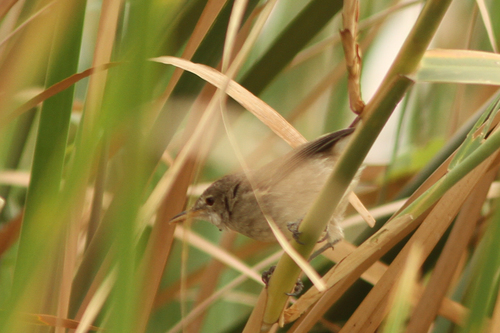
Rousserolle des cannes (Acrocephalus rufescens) Rousserolle des cannes

Médias

Chargement…

En bref

The most reliable way to separate Basra Reed Warbler from Greater Swamp Warbler is by focusing on bill shape and underpart color: Basra has a narrower, longer, and more pointed bill, and noticeably whiter underparts, while Greater Swamp Warbler is generally richer below. Both are large Acrocephalus warblers of dense reedbeds, but Basra Reed Warbler is restricted to the Middle East and migrates, whereas Greater Swamp Warbler is resident in sub-Saharan African swamps. Structural and subtle plumage differences are key, as both can appear similar in overall jizz and habitat. No distinctive age-specific wing or flight pattern marks are documented for either species, so field separation relies on careful scrutiny of structure and coloration.

Conseils d’identification

  1. Bill shape: Basra Reed Warbler has a noticeably narrower, longer, and more pointed bill than Greater Swamp Warbler. Look for this especially in profile views; it is a key structural difference and applies to adults.
  2. Underpart color: Basra Reed Warbler shows distinctly whiter underparts, especially on the belly and breast, compared to the duskier, richer underparts of Greater Swamp Warbler. This is most obvious in good light and on perched birds.
  3. Upperpart tone: Both species are plain brown above, but Basra Reed Warbler's contrast with its white underparts can be a subtle clue. Greater Swamp Warbler is more uniformly colored overall.
  4. Facial pattern: Neither species has strong facial markings; do not rely on supercilium or eye-stripe for separation.
  5. Wing pattern: No distinctive age-specific wing or flight marks are documented for either species, so do not use upperwing panels or trailing edge as a separator.
  6. Size: Both are large Acrocephalus warblers, but size overlap is likely. Greater Swamp Warbler averages 19.8 g; Basra is slightly smaller than Great Reed Warbler but no mass is given. Use size only as a supporting clue.
  7. Habitat and range: Basra Reed Warbler is a Middle Eastern breeder (Iraq, Iran, Kuwait, Israel) and migrates to East Africa; Greater Swamp Warbler is resident in sub-Saharan African swamps. If seen in Africa outside migration periods, Greater Swamp Warbler is far more likely.
  8. Behavior: Both are skulking and secretive in dense reeds, rarely venturing far from cover. Behavior alone is not a reliable separator.
  9. Voice: If heard, Basra Reed Warbler's 'chaar' call is deeper than Common Reed Warbler and may help, but Greater Swamp Warbler's call is not described here.
  10. Seasonal context: In the Middle East during breeding season, Basra is the expected species; in African swamps, Greater Swamp Warbler is the default. Vagrancy is extremely rare for both.
  11. Migration: Basra Reed Warbler is migratory and may be found in bushland or thickets on passage; Greater Swamp Warbler is resident and not expected outside swampy habitats.
  12. Sex and age: No sex-specific or age-specific field marks are documented for either species; all tips apply to adults unless otherwise noted.
  13. Common pitfalls: Both can be confused with other large Acrocephalus warblers (like Great Reed Warbler), but when distinguishing these two, focus on bill shape and underpart color.
  14. Jizz: Both are robust, long-tailed warblers with strong legs and upright posture in reeds; subtle differences in structure are more useful than overall impression.
  15. When in doubt: If the bill appears short and blunt, and the underparts are rich or dusky, lean toward Greater Swamp Warbler; if the bill is long and pointed with white underparts, Basra is more likely.

Taille

Direct comparative measurements are limited, but the Greater Swamp Warbler has a documented average adult body mass of 19.8 g [wikidata]. Basra Reed Warbler is described as smaller than Great Reed Warbler, but no precise mass is given. In the field, both species are robust Acrocephalus warblers, but size overlap is likely and not a reliable separator on its own. Use structure and plumage for confident identification.

Plumage

No age-specific upperwing or flight pattern marks are noted for either species, so focus on overall coloration and structure. Adult Basra Reed Warbler is characterized by noticeably whiter underparts and a narrower, longer, more pointed bill. Its upperparts are plain brownish, typical of reed warblers, but the contrast with the white belly and breast is more pronounced than in Greater Swamp Warbler. Greater Swamp Warbler, by contrast, tends to have richer, duskier underparts and a less sharply pointed bill. Both species lack strong facial markings or wing bars, so subtle differences in tone and structure are critical. These contrasts apply to adults; no information is available on juvenile or immature-specific plumage differences.

Comportement

Both species are skulking reedbed specialists, often moving low in dense aquatic vegetation. Basra Reed Warbler is migratory, so may be seen in bushy or thicket habitats on passage or wintering grounds, but is most often found in extensive reedbeds during breeding. Greater Swamp Warbler is resident and tied to African swamps year-round. In the field, both can be elusive and are best detected by song or call, but behavior is not a strong separator between the two.

Habitat

Basra Reed Warbler breeds almost exclusively in the Tigris–Euphrates river system (southwest Iran, Iraq, Kuwait, and recently Israel), favoring dense reedbeds and papyrus stands in shallow, fresh or brackish water. It is migratory, wintering in East Africa, and may use bushland or thickets when not breeding. Greater Swamp Warbler is widespread across sub-Saharan Africa, always associated with swamps and marshes. The two species do not overlap in breeding range, and habitat context is a strong clue: Basra is a Middle Eastern specialist, Greater Swamp Warbler an African resident.

Voix

Basra Reed Warbler gives a gruff 'chaar' call, described as deeper than that of Common Reed Warbler. No specific vocal description is available for Greater Swamp Warbler here, so voice is not a reliable separator unless Basra's distinctive call is heard. Song is not covered in the provided notes.

Envoyer une meilleure description

Utilise les mêmes sections que la comparaison. Ton texte est publié tout de suite.

The most reliable way to separate Basra Reed Warbler from Greater Swamp Warbler is by focusing on bill shape and underpart color: Basra has a narrower, longer, and more pointed bill, and noticeably whiter underparts, while Greater Swamp Warbler is generally richer below. Both are large Acrocephalus warblers of dense reedbeds, but Basra Reed Warbler is restricted to the Middle East and migrates, whereas Greater Swamp Warbler is resident in sub-Saharan African swamps. Structural and subtle plumage differences are key, as both can appear similar in overall jizz and habitat. No distinctive age-specific wing or flight pattern marks are documented for either species, so field separation relies on careful scrutiny of structure and coloration.

  1. Bill shape: Basra Reed Warbler has a noticeably narrower, longer, and more pointed bill than Greater Swamp Warbler. Look for this especially in profile views; it is a key structural difference and applies to adults.
  2. Underpart color: Basra Reed Warbler shows distinctly whiter underparts, especially on the belly and breast, compared to the duskier, richer underparts of Greater Swamp Warbler. This is most obvious in good light and on perched birds.
  3. Upperpart tone: Both species are plain brown above, but Basra Reed Warbler's contrast with its white underparts can be a subtle clue. Greater Swamp Warbler is more uniformly colored overall.
  4. Facial pattern: Neither species has strong facial markings; do not rely on supercilium or eye-stripe for separation.
  5. Wing pattern: No distinctive age-specific wing or flight marks are documented for either species, so do not use upperwing panels or trailing edge as a separator.
  6. Size: Both are large Acrocephalus warblers, but size overlap is likely. Greater Swamp Warbler averages 19.8 g; Basra is slightly smaller than Great Reed Warbler but no mass is given. Use size only as a supporting clue.
  7. Habitat and range: Basra Reed Warbler is a Middle Eastern breeder (Iraq, Iran, Kuwait, Israel) and migrates to East Africa; Greater Swamp Warbler is resident in sub-Saharan African swamps. If seen in Africa outside migration periods, Greater Swamp Warbler is far more likely.
  8. Behavior: Both are skulking and secretive in dense reeds, rarely venturing far from cover. Behavior alone is not a reliable separator.
  9. Voice: If heard, Basra Reed Warbler's 'chaar' call is deeper than Common Reed Warbler and may help, but Greater Swamp Warbler's call is not described here.
  10. Seasonal context: In the Middle East during breeding season, Basra is the expected species; in African swamps, Greater Swamp Warbler is the default. Vagrancy is extremely rare for both.
  11. Migration: Basra Reed Warbler is migratory and may be found in bushland or thickets on passage; Greater Swamp Warbler is resident and not expected outside swampy habitats.
  12. Sex and age: No sex-specific or age-specific field marks are documented for either species; all tips apply to adults unless otherwise noted.
  13. Common pitfalls: Both can be confused with other large Acrocephalus warblers (like Great Reed Warbler), but when distinguishing these two, focus on bill shape and underpart color.
  14. Jizz: Both are robust, long-tailed warblers with strong legs and upright posture in reeds; subtle differences in structure are more useful than overall impression.
  15. When in doubt: If the bill appears short and blunt, and the underparts are rich or dusky, lean toward Greater Swamp Warbler; if the bill is long and pointed with white underparts, Basra is more likely.

Direct comparative measurements are limited, but the Greater Swamp Warbler has a documented average adult body mass of 19.8 g [wikidata]. Basra Reed Warbler is described as smaller than Great Reed Warbler, but no precise mass is given. In the field, both species are robust Acrocephalus warblers, but size overlap is likely and not a reliable separator on its own. Use structure and plumage for confident identification.

No age-specific upperwing or flight pattern marks are noted for either species, so focus on overall coloration and structure. Adult Basra Reed Warbler is characterized by noticeably whiter underparts and a narrower, longer, more pointed bill. Its upperparts are plain brownish, typical of reed warblers, but the contrast with the white belly and breast is more pronounced than in Greater Swamp Warbler. Greater Swamp Warbler, by contrast, tends to have richer, duskier underparts and a less sharply pointed bill. Both species lack strong facial markings or wing bars, so subtle differences in tone and structure are critical. These contrasts apply to adults; no information is available on juvenile or immature-specific plumage differences.

Both species are skulking reedbed specialists, often moving low in dense aquatic vegetation. Basra Reed Warbler is migratory, so may be seen in bushy or thicket habitats on passage or wintering grounds, but is most often found in extensive reedbeds during breeding. Greater Swamp Warbler is resident and tied to African swamps year-round. In the field, both can be elusive and are best detected by song or call, but behavior is not a strong separator between the two.

Basra Reed Warbler breeds almost exclusively in the Tigris–Euphrates river system (southwest Iran, Iraq, Kuwait, and recently Israel), favoring dense reedbeds and papyrus stands in shallow, fresh or brackish water. It is migratory, wintering in East Africa, and may use bushland or thickets when not breeding. Greater Swamp Warbler is widespread across sub-Saharan Africa, always associated with swamps and marshes. The two species do not overlap in breeding range, and habitat context is a strong clue: Basra is a Middle Eastern specialist, Greater Swamp Warbler an African resident.

Basra Reed Warbler gives a gruff 'chaar' call, described as deeper than that of Common Reed Warbler. No specific vocal description is available for Greater Swamp Warbler here, so voice is not a reliable separator unless Basra's distinctive call is heard. Song is not covered in the provided notes.

Abandonner tes modifications ?

Tu as des modifications non enregistrées. Si tu pars maintenant, elles seront perdues.

Rousserolle d'Irak · Rousserolle des cannes · Mes oiseaux difficiles