

Motmot

Prion de la Désolation vs Puffin à lunettes

Pachyptila desolata contre Procellaria conspicillata

Faire un quiz avec Prion de la Désolation et Puffin à lunettes
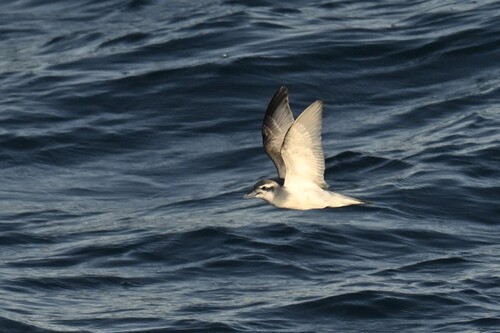
Prion de la Désolation (Pachyptila desolata) Prion de la Désolation
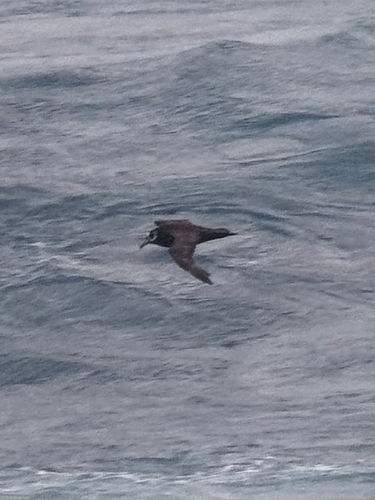
Puffin à lunettes (Procellaria conspicillata) Puffin à lunettes

Médias

Chargement…

En bref

Antarctic Prion and Spectacled Petrel are extremely different in the field, with the prion being a small, pale, blue-grey and white seabird, and the petrel a much larger, almost entirely black bird with a distinctive white eye-ring. The most reliable field mark is overall color: Antarctic Prion shows white underparts and blue-grey upperparts with a dark 'M' across the back, while Spectacled Petrel is mostly black with a striking white spectacle around the eye. Bill color and size are also strong clues—Antarctic Prion has a blue-grey bill, while Spectacled Petrel has a yellow bill. Even at a distance or in poor light, the prion’s pale appearance and smaller size stand out against the petrel’s bulk and darkness.

Conseils d’identification

  1. Overall color is the fastest check: Antarctic Prion is pale (blue-grey and white), Spectacled Petrel is almost entirely black except for a white eye-ring.
  2. White underparts: Only Antarctic Prion shows white below; Spectacled Petrel is black underneath.
  3. Upperwing pattern: Prion has a dark 'M' across the back and wings, visible in flight; Spectacled Petrel has uniform dark wings with no pale panels or 'M'.
  4. Facial markings: Prion has a white eyebrow, but Spectacled Petrel has a bold white ring around the eye (the 'spectacles'), which is much more striking and diagnostic at close range.
  5. Bill color: Prion’s bill is blue-grey; Spectacled Petrel’s bill is yellow. This is visible at moderate range in good light.
  6. Size and structure: Prion is small and slim, about half the length of the petrel. Spectacled Petrel is large, heavy-bodied, and broad-winged.
  7. Tail: Prion has a grey wedge-shaped tail with a black tip; Spectacled Petrel’s tail is not noted as distinctive, but is black like the rest of the plumage.
  8. Feet color: Prion has blue feet; Spectacled Petrel’s feet color is not described, but is not a field mark.
  9. Flight style: Prion is agile, buoyant, and often in flocks; Spectacled Petrel is more solitary, with deep, powerful wingbeats.
  10. Habitat and range: Antarctic Prion is widespread in the Southern Ocean; Spectacled Petrel is rare and restricted to the South Atlantic near Tristan da Cunha.
  11. Confusion risk: Antarctic Prion is sometimes confused with other prions (e.g., Salvin’s), but never with a large, black petrel like Spectacled Petrel.
  12. No age/sex confusion: Both species look similar across ages and sexes for the purposes of field ID; no juvenile or seasonal plumage overlap.
  13. At sea: Even at a distance, the prion’s pale, small shape and the petrel’s dark, large bulk are obvious with binoculars.
  14. Voice: Not described for either species in a way that helps separation at sea.
  15. If in doubt: If you see a small, pale, fluttery seabird with a dark 'M' on the back, it is Antarctic Prion; if you see a large, black seabird with a white eye-ring, it is Spectacled Petrel.

Taille

Antarctic Prion is much smaller, with a body mass around 156 g and a length of about 27 cm. Spectacled Petrel is nearly twice as long at 55 cm and is described as one of the largest burrow-nesting petrels, making it far heavier and bulkier than any prion. In direct comparison, the prion will appear dainty and swift, while the petrel looks robust and powerful.

Plumage

No age-specific wing patterns are noted for either species, but the overall color and pattern are dramatically different at all ages. Antarctic Prion (all ages) has blue-grey upperparts with a dark 'M' pattern across the back and wings, white underparts, a white eyebrow, and a grey tail with a black tip. Its greater coverts are nearly black, but this is subtle compared to the overall pale look. Spectacled Petrel (all ages) is predominantly black, with the only significant pale mark being a bold white ring around the eye ('spectacles'). The bill is yellow in the petrel and blue-grey in the prion. There is no mention of seasonal or age-related variation that would cause confusion between these two species.

Comportement

Both are pelagic seabirds, but Antarctic Prion is more likely to be seen in large, agile flocks, often dipping and gliding low over the water, filtering zooplankton. Spectacled Petrel, being much larger, flies with deeper, more powerful wingbeats and is less likely to form dense flocks. The prion’s flight is more buoyant and fluttery compared to the petrel’s heavier, steadier flight.

Habitat

Both species are oceanic, but Antarctic Prion is widespread in the Southern Ocean, while Spectacled Petrel is much rarer and restricted to waters near Tristan da Cunha and Inaccessible Island in the South Atlantic. If you are far from the South Atlantic, Spectacled Petrel is extremely unlikely. Antarctic Prion is more likely to be encountered in subantarctic and Antarctic waters.

Envoyer une meilleure description

Utilise les mêmes sections que la comparaison. Ton texte est publié tout de suite.

Antarctic Prion and Spectacled Petrel are extremely different in the field, with the prion being a small, pale, blue-grey and white seabird, and the petrel a much larger, almost entirely black bird with a distinctive white eye-ring. The most reliable field mark is overall color: Antarctic Prion shows white underparts and blue-grey upperparts with a dark 'M' across the back, while Spectacled Petrel is mostly black with a striking white spectacle around the eye. Bill color and size are also strong clues—Antarctic Prion has a blue-grey bill, while Spectacled Petrel has a yellow bill. Even at a distance or in poor light, the prion’s pale appearance and smaller size stand out against the petrel’s bulk and darkness.

  1. Overall color is the fastest check: Antarctic Prion is pale (blue-grey and white), Spectacled Petrel is almost entirely black except for a white eye-ring.
  2. White underparts: Only Antarctic Prion shows white below; Spectacled Petrel is black underneath.
  3. Upperwing pattern: Prion has a dark 'M' across the back and wings, visible in flight; Spectacled Petrel has uniform dark wings with no pale panels or 'M'.
  4. Facial markings: Prion has a white eyebrow, but Spectacled Petrel has a bold white ring around the eye (the 'spectacles'), which is much more striking and diagnostic at close range.
  5. Bill color: Prion’s bill is blue-grey; Spectacled Petrel’s bill is yellow. This is visible at moderate range in good light.
  6. Size and structure: Prion is small and slim, about half the length of the petrel. Spectacled Petrel is large, heavy-bodied, and broad-winged.
  7. Tail: Prion has a grey wedge-shaped tail with a black tip; Spectacled Petrel’s tail is not noted as distinctive, but is black like the rest of the plumage.
  8. Feet color: Prion has blue feet; Spectacled Petrel’s feet color is not described, but is not a field mark.
  9. Flight style: Prion is agile, buoyant, and often in flocks; Spectacled Petrel is more solitary, with deep, powerful wingbeats.
  10. Habitat and range: Antarctic Prion is widespread in the Southern Ocean; Spectacled Petrel is rare and restricted to the South Atlantic near Tristan da Cunha.
  11. Confusion risk: Antarctic Prion is sometimes confused with other prions (e.g., Salvin’s), but never with a large, black petrel like Spectacled Petrel.
  12. No age/sex confusion: Both species look similar across ages and sexes for the purposes of field ID; no juvenile or seasonal plumage overlap.
  13. At sea: Even at a distance, the prion’s pale, small shape and the petrel’s dark, large bulk are obvious with binoculars.
  14. Voice: Not described for either species in a way that helps separation at sea.
  15. If in doubt: If you see a small, pale, fluttery seabird with a dark 'M' on the back, it is Antarctic Prion; if you see a large, black seabird with a white eye-ring, it is Spectacled Petrel.

Antarctic Prion is much smaller, with a body mass around 156 g and a length of about 27 cm. Spectacled Petrel is nearly twice as long at 55 cm and is described as one of the largest burrow-nesting petrels, making it far heavier and bulkier than any prion. In direct comparison, the prion will appear dainty and swift, while the petrel looks robust and powerful.

No age-specific wing patterns are noted for either species, but the overall color and pattern are dramatically different at all ages. Antarctic Prion (all ages) has blue-grey upperparts with a dark 'M' pattern across the back and wings, white underparts, a white eyebrow, and a grey tail with a black tip. Its greater coverts are nearly black, but this is subtle compared to the overall pale look. Spectacled Petrel (all ages) is predominantly black, with the only significant pale mark being a bold white ring around the eye ('spectacles'). The bill is yellow in the petrel and blue-grey in the prion. There is no mention of seasonal or age-related variation that would cause confusion between these two species.

Both are pelagic seabirds, but Antarctic Prion is more likely to be seen in large, agile flocks, often dipping and gliding low over the water, filtering zooplankton. Spectacled Petrel, being much larger, flies with deeper, more powerful wingbeats and is less likely to form dense flocks. The prion’s flight is more buoyant and fluttery compared to the petrel’s heavier, steadier flight.

Both species are oceanic, but Antarctic Prion is widespread in the Southern Ocean, while Spectacled Petrel is much rarer and restricted to waters near Tristan da Cunha and Inaccessible Island in the South Atlantic. If you are far from the South Atlantic, Spectacled Petrel is extremely unlikely. Antarctic Prion is more likely to be encountered in subantarctic and Antarctic waters.

Abandonner tes modifications ?

Tu as des modifications non enregistrées. Si tu pars maintenant, elles seront perdues.

Prion de la Désolation · Puffin à lunettes · Mes oiseaux difficiles