

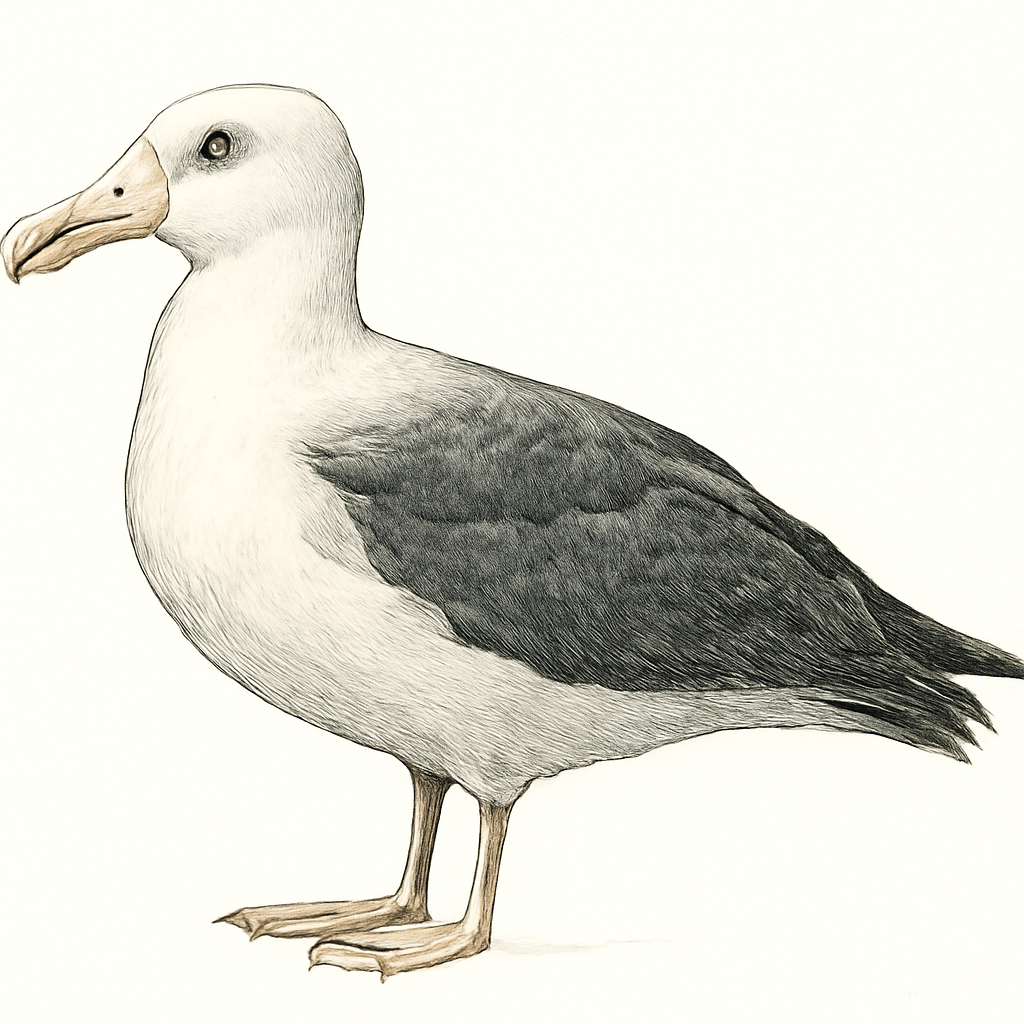
Faire un quiz avec Albatros hurleur et des espèces similaires
Voir toutes les photos, vidéos et sons
Relecture nécessaire
Motmot est un projet communautaire, et beaucoup de photos attendent encore un œil humain. Si tu connais cet oiseau, tu peux aider en relisant ses images.

O-o, on n’a plus de crédits IA. Je développe Motmot sur mon temps libre, et il n’y a pas de financement pour l’instant. Si tu as envie d’aider à le faire grandir, écris-moi à info@motmot.club.
Comment identifier Albatros hurleur
Rédaction des notes d’identification…
Cela cherche des notes d’identification dans des sources ouvertes, puis demande au modèle de les rédiger. Cela peut prendre une minute.
Connecte-toi pour générer des notes d’identification pour cet oiseau.
Souvent mélangé avec
Dans les quiz, les joueurs confondent le plus souvent Albatros hurleur avec ces oiseaux—soit cette espèce a été choisie par erreur, soit l’inverse.
| Espèces | Confusions |
|---|---|
| Albatros royal Diomedea epomophora | 11 |
| Albatros des Antipodes Diomedea antipodensis | 10 |
| Albatros de Sanford Diomedea sanfordi | 4 |
| Albatros de Tristan da Cunha Diomedea dabbenena | 2 |
| Albatros fuligineux Phoebetria palpebrata | 2 |
Famille
Albatrosses, of the biological family Diomedeidae, are large seabirds related to the procellariids, storm petrels, and diving petrels in the order Procellariiformes (the tubenoses). They range widely in the Southern Ocean and the North Pacific. They are absent from the North Atlantic, although fossil remains of short-tailed albatross show they lived there up to the Pleistocene, and occasional vagrants are found.
Ordre
Procellariiformes is an order of seabirds that comprises four families; the albatrosses, the petrels and shearwaters, and two families of storm petrels. Formerly called Tubinares and still called tubenoses in English, Procellariiformes are often referred to collectively as the petrels, a term that has been applied to all members of the order, or more commonly all the families except the albatrosses. They are almost exclusively pelagic (feeding in the open ocean), and have a cosmopolitan distribution across the world's oceans, …