

Cardinal pyrrhuloxia
Cardinalis sinuatus
Cardinals and Allies (Cardinalidae) · Passeriformes · Cardinaux, passerins et dickcissel
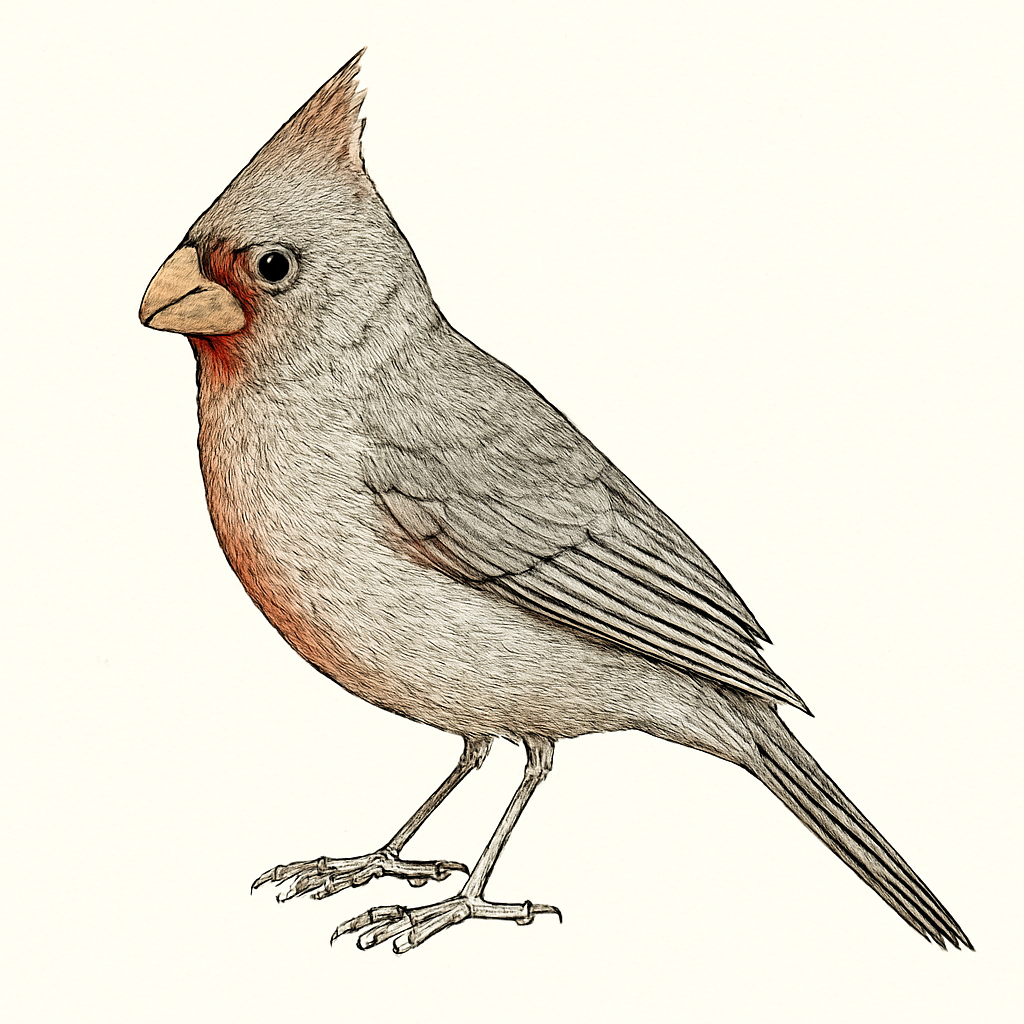
Faire un quiz avec Cardinal pyrrhuloxia et des espèces similaires
Voir toutes les photos, vidéos et sons
Relecture nécessaire
Motmot est un projet communautaire, et beaucoup de photos attendent encore un œil humain. Si tu connais cet oiseau, tu peux aider en relisant ses images.
O-o, on n’a plus de crédits IA. Je développe Motmot sur mon temps libre, et il n’y a pas de financement pour l’instant. Si tu as envie d’aider à le faire grandir, écris-moi à info@motmot.club.
Comment identifier Cardinal pyrrhuloxia
Rédaction des notes d’identification…
Cela cherche des notes d’identification dans des sources ouvertes, puis demande au modèle de les rédiger. Cela peut prendre une minute.
Connecte-toi pour générer des notes d’identification pour cet oiseau.
Souvent mélangé avec
Dans les quiz, les joueurs confondent le plus souvent Cardinal pyrrhuloxia avec ces oiseaux—soit cette espèce a été choisie par erreur, soit l’inverse.
| Espèces | Confusions |
|---|---|
| Cardinal rouge Cardinalis cardinalis | 4 |
| Cardinal jaune Pheucticus chrysopeplus | 3 |
| Pic maculé Sphyrapicus varius | 1 |
| Geai du Yucatan Cyanocorax yucatanicus | 1 |
| Piranga vermillon Piranga rubra | 1 |
Famille
Cardinalidae (sometimes referred to as "cardinal-grosbeaks" or simply "cardinals") is a family of New World-endemic passerine birds that consists of cardinals, grosbeaks, and buntings. It also includes several other genera such as the tanager-like Piranga and the warbler-like Granatellus. Membership of this family is not easily defined by a single or even a set of physical characteristics, but instead by molecular work.
Ordre
A passerine () is any bird of the order Passeriformes (; from Latin passer 'sparrow' and formis '-shaped'), which includes more than half of all bird species. Sometimes known as perching birds, passerines generally have an anisodactyl arrangement of their toes (three pointing forward and one back), which facilitates perching. With more than 140 families and some 6,500 identified species, Passeriformes is the largest order of birds and one of the most diverse clades of terrestrial vertebrates, representing 60% of …