

Motmot

Chara Yucateca vs Chara Unicolor

Cyanocorax yucatanicus frente a Aphelocoma unicolor

Juega un quiz con Chara Yucateca y Chara Unicolor
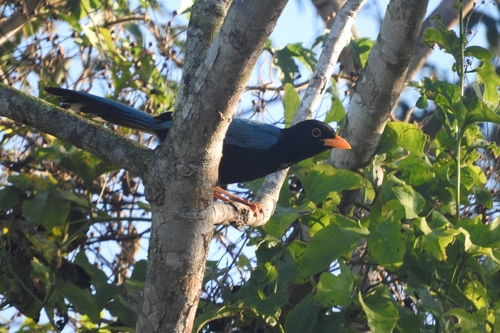
Chara Yucateca (Cyanocorax yucatanicus) Chara Yucateca
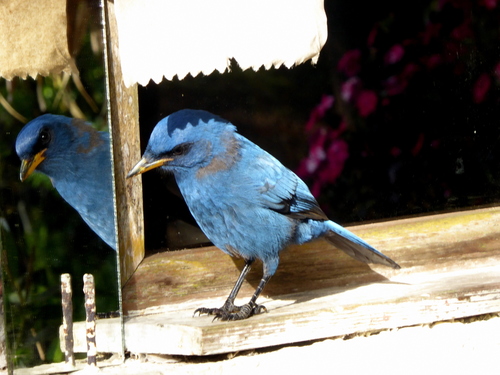
Chara Unicolor (Aphelocoma unicolor) Chara Unicolor

Medios

Cargando…

En breve

The most reliable field mark to separate Yucatan Jay from Unicoloured Jay is the presence of strong yellow bare parts (bill, legs, and eye ring) in Yucatan Jay, especially in immatures and subadults, versus the always black bare parts in Unicoloured Jay. Juvenile Yucatan Jays also show a striking white head and body, which is never seen in Unicoloured Jay. Adult Yucatan Jays are black with blue wings and tail, while Unicoloured Jays are entirely deep blue to purplish blue with no black or white. If you see a jay with any yellow on the bill, legs, or eye ring, or any white in the plumage, it is a Yucatan Jay; a uniformly blue bird with black bare parts is a Unicoloured Jay.

Consejos de identificación

  1. Juvenile Yucatan Jay is unique: Look for a white head, body, and tail tip with blue back and grey wings/tail—no other jay in the region, including Unicoloured Jay, shows this combination.
  2. Yellow bare parts in Yucatan Jay: Immature and subadult Yucatan Jays have yellow bills, legs, and eye rings, sometimes with a pinkish tinge. If you see any yellow on these parts, it is not Unicoloured Jay.
  3. Bill color by age: Yucatan Jay's bill starts yellow and becomes mottled, then black by the second year. Unicoloured Jay's bill is pale in immatures but quickly turns black; adults are always black-billed.
  4. Eye ring color: Yucatan Jay has a yellow eye ring in immatures and subadults, turning black by the third year. Unicoloured Jay never shows a yellow eye ring—always dark.
  5. Adult plumage contrast: Adult Yucatan Jay is black with bright blue wings, mantle, and tail. Unicoloured Jay is entirely deep blue to purplish blue, sometimes with a slightly darker head and throat, but never with black body or white in the plumage.
  6. No white in Unicoloured Jay: Any white in the plumage (especially head or tail tip) rules out Unicoloured Jay.
  7. Leg color: Yucatan Jay's legs and feet are yellow in immatures and subadults, black in adults. Unicoloured Jay's legs and feet are always black in adults.
  8. Juvenile Unicoloured Jay: Duller, greyer blue overall, but still uniform—never white or black bodied, and bare parts quickly darken.
  9. Size and structure: Unicoloured Jay is slightly larger and longer-tailed, but this is subtle and unreliable unless both are seen together.
  10. Habitat context: Yucatan Jay is found in lowland dry forests and open areas of the Yucatán Peninsula; Unicoloured Jay is a montane forest specialist elsewhere in Mexico and Central America.
  11. Geographic range: If you are outside the Yucatán Peninsula, especially in montane forest, Unicoloured Jay is much more likely.
  12. Vocalizations: Not reliably separable by voice alone based on available descriptions.
  13. Seasonal changes: Yucatan Jay's bare parts change color with age, so check for mottled bills and eye rings in second-year birds; Unicoloured Jay does not show this progression.
  14. Sexes similar: Both species have no sexual dimorphism in plumage, so all field marks apply to both sexes.
  15. Common pitfalls: Immature Yucatan Jays may be mistaken for Unicoloured Jay if the observer does not notice the yellow bare parts or residual white in the plumage. Conversely, dull juvenile Unicoloured Jays could be confused with subadult Yucatan Jays, but will lack any yellow or white.

Tamaño

Unicoloured Jay is slightly larger and heavier, averaging about 130 g and 34 cm in length, compared to Yucatan Jay's 118 g and 30 cm. In the field, this size difference is subtle and may not be obvious unless both species are seen together. Both are robust jays, but Unicoloured Jay may appear a bit bulkier and longer-tailed.

Plumaje

Juvenile Yucatan Jays are unmistakable with a white head, body, and tail tip, soft blue back, and greyish wings and tail with white outer rectrices. Their bare parts (bill, legs, feet) are soft yellow tinged with pink, and the eye ring is yellow. As they age, black replaces the white on the head and body, but the yellow bare parts persist through the first year, and the bill gradually darkens to black by the second year. Adults are black with bright blue wings, mantle, and tail, yellow eye rings and legs, and a black bill. In contrast, Unicoloured Jay of all ages is entirely deep blue to purplish blue, sometimes a bit duller or greyer in juveniles, but never with white or black body parts. Juvenile Unicoloured Jays are a duller bluish grey but still uniform, and their bare parts are pale at first but quickly become black. Adults of all subspecies have black bills, legs, and feet, and a dark brown iris. There is never any yellow or white in the plumage or bare parts of Unicoloured Jay.

Comportamiento

Both species are social and often seen in groups, moving actively through the canopy and mid-levels. There are no strong behavioral differences noted in the sources that would reliably separate them in the field. Both can be noisy and conspicuous, though Unicoloured Jay may be more secretive in dense montane forest.

Hábitat

Yucatan Jay is restricted to the Yucatán Peninsula and adjacent lowlands, favoring subtropical or tropical dry forest, plantations, and open or cleared areas up to 250 m elevation. Unicoloured Jay is found in montane forests of Mexico, Guatemala, Honduras, and El Salvador, typically at higher elevations and in more humid, forested environments. If you are in lowland dry forest or agricultural areas of the Yucatán, Yucatan Jay is expected; in montane cloud forest or pine-oak forest at higher elevations outside the Yucatán, Unicoloured Jay is the likely species.

Voz

Both species are vocal, but the notes do not provide diagnostic differences in calls for field separation. Unicoloured Jay's calls are described as highly variable, including grating, harsh, musical, and whistled notes, but these are not directly contrasted with Yucatan Jay in the sources.

Enviar una descripción mejor

Usa las mismas secciones que la comparación. El texto se publica al momento.

The most reliable field mark to separate Yucatan Jay from Unicoloured Jay is the presence of strong yellow bare parts (bill, legs, and eye ring) in Yucatan Jay, especially in immatures and subadults, versus the always black bare parts in Unicoloured Jay. Juvenile Yucatan Jays also show a striking white head and body, which is never seen in Unicoloured Jay. Adult Yucatan Jays are black with blue wings and tail, while Unicoloured Jays are entirely deep blue to purplish blue with no black or white. If you see a jay with any yellow on the bill, legs, or eye ring, or any white in the plumage, it is a Yucatan Jay; a uniformly blue bird with black bare parts is a Unicoloured Jay.

  1. Juvenile Yucatan Jay is unique: Look for a white head, body, and tail tip with blue back and grey wings/tail—no other jay in the region, including Unicoloured Jay, shows this combination.
  2. Yellow bare parts in Yucatan Jay: Immature and subadult Yucatan Jays have yellow bills, legs, and eye rings, sometimes with a pinkish tinge. If you see any yellow on these parts, it is not Unicoloured Jay.
  3. Bill color by age: Yucatan Jay's bill starts yellow and becomes mottled, then black by the second year. Unicoloured Jay's bill is pale in immatures but quickly turns black; adults are always black-billed.
  4. Eye ring color: Yucatan Jay has a yellow eye ring in immatures and subadults, turning black by the third year. Unicoloured Jay never shows a yellow eye ring—always dark.
  5. Adult plumage contrast: Adult Yucatan Jay is black with bright blue wings, mantle, and tail. Unicoloured Jay is entirely deep blue to purplish blue, sometimes with a slightly darker head and throat, but never with black body or white in the plumage.
  6. No white in Unicoloured Jay: Any white in the plumage (especially head or tail tip) rules out Unicoloured Jay.
  7. Leg color: Yucatan Jay's legs and feet are yellow in immatures and subadults, black in adults. Unicoloured Jay's legs and feet are always black in adults.
  8. Juvenile Unicoloured Jay: Duller, greyer blue overall, but still uniform—never white or black bodied, and bare parts quickly darken.
  9. Size and structure: Unicoloured Jay is slightly larger and longer-tailed, but this is subtle and unreliable unless both are seen together.
  10. Habitat context: Yucatan Jay is found in lowland dry forests and open areas of the Yucatán Peninsula; Unicoloured Jay is a montane forest specialist elsewhere in Mexico and Central America.
  11. Geographic range: If you are outside the Yucatán Peninsula, especially in montane forest, Unicoloured Jay is much more likely.
  12. Vocalizations: Not reliably separable by voice alone based on available descriptions.
  13. Seasonal changes: Yucatan Jay's bare parts change color with age, so check for mottled bills and eye rings in second-year birds; Unicoloured Jay does not show this progression.
  14. Sexes similar: Both species have no sexual dimorphism in plumage, so all field marks apply to both sexes.
  15. Common pitfalls: Immature Yucatan Jays may be mistaken for Unicoloured Jay if the observer does not notice the yellow bare parts or residual white in the plumage. Conversely, dull juvenile Unicoloured Jays could be confused with subadult Yucatan Jays, but will lack any yellow or white.

Unicoloured Jay is slightly larger and heavier, averaging about 130 g and 34 cm in length, compared to Yucatan Jay's 118 g and 30 cm. In the field, this size difference is subtle and may not be obvious unless both species are seen together. Both are robust jays, but Unicoloured Jay may appear a bit bulkier and longer-tailed.

Juvenile Yucatan Jays are unmistakable with a white head, body, and tail tip, soft blue back, and greyish wings and tail with white outer rectrices. Their bare parts (bill, legs, feet) are soft yellow tinged with pink, and the eye ring is yellow. As they age, black replaces the white on the head and body, but the yellow bare parts persist through the first year, and the bill gradually darkens to black by the second year. Adults are black with bright blue wings, mantle, and tail, yellow eye rings and legs, and a black bill. In contrast, Unicoloured Jay of all ages is entirely deep blue to purplish blue, sometimes a bit duller or greyer in juveniles, but never with white or black body parts. Juvenile Unicoloured Jays are a duller bluish grey but still uniform, and their bare parts are pale at first but quickly become black. Adults of all subspecies have black bills, legs, and feet, and a dark brown iris. There is never any yellow or white in the plumage or bare parts of Unicoloured Jay.

Both species are social and often seen in groups, moving actively through the canopy and mid-levels. There are no strong behavioral differences noted in the sources that would reliably separate them in the field. Both can be noisy and conspicuous, though Unicoloured Jay may be more secretive in dense montane forest.

Yucatan Jay is restricted to the Yucatán Peninsula and adjacent lowlands, favoring subtropical or tropical dry forest, plantations, and open or cleared areas up to 250 m elevation. Unicoloured Jay is found in montane forests of Mexico, Guatemala, Honduras, and El Salvador, typically at higher elevations and in more humid, forested environments. If you are in lowland dry forest or agricultural areas of the Yucatán, Yucatan Jay is expected; in montane cloud forest or pine-oak forest at higher elevations outside the Yucatán, Unicoloured Jay is the likely species.

Both species are vocal, but the notes do not provide diagnostic differences in calls for field separation. Unicoloured Jay's calls are described as highly variable, including grating, harsh, musical, and whistled notes, but these are not directly contrasted with Yucatan Jay in the sources.

¿Descartar los cambios?

Tienes ediciones sin guardar. Si sales ahora, se perderán.

Chara Yucateca · Chara Unicolor · Mis aves difíciles